Generally in January I yearn for rib-sticking, stodgy, winter warmers; the kind of hearty, satisfying food that provides an extra layer of insulation against the cold and damp outside.
But occasionally I find myself craving sunshine food; dishes that remind me of blue skies, eating al fresco and the scent of honeysuckle. And this slow roasted pork does exactly that. The sweet, fragrant and tender pork neck is shredded and served simply with flatbreads, salad and tzatziki, very reminiscent of incredible gyros we enjoyed on holiday in Kefalonia last summer.
Pork neck is a very cheap cut of meat but you’ll probably need to ask your butcher for it. Ours doesn’t have it out on the counter as it’s not all that popular; he normally uses it in his sausages. But it is perfect for slow cooking – so delicious and full of flavour, especially when you marinade it in plenty of herbs, garlic and lemon juice. Don’t be tempted to rush the roasting. For a wonderfully succulent texture, the pork neck will need around four to five hours in the oven.
Slow roasted pork neck in thyme, rosemary and bay
Serves 4
1kg pork neck
6 cloves of garlic, peeled
large bunch of fresh thyme, leaves stripped
2 large sprigs of rosemary
1 lemon
handful of bay leaves
Preheat the oven to 200°C/gas mark 6. You begin with a high temperature to get it started and then whack it right down low to slow cook.
Using a pestle and mortar, roughly crush the garlic cloves with the thyme, a handful of rosemary picked from the stalk and the juice of half the lemon. Put the piece of pork into a medium-sized ovenproof dish, pierce all over with a sharp knife and rub all over with the garlic and herb mixture so it penetrates the flesh.
Chop the remaining lemon half into half again and place in the dish alongside the pork with the rest of the rosemary and bay leaves. Cover tightly with foil and place in the oven. (If you’re using an Aga, place in the middle of the top oven.)
After 15 to 20 minutes, just enough time to really get the meat hot, turn the temperature down to 140°C/gas mark 1, or the middle of the simmering Aga oven.
Roast for four to five hours until the meat is tender and beginning to fall apart.
Remove the foil and increase the temperature to 200°C/gas mark 6 (back to the top Aga oven) again for another 10 to 15 minutes to brown the pork a little.
Shred the pork using a couple of forks and pile onto a large serving plate. Bring to the table with a simple salad, tzatziki and a stack of warm mint flatbreads (below).
Mint flatbreads
These flatbreads were inspired by a Yotam Ottolenghi recipe in his wonderful book Plenty. I’ve swapped coriander for mint, which perfectly complements the Greek-style pork and yoghurt.
280g plain flour
3tsp baking powder
1½ tsp salt
280g Greek yoghurt
1 tbsp dried mint
butter
olive oil
Place the flour, baking powder, salt, yoghurt and mint in a large bowl and mix together to form a dry dough. Add a little more flour it it’s a bit sticky. Knead the dough for a couple of minutes until it is smooth and stretchy. Wrap the dough in clingfilm and chill in the fridge for an hour.
Divide the dough into 10 to 12 pieces, form into balls and then roll with a rolling pin into round discs about 2mm thick.
Heat a knob of butter and a little olive oil in a large, heavy-based frying pan over a medium heat and fry the flatbreads, one at a time, for a couple of minutes on each side until golden brown. Add a little more butter and oil as required. Keep the flatbreads warm until you’ve cooked them all.
Enjoy with your slow roasted pork!
As this dish features lots of lovely herbs, I’m entering it into Lavender & Lovage’sHerbs on Saturday recipe challenge, which I also happen to be hosting this month!
Breakfast Club: because breakfast should be more interesting than tea & toast or coffee & cereal.
During December, I am delighted to be hosting Breakfast Club, a bloggers challenge created by the very talented Helen at Fuss Free Flavours to encourage more creativity in the kitchen for that all important first meal of the day. I really hope you’ll join in the fun by entering a dish or two.
Let’s do brunch!
The theme for Breakfast Club this month is Brunch. According to Marge Simpson’s charming Casanova of a bowling instructor, the über smooth Jacques, brunch is…
…not quite breakfast, it’s not quite lunch, but it comes with a slice of cantaloupe at the end. You don’t get completely what you would at breakfast, but you get a good meal!
Brunch is my idea of a perfect breakfast. The kind of lazy breakfast you cook and eat at leisure on a relaxed Sunday, when you’re not in a rush to get to work or school. The kind of laid back breakfast you take your time over with a large pot of coffee and a selection of papers.
So no, not the kind of breakfast I get to eat all that often, but I always make sure I indulge when the opportunity presents itself. And a very good idea to have a stock of good brunch recipes up your sleeve for when it does.
It’s very easy to enter a brunch dish into this month’s Breakfast Club:
Email me with the URL for your brunch recipe blog post
Mention in your post you are entering your dish into Breakfast Club, include the logo above, and add links back to both this post and the Breakfast Club page at Fuss Free Flavours
Entries can be submitted to other events
You are welcome to enter old posts/recipes but they must be republished with the logo and links above
If you use Twitter please use #blogbreakfastclub and tweet your entry, and I’ll retweet everyone I see
The closing date is Friday 28 December 2012.
Hopefully, that all makes sense but if you do have any questions, please comment below. I can’t wait to see your entries!
Oh and before I forget, Helen at Fuss Free Flavours is always on the look out for new guest hosts for the Breakfast Club, and last month’s round up is here.
To get things started, I thought I’d give you my brunch recipe. I found it hard to choose which one as I have so many brunch favourites. I love pancakes and did think about entering these indulgent lemon and ricotta pancakes.
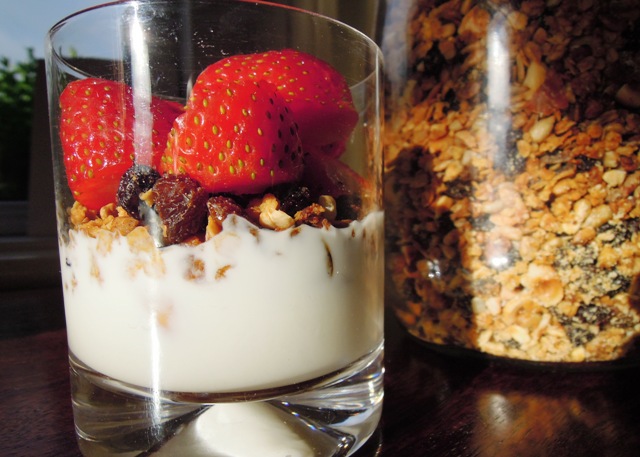
Or how about a more virtuous start to the day with some homemade granola?
But then I do also find it hard to resist a good fry up, but really – who needs a recipe for that? And so I’ve decided on…
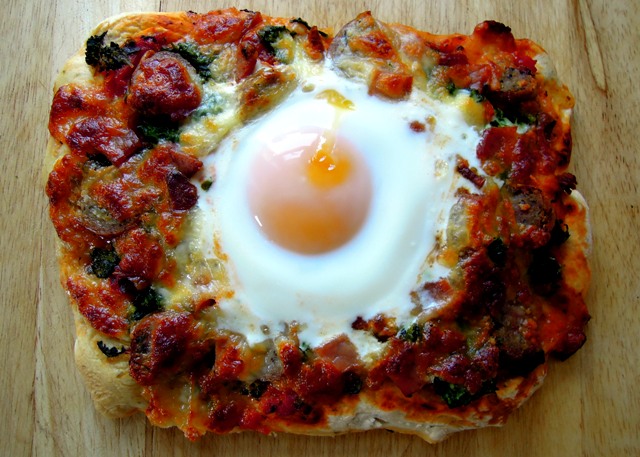
The full English pizza
I know it sounds a little crazy. Or maybe a lot crazy. But this is a perfect and fun weekend brunch, particularly when you’ve had a few drinks the night before and need some stodge to sort you out. It’s essentially all the usual suspects you’d find in a cooked English breakfast but on top of a pizza. Gorgeous. And you probably won’t need to eat for the rest of the day.
I get up early to make the pizza dough. Then go back to bed for a bit with a cup of tea while the dough rises. But if that sounds to you like too much of a palaver, then ready-made pizza bases would make life a little easier.
Makes 4 pizzas
For the dough:
400g strong white bread flour
1 tsp salt
1 x 7g sachet fast action dried yeast
2 tbsp chopped fresh oregano
250ml luke warm water
1 tbsp olive oil
For the topping:
200g spinach
knob of butter
passata, about half a jar
4 pork sausages, grilled and sliced
4 rashers bacon, grilled and chopped
mozzarella, 2 x 250g balls
4 free range eggs
To make the pizza dough, put the flour, salt, dried yeast and oregano into a large mixing bowl and mix well.
Make a well in the middle and pour in the lukewarm water and oil. Gradually work the flour into the liquid, making a soft dough. If it’s too dry, add a drop more water. If it’s too sticky, add a little more flour.
Flour your surface before tipping the dough onto it. Knead the dough by stretching it away from you, then pulling back into a ball. Do this for five minutes or so, until the dough is smooth and elastic.
Return the dough to the mixing bowl, cover loosely with cling film and put in a warm place for about an hour, until the dough has doubled in size. This is when I retire back to bed for a while.
Preheat the oven to 200°C/Gas Mark 6 or use the middle of the top oven of an Aga.
Uncover the risen dough and punch it back down. Flour the surface again and divide the dough into four balls. Stretch or roll out each ball until you have a thin circle about 22cm across. Place the pizzas onto slightly oiled baking sheets.
Melt the butter in a frying pan. Add the spinach and cook gently until wilted.
Pour a couple of tablespoons of passata onto each pizza, smoothing out with the back of the spoon. Spread some spinach over each base (squeeze out any excess butter), followed by the pieces of sausage and bacon, and finish with torn pieces of mozzarella. Be careful not to overload the centre of the pizza, where you’ll be cooking your egg later.
Bake the pizzas in the oven for 15-20 minutes. Remove from the oven and carefully break an egg into the middle of each pizza. Return to the oven for 3 to 4 minutes until the white is just cooked but the yolk is still soft. Enjoy at your leisure!
Here is another entry for Action for Children’s Festive Food for a Fiver contest – my very easy sausage, cranberry and apple plait. Costing around £5.70 to make and feeding a family of six, this tasty dish works out at only 95p a head; even less if you were to make your own pastry from scratch.
As more families are finding it increasingly difficult to put regular meals on the table, they’d like people to put their creativity to work for a good cause and learn new cooking and money management skills from others, by sharing frugal recipes ideas (less than £1.25 a head) on Facebook and Twitter. The two best recipes will be rewarded with a lovely family cookbook, full of many useful tips, kindly provided by Giraffe Restaurant.
Visit the Action for Children website for more details on how you can get involved.
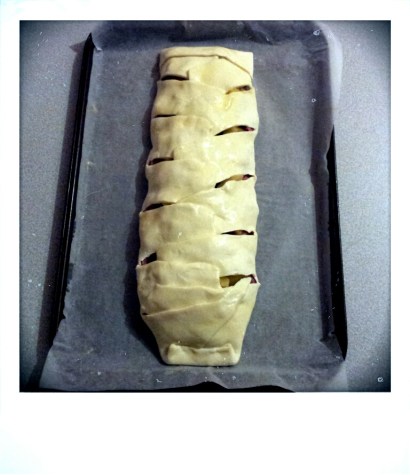
Sausage, cranberry and apple plait
Filled with sausage meat, this plait is essentially a big, posh sausage roll but much yummier. The cranberries and apple provide those lovely festive flavours. You can also do a sweet version by switching the sausage for marzipan or maybe mincemeat.
Put the apples in a saucepan with the knob of butter and cook gently until they begin to soften. Stir in the cranberries and cook for a few minutes. Then leave to cool.
Line a baking tray with baking parchment and lay the puff pastry on top.
Slice open the sausage skins and squeeze out the sausage meat down the centre of the puff pastry. Top with the cooled apple and cranberry mixture. With a sharp knife, cut stripes almost from the filling out to the edge.
Brush some beaten egg onto the pastry and then carefully fold in alternate sides of the pastry to overlap on top of the filling.
Keep going until the filling is covered. Fold over the pastry at the top and the bottom. You may need to trim of some excess pastry if it looks a little too bulky.
Brush the pastry with more egg. Bake in the oven for 20 to 25 minutes until the pastry is golden brown and the filling is cooked through.
Carefully slice the sausage plait and serve with a simple salad. Delicious!
While duck isn’t the cheapest meat around, I’d happily eat meat-free for a few days to justify including it on my weekly meal plan. A deliciously succulent meat, it works wonderfully with strong, spicy flavours.
This broth is inspired by a Riverford recipe and features star anise, Chinese five spice, ginger and garlic, as well as that favourite of the veg box at this time of year, the Savoy cabbage. It is the perfect winter warmer, especially when you serve it with a little chilli sauce on the side.
I think the spicy broth would go very well with a glass of Isla Negra Merlot, a soft, easy drinking red wine I was lucky enough to sample the other night during #BoothsCheers,a special festive wine and beer tasting on Twitter organised by the British supermarketBooths. There will be more tastings on Wednesday nights between now and Christmas – maybe you’d like to take part next time? But anyway, enough about the drink and back to the food…
Spicy duck broth with Savoy cabbage and noodles
Serves 4
2 duck breasts
2 tsp Chinese five spice
1 tbsp vegetable oil
dash sesame oil
3 cloves of garlic, peeled and crushed
3cm fresh ginger, peeled and grated
half a Savoy cabbage, finely shredded
2 litres hot chicken stock
2 star anise
150g dried egg noodles
chilli and soy sauces to serve
Preheat the oven to 200ºC / gas mark 6.
Score the duck skin and rub in the five spice. Place the duck breasts on a rack in a roasting tin and roast in the oven for 15 to 20 minutes. Remove from the oven and leave to rest somewhere warm.
In a large saucepan heat the vegetable and sesame oils and fry the garlic and ginger for a minute before adding the Savoy cabbage. Stir fry for a couple of minutes and then add the hot stock and star anise.
Bring to a simmer and gently cook the cabbage for a couple of minutes. Then add the noodles and cook for around three more minutes until the noodles are just soft.
Pour the broth into bowls, using tongs to serve the noodles and cabbage. Slice the duck breast and place on top. Serve with some soy and chilli sauces on the side. And enjoy!
Somehow I completely failed to spot that this week is National Sausage Week here in the UK. Now if anyone should be celebrating the humble sausage, it clearly should be Bangers & Mash. The amount we consume in our house contributes significantly to supporting the British sausage industry, I’m sure.
Thankfully, I had this very tasty sausage dish waiting in the wings to appear on the blog – a perfect winter warmer for all the family on these darker, colder days.
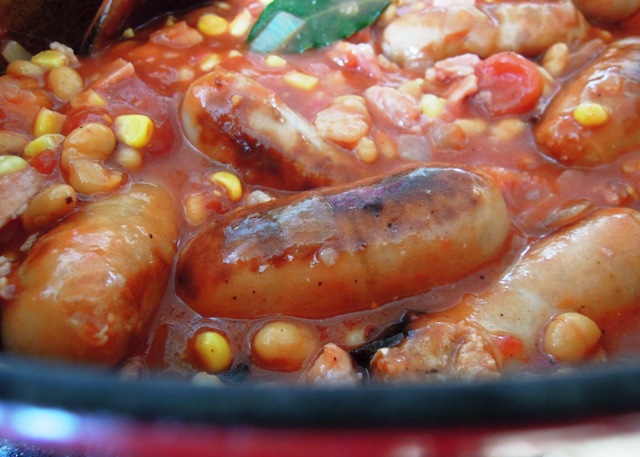
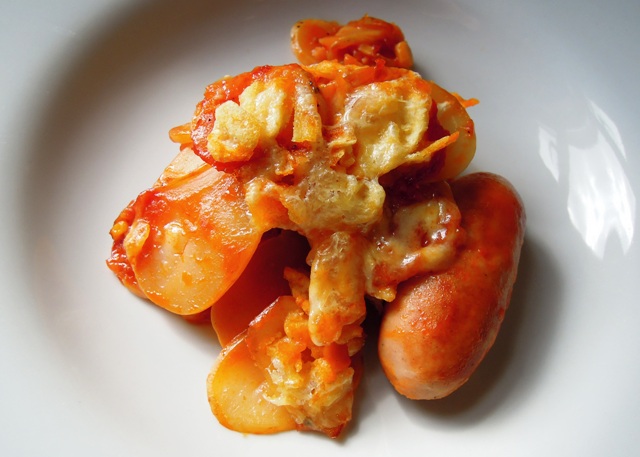
So bumped up the running order a little, I bring you the ‘Star Wars’ sausage stew, a recipe my children (and us grown ups too) adore, which I discovered in my old Blue Peter Book of Gorgeous Grub, circa 1980. The topping of crushed up plain crisps and grated cheese takes me back to my childhood when crisps seemed to appear in hot dishes all the time.
As a child I was a committed fan of the BBC children’s programme Blue Peter, winning a total of four badges over the years in various competitions. I was forever pestering my mum for old boxes, loo roll holders and sticky backed plastic so that I could make the latest Blue Peter creation.
But for some reason I never tried to recreate any of their recipes. It was my dad who recently dug out this cookbook, which, to be totally honest, I can’t remember having as a child as I wasn’t really all that interested in food back then. Oh how things change! So I’m rather enjoying working my way through all the recipes that were submitted by Blue Peter viewers, answering the call from presenters Simon Groom, Chris Wenner and Tina Heath.
According to eight-year-old Elspeth Bruford from Edinburgh who sent in this recipe…
We called it this because it was invented when we wanted a hot meal waiting for us when we came home from seeing the film ‘Star Wars’.
I wonder where Elspeth is now and whether she still makes her Star Wars sausage stew?
Star Wars sausage stew
Serves 4 to 5
1 tbsp vegetable oil
450g sausages (Elspeth cut hers into slices; I left mine whole)
2 onions, chopped
175g bacon, chopped
1 small tin baked beans
1 small tin sweetcorn (I used frozen)
1 large tin chopped tomatoes
1 bay leaf
salt and pepper
2 large potatoes, peeled and thinly sliced
1 packet of plain crisps, crushed
50g Cheddar cheese, grated
Preheat the oven to 150ºC / gas mark 2.
Heat the oil in a large casserole and brown the sausages, then remove to one side. Add the onion and bacon to the casserole and gently brown. Throw the sausages back in, as well as the beans, sweetcorn and tomatoes. Add the bay leaf, season well with salt and pepper and give it all a good mix.
Top with the sliced potatoes and season again. Cover with a lid or foil and cook in the oven for around two and a half hours.
Remove the lid or foil and turn up the heat to 190ºC / gas mark 5 and cook for another half an hour to brown the potatoes.
Finally top with the crushed crisps and cheese and return to the oven until the cheese has melted. Serve immediately.
It is the last in my Around the World in Six Suppers, and for the final mystery destination we leap from the virtual to the real world. Yes indeed! We said – hang the staycation! We need a proper holiday!
Overlooking Myrtos Beach, made famous by Captain Corelli’s Mandolin
I know. So much for our good intentions to stay at home this summer and save some money. Our resolve seemed to weaken as the British weather deteriorated. And when our good friend Mikey suggested we come see him and his family on the Greek island of Kefalonia it was too hard to resist, particularly since he is a winemaker and promised us lots of good wine too.
For the last week of the school holidays, we therefore found ourselves on this beautiful Ionian island, most commonly known as the setting for Captain Corelli’s Mandolin and home to a wonderful tradition of fine food that’s simple and unfussy.
Mikey first came to Kefalonia around five years ago to make wine for Gentilini, one of the largest vineyards on the island. He now lives here with his lovely wife Yvonne and their two gorgeous daughters.
Although we couldn’t really justify a trip abroad, I have to admit it is just what I needed. There’s something about soaking up properly hot sunshine and swimming in warm seas that allows me to truly relax and switch off. Kefalonia was absolutely perfect for this: never a cloud in sight, crystal-clear turquoise seas and temperatures rarely dipping below the mid-thirties. Every view was a picture postcard and as soon as we stepped off the plane, my family was grinning from ear to ear.
As we were only there a week, we weren’t tempted to try and do too much either. Mikey acted as the perfect guide to the island. Despite being insanely busy with the grape harvest and starting work at 6am each day, he succeeded in helping us find the best places to eat and drink.
From drinking mojitos on the beach at Megali Amos…
Drinking cocktails in the sea – life doesn’t get better than this
… and organising a fantastic Greek barbecue at the winery…
Petros, the barbecue kingNo barbecue is complete without a sausage or two
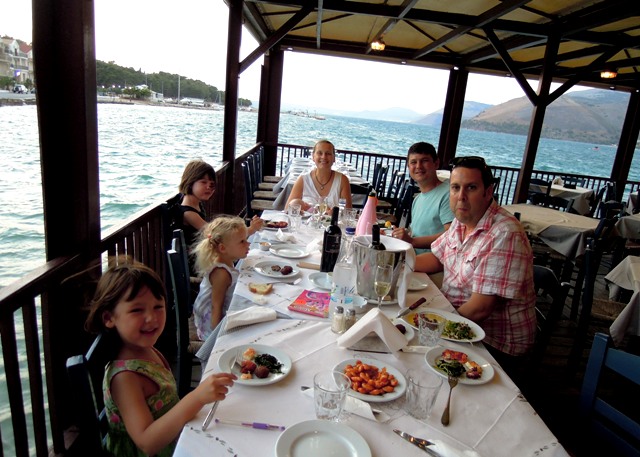
… to a marvellous traditional meze overlooking the harbour at Kiani Atki…
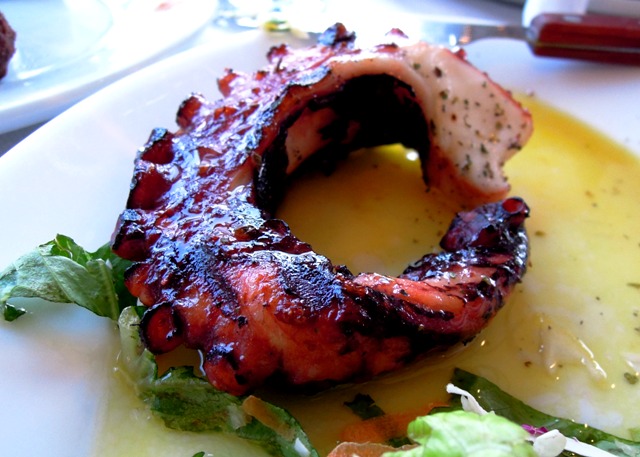
The perfect spot to enjoy meze and watch the sunset with good friends at Kiani Atki in ArgostoliThe octopus was simply sensational
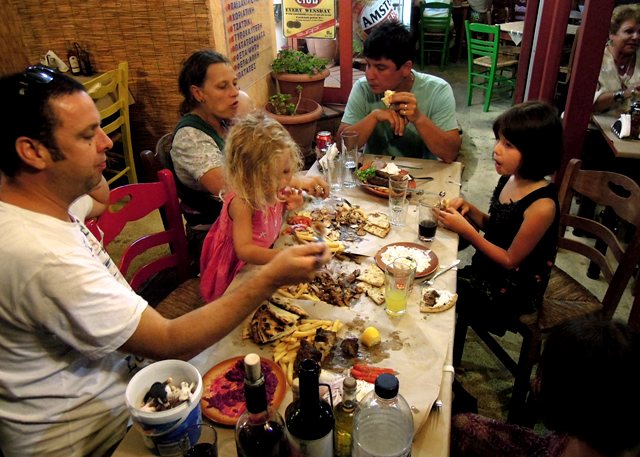
… and devouring gyros at Ladokoola, Mikey’s favourite ‘chuck it all on the table’ restaurant.
They really do ‘chuck it on the table’ as Mikey described it
No surprise I came home a few pounds heavier!
But my favourite meal of the holiday was the one Mikey and Yvonne cooked us one evening at their home.
They invited us over for a very traditional meal of pastitsio, often talked of as Greece’s version of lasagne, served with horiatiki, the ubiquitous Greek salad. And of course, lots of good Greek wine, robola and rosé.
Mikey’s pastitsio and horiatiki salad
I’ve never eaten pastitsio before but it’s certainly a recipe I know I’ll be cooking again and again back at home. Our two girls gobbled theirs up without a peep while the grownups reminisced about the old days in Bristol.
The pastitsio recipe in the Kefalonian cookbook Mikey and Yvonne gave me as a gift calls for tagliatelle pasta but Mikey prefers to make his with penne, while Yvonne says she uses little macaroni. So it seems anything goes really; make use of whatever you happen to have in the cupboard. For an authentic pastitsio, you should use the local kefalotiri cheese but any hard sheep’s milk cheese should be fine, such as manchego.
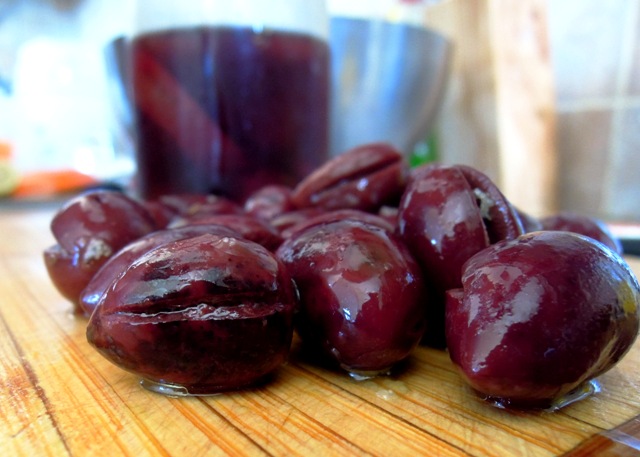
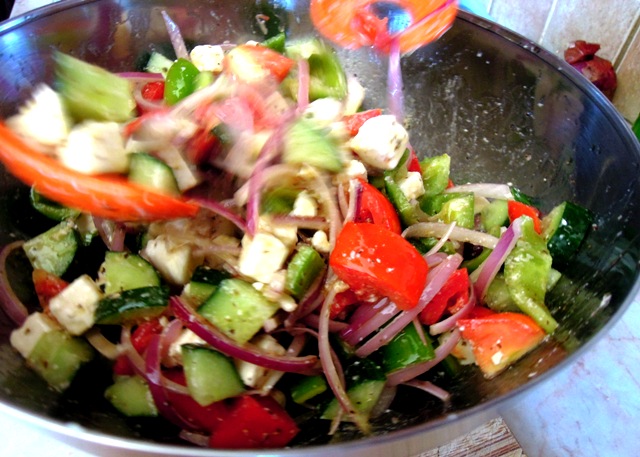
According to Mikey, a proper horiatiki or Greek salad should be served at room temperature – not cold from the fridge – and made well in advance so that the salt has plenty of time to work its magic on the tomato and cucumber, extracting some of the water content and intensifying the flavours. It is served simply with good olive oil but no vinegar. And of course, you need plenty of really good black olives. Yvonne had made her own and they were like nothing I’d tasted before.
Yvonne’s homemade olives
Mikey prepared his horiatiki before taking us all down to the local beach for a wonderful evening swim as the sun began to set. If only we could always swim in the sea before supper…
Tossing up the horiatiki with plenty of salt and good olive oil
Horiatiki Salad
2 large beef tomatoes
½ cucumber
1 red onion
1 green pepper
large pinch of salt
handful of black olives
150g Feta cheese, cubed
large pinch of dried oregano
large glug of quality olive oil
Cut the tomatoes and cucumber into large chunks and throw into a large serving bowl. Slice the red onion and cut the pepper into thin strips, and add to the bowl. Sprinkle with a decent pinch of salt and mix it all really well. Add the olives, Feta and oregano and smother with a good peppery olive oil. Toss gently to make sure the oil covers everything well and leave for half an hour or so before serving.
Pastitsio. Note the large squeezy Marmite in the background, which we were under strict orders to bring over from Blighty.
Pastitsio
2tbsp olive oil
1 onion, finely chopped
600g minced beef
100ml white wine
500ml tomato passata
1 tbsp tomato puree, dissolved in a little hot water
salt and pepper
pinch of cinnamon
pinch of nutmeg
600g penne or other small pasta
handful of kefalotiri or other hard sheep’s milk cheese, grated
For the Béchamel Sauce
1 litre milk
6tbsp plain flour
salt and pepper
nutmeg
1 egg, beaten
1 tbsp butter
Preheat oven to 190°C/gas mark 5.
Heat the olive oil in a frying pan and sauté the onion until soft. Add the minced beef and cook until browned. Pour in the wine and cook off until the liquid has evaporated. Stir in the passata and puree and season with salt and pepper. Sprinkle in a little cinnamon and nutmeg. Taste and add more if required. Bring the sauce to the boil and gently simmer on a low heat until the sauce has thickened.
To make the béchamel sauce, pour the milk into a pan and heat gently. When the milk is warm, slowly add the flour, stirring constantly to prevent lumps. Season with salt and pepper and a little nutmeg. Once the sauce has thickened, stir in the egg and then the butter. Check the seasoning again and remove from the heat.
Bring a large pan of salted water to the boil and cook the penne according to the packet instructions. Drain and rinse with warm water to prevent the pasta from sticking together.
Butter the bottom of a large ovenproof dish. Put half the pasta along the bottom of the dish and press down firmly. Pour the meat sauce over the pasta and smooth over. Cover with the rest of the pasta and again press down well. Pour the béchamel sauce over the top and sprinkle with the grated cheese.
Bake in the oven for around 40 minutes, until the top is golden and the cheese is bubbling. Leave to stand for quarter of an hour to let the béchamel sauce set slightly before serving with the horiatiki salad.
It’s the penultimate stop in my culinary world tour and this week we’re heading to the beautiful Spanish city Barcelona. The Catalan capital is one of the most amazing cities in the world, with its stunning architecture, fantastic restaurants and nightlife, and superb shopping.
I haven’t been back to Barcelona since I was 18, towards the end of a month’s inter-railing with my best friend Ruth after our A-levels, but it remains vivid in my memory. We had thoroughly exhausted ourselves trying to pack as many European cities into our four weeks’ travels as possible and by the time we reached Barcelona in our last week we needed to slow down. Barcelona was the perfect place to put down roots for a little while. While Ruth was ensconced in her first romance, I enjoyed wandering the streets of Barcelona simply breathing in the city.
One day I must return. But for now, I’ll imagine I’m there with my family. And what else would we be eating but tapas?
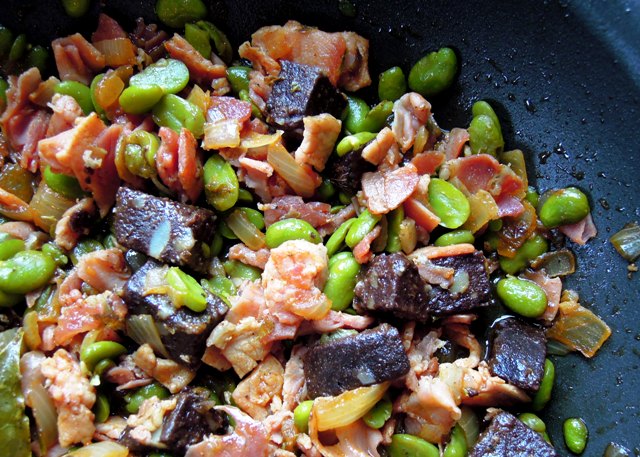
My sister Lottie lives in Toledo with her boyfriend Jose Luis. His mother Reme is a cook and has worked in a number of restaurants, so Lottie volunteered to ask her for suggestions on typical Catalan tapas for me to try out on my brood. The dishes she recommended I try were Pollo a la Catalana (Catalan style chicken with prunes and apricots) and Habas a la Catalana (broad beans with Jamon Iberica and Morcilla, a Spanish black pudding), both of which were absolutely delicious.
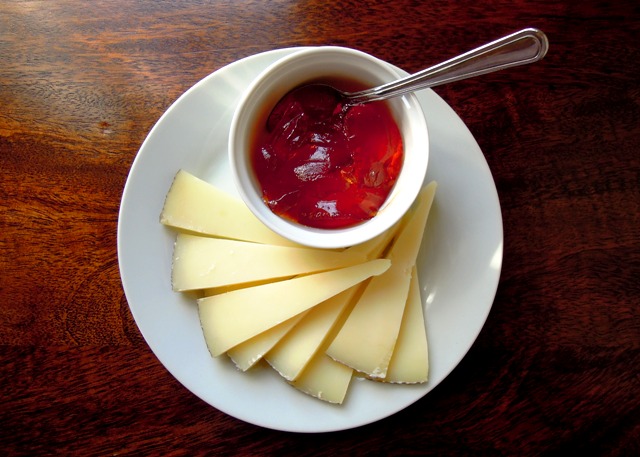
I also added some of my own personal favourites to the menu: Garbanzos con Espinacas (chickpeas with spinach), Albondigas (meatballs in tomato sauce), Gambas al Ajillo (garlic prawns), rosemary almonds, Manchego with Membrillo (quince paste or jelly), all of which were served with olives and bread – quite insanely I decided to go the whole hog and bake my own.
Preparing all the above made for a long, long, hot day in the kitchen. I cleared my husband and kids off for a few hours and cranked the music up loud while I cooked, and although I don’t intend on cooking quite so many dishes for one meal again in a hurry, I really rather enjoyed myself in a crazy kind of way.
So let’s get this recipe show on the road…
Simple Spanish bread rolls
Bread rolls
Makes 4 rolls
500g strong white bread flour
1½tsp salt ½tsp sugar 7g packet fast acting dry yeast
150ml warm water
1 egg, beaten and mixed with a little water
Mix the flour, salt, sugar and yeast in a large bowl. Gradually add the water, combining the ingredients until you get a soft dough. Add a little more water if you find you still have flour left at the bottom of the bowl. Likewise, if the dough is too sticky add a little more flour.
Knead the dough for five to ten minutes, until it is smooth and elastic. Form the dough into a ball and leave in the mixing bowl. Cover with a tea towel and leave to rise in a warm, draft-free place for about an hour.
Preheat oven to 200°C/Gas Mark 6.
When the dough has roughly doubled in size, knead again briefly. Divide into four pieces, form into balls and place on a lightly oiled baking sheet. Allow to rise again for a further 15 minutes.
Bake the rolls for 5 minutes, then remove from the oven and brush the tops with the egg mixture. Return to the oven and bake for another 15 minutes. Remove from the oven and allow the rolls to cool on a wire rack.
Rosemary almonds
Rosemary almonds
This is a favourite party snack, taken from Leon’s ‘Naturally Fast Food’.
250g whole almonds, with skins
3 sprigs fresh rosemary
25ml olive oil
sea salt
Preheat oven to 170°C/Gas Mark 3.
Spread the almonds on a baking sheet with two of the rosemary sprigs. Remove the leaves from the other sprig and keep to one side.
Toast the almonds in the oven for 5 to 7 minutes, until just beginning to brown.
Toss in the olive oil and salt while still hot. Remove the rosemary sprigs and add the reserved leaves. Return to the oven for 3 more minutes and then serve.
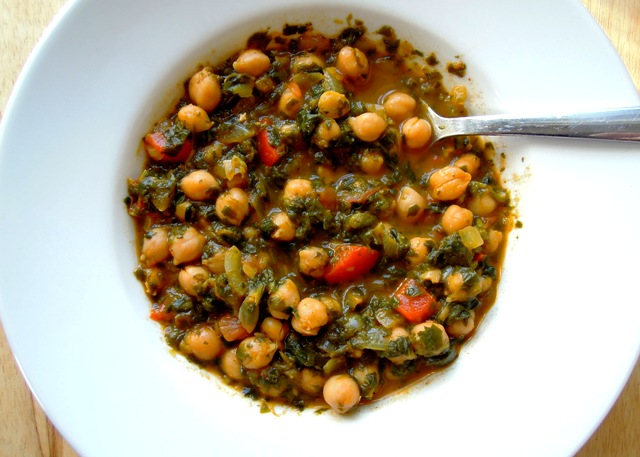
Chickpeas with spinach
Garbanzos con Espinacas (chickpeas with spinach)
2 tbsp olive oil
½ onion, chopped
2 garlic cloves, 1 chopped and 1 left whole
1 tomato, peeled and chopped
1tsp paprika
½tsp ground cumin
¼tsp ground cayenne pepper
¼tsp saffron
4 peppercorns
1 x 410g tin chickpeas, liquid reserved
200g frozen spinach
salt
Heat the oil in a large pan over medium heat. Add the onion and chopped garlic and fry for a couple of minutes. Add the tomato and cook until slightly reduced. Stir in the paprika, cumin and cayenne.
Using a pestle and mortar, crush the saffron and peppercorns with the remaining clove of garlic. Dissolve the spices in 3 tablespoons of water and add to the pan with the chickpeas and their liquid from the tin, along with the spinach and salt to taste. Cover and simmer over a low heat for 20 minutes, adding more water if it looks a little dry. The mixture should be saucy, but not sloppy. Serve warm.
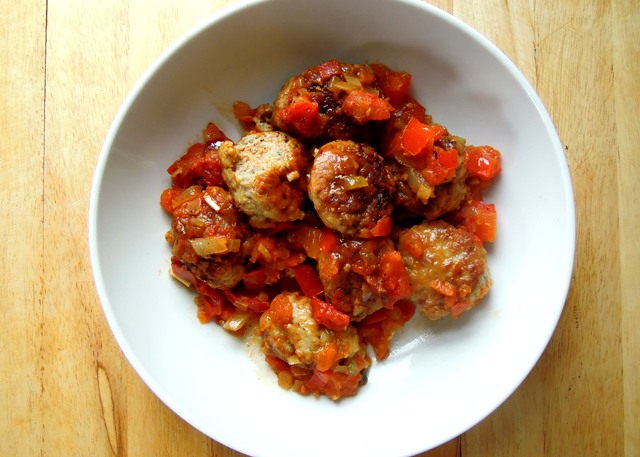
Spanish meatballs
Albondigas (Spanish meatballs in tomato sauce)
The meatballs I’ve eaten in Spain are normally a little spicier than this recipe but I wanted to keep it mild for my children. Feel free to add some chilli, paprika or cayenne to the recipe.
3-4 cloves garlic
parsley
white wine, just over half a glass
300g pork mince
2 slices stale bread
milk
1 egg (beaten)
salt and pepper
flour
olive oil
1 onion, finely chopped
4 tomatoes, roughly chopped
Preheat the oven to 190C/Gas 5.
Crush 2 of the garlic cloves with the parsley and mix with a dash of white wine. Add this mixture to the minced pork in a large bowl and combine well. Leave to stand for half an hour.
Place the bread in a dish and cover with the milk. Leave to soak for a few minutes and then squeeze out most of the milk.
Add the bread, egg, salt and pepper to the mince and knead until all the ingredients are mixed well together. Roll the mince mixture into small balls and roll each one in flour.
Fry in plenty of hot oil until they turn golden brown, drain and place in a casserole dish.
To make the sauce, heat a little oil in a frying pan. Add the onion and remaining clove of garlic and gently fry until golden.
Add the chopped tomatoes and about half a glass of white wine. Bring to a simmer and cook for 5 minutes
Pour the sauce over the meatballs and place in the oven for 20 – 25 minutes. Serve warm.
Catalan style chicken with prunes and apricots
Pollo a la Catalana (Catalan style chicken with prunes and apricots)
handful each of prunes and dried apricots white wine
olive oil
4 chicken thighs
2 cloves garlic
2 bay leaves
cinnamon stick
2tbsp runny honey
handful of pine nuts
1tbsp corn flour
dash of red wine vinegar
knob of butter
Place the prunes and apricots in a bowl and cover with white wine. Leave to soak overnight.
Preheat the oven to 200C/Gas 6.
In a frying pan heat the oil and brown the chicken thighs. Remove the chicken to a roasting tin, along with the garlic, bay leaves and cinnamon stick. Roast in the oven for 25 minutes until the chicken is cooked through.
While the chicken is roasting, prepare the sauce. Add the honey to the frying pan in which you browned the chicken and heat. Add the fruit, the wine in which they have been soaking and pine nuts.
When the chicken is cooked, remove to a serving plate and keep warm. Place the roasting tin over a medium heat, and stir in the corn flour to absorb the juices. Add a cupful of water and a dash of red wine vinegar to deglaze the tin and stir in the butter. Pour in the fruity sauce, mix together and then pour over the chicken and serve.
Broad beans with Jamon Iberica and black pudding
Habas a la Catalana (broad beans with Jamon Iberica and black pudding)
This is one of the recipes from Reme, my sister Lottie’s boyfriend’s mother. I couldn’t get hold of Morcilla, a Spanish black pudding, so I went with Bury Market black pudding instead!
120g shelled broad beans
3 rashers smoked streaky bacon, chopped
2 cloves of garlic, chopped
½ onion, chopped
1 bay leaf
olive oil
bunch fresh mint, chopped
½tsp paprika
glass of white wine
100g Jamon Iberica, chopped
100g Morcilla or black pudding
salt and pepper
Blanch the broad beans in boiling, salted water for a few minutes until tender. Double shell the beans to reveal the beautifully bright green innards. It’s a bit of a palaver I know, but it’s really worth it.
Heat the oil in a pan and fry the bacon, garlic, onion and bay leaf for about 5 minutes. Add the mint and paprika, broad beans, white wine and black pudding. Stir and cook for a few minutes before adding the jamon. Season to taste and serve warm.
Garlic prawns
Gambas al Ajillo (garlic prawns)
I based this dish on a simple recipe I found in ‘Tapas’ by Louise Pickford.
12 raw tiger prawns
2 tbsp olive oil
knob of butter
2 cloves garlic, crushed
1 tbsp fresh basil, torn
juice of 1 lemon
salt and pepper
aioli (garlic mayonnaise) to serve – again I cheated and bought a jar!
Wash and dry the prawns.
Heat the oil and butter in a frying pan, add the prawns and garlic and fry for 3 to 4 minutes until the prawns are pink.
Remove the pan from the heat, stir in the basil and lemon juice. Season to taste with salt and pepper. Serve warm with a dish of aioli for dipping.
Manchego cheese with quince jelly
Manchego and Membrillo
Manchego is a tasty Spanish cheese made from sheep’s milk, which has a natural affinity with quinces. The idea of making my own membrillo really was a step too far, so I cheated and bought a jar of quince jelly instead. If you wanted to make your own, I reckon this recipe looks rather good.
So there you have it. My Barcelona tapas menu. I made way too much food for my family of four, but the leftovers were all gobbled up over the course of the next few days. The Catalan-style chicken in particular was very popular, and I’ll be making this dish again on its own for dinner, served simply with rice and salad.
I’ve almost completed my Around the World in Six Suppers adventure – can you believe the school holidays are nearing their end already? So where will the last dish come from next week? Watch this space to find out!
The fourth stop in my virtual Around the World in Six Suppers culinary tour finds us in Rio de Janeiro, the party capital of Brazil.
Back in my early 20s, when I was working in a PR agency in Bristol, I went on the jammiest press trip ever. I took some local business journalists all the way to Brazil for almost a week, just to see a fleet of new British Airways aircraft on the production line in Sao Jose dos Campos. We only needed to spend half a day in the factory, but due to flight schedules we had to stay for five days. A real shame that.
After our stint at the factory, our host Embraer put us up at fantastic hotels, firstly in Sao Paulo and then Rio de Janeiro, to make sure we got a really good impression of Brazil. It was incredible. We were wined and dined like royalty. I got to see football in Sao Paulo, sunbathe on Copacabana and Ipanema, hang glide close to Corcovado, take a cable car up Sugar Loaf Mountain (imagining I was in a Bond film), dance to Bossa Nova beats in the clubs and drink way too many caipirinhas. I’ve been on many a press trip since but none has ever come close.
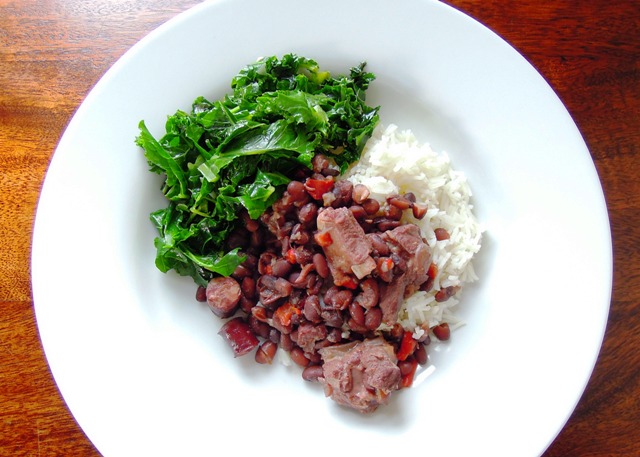
And so, to take me back to those days of luxury in Rio and Sao Paulo, I’ve ironically cooked up what actually started out something of a peasant meal, and is now seen by many as Brazil’s national dish. It’s similar to a French cassoulet and is thought to originate from the slaves in Brazil who would cook up big pots of stew from black beans and the parts of the pig the landowners discarded.
It isn’t the prettiest dish in the world, stews rarely are, but it tastes so good. It’s rich and earthy, smoky and very, very satisfying.
Feijoada – Traditional Brazilian Stew
Serves 6
500g dried black beans
2tbsp olive oil
2 onions, peeled and finely chopped
1 red pepper, deseeded and chopped
6 cloves of garlic, finely chopped
130g smoked sausage – I used kabanos
600g pork ribs, cut into chunks
200g smoked gammon, cut into chunks
5 bay leaves
salt and pepper
Cover the black beans completely in cold water and soak overnight.
Preheat the oven to 150C/Gas 2.
In a large casserole, heat the olive oil and sweat the onions and red pepper until soft. Add the garlic and fry for a minute or so before adding the drained black beans, smoked sausage, pork ribs, gammon, bay leaves, salt and pepper. Stir briefly before covering with cold water and bringing to a gentle simmer.
Cover the casserole with a lid and place in the oven to cook slowly for around two hours, until the meat falls off the bone.
Serve with boiled white rice and sliced spring greens fried with a little chopped onion and garlic. It’s also traditional to serve with slices of orange, but I completely forgot this bit – I can’t say I missed them.
When I put out a call a month or so ago for people to send in their favourite family recipes for the Care to Cook recipe challenge I had absolutely no idea what kind of response to expect. Care to Cook is a challenge I set up with a fostering and adoption charity I work with called TACT in order to promote their cookbook, which they’re selling to support adopted children and their families.
But I had nothing to worry about. You lot rose to the challenge splendidly, supplying a fantastic assortment of family favourites, both savoury and sweet. The task set was to suggest a dish you would cook to welcome someone into your family home. For many children in care, family meals are simply something they are not used to. Each and every dish submitted into the challenge is one I know would make a vulnerable child or young person feel special, valued and welcomed.
Before I announce the winner, here are each of those delicious entries in turn. Warning – this list is guaranteed to make you hungry!
First in was this tasty little number from Under The Blue Gum Tree, which looks far superior to its McDonald’s namesake: Homemade Fillet O’ Fish and “Chips”. The fillet is served in lovingly prepared carrot and cumin bread rolls, with potato skins covered in paprika and cayenne pepper, and some salsa and soured cream on the side. Now, who could resist that?
Homemade Fillet O’ Fish and “Chips” from Under The Blue Gum Tree
Next we have French Madeleinesfrom Crêpes Suzettes. These pretty little cakes look so tempting and perfect for goûter, the snack French kids have at around 4pm. I think my children must be a bit French as they are always starving when they come home from school too!
French Madeleines from Crepes Suzette
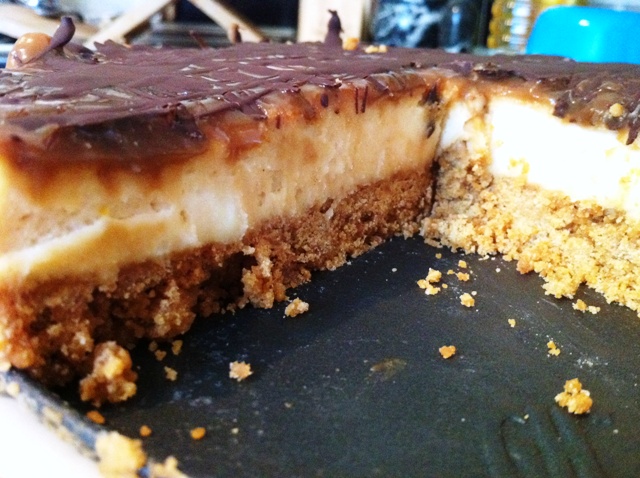
For Reluctant Housedad, what to cook for this challenge was a bit of a no-brainer. It had to be his Peanut Butter and Salted Caramel Chocolate Cheesecake. Doesn’t it look incredible? I love puddings that combine sweet and salty and absolutely anything that contains peanut butter, so this is going straight to the top of my must-bake list.
Peanut Butter and Salted Caramel Chocolate Cheesecake from Reluctant Housedad
My fabulous mother Cheryl suggested this next dish Hokkien Mee, which she remembers eating as a girl growing up on the Malaysian island of Penang. It’s a hot and spicy noodle dish, featuring both meat and seafood, common in many South East Asian dishes. It’s a little different to the Singapore version but, as my Mum would tell you, much more delicious!
Penang Hokkien Mee from Cheryl Leembruggen (photo via vkeon.com)
Karen from Lavender & Lovage offers up these ‘frugal but comforting’ Stuffed Tomatoes with Herbs and Oats, which I think look incredibly tasty and very satisfying. It’s a real family-favourite in Karen’s house; her daughter loved eating this when she was little, and still does now she is all grown up!
Stuffed Tomatoes with Herbs and Oats from Lavender & Lovage
My little sister Elly surprised me with her cooking skills with this next entry, her Nonya Chicken Curry from Malaysia. I just assumed she would submit a recipe for something sweet and sticky – she’s a great baker you see. But no, this is her curry dish that got a big thumbs up from her boyfriend’s dad. He’s from Malaysia himself and apparently not an easy man to impress!
Nonya Chicken Curry from Elly Rowe
Pasta and Pesto Sauce is our next entry which comes from A Trifle Rushed. Pesto is always a favourite in our house but I must admit it’s normally a meal-in-a-hurry using dried pasta and jarred sauce. Here Jude and her daughter lovingly make fresh pasta by hand and blend their own pesto in a pestle and mortar. I bet it tastes incredible; it certainly looks wonderful.
Pasta and Pesto Sauce from A Trifle Rushed
Louisa at Chez Foti now lives in the French Pyrenees and likes to cook classic French dishes whenever friends and family come to visit. This Boeuf en Daube is a particular favourite and I can see why; it looks so sumptuously satisfying! It’s one of those meals you can prepare in advance and leave to slow cook in the oven, so that your visitors arrive to the most glorious aromas emanating from the kitchen. Yum!
Boeuf en Daube from Chez Foti
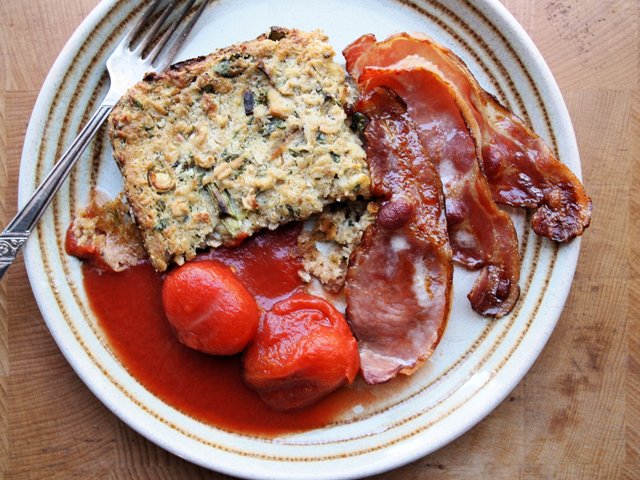
When I received this next entry from Lavender & Lovage for Yorkshire Season Pudding with Herbs I had to try it straight away. We had it for brunch one Sunday morning, and it was perfect with our bacon, eggs and beans. I like the fact this is a traditional family recipe, and one that Karen’s grandmother used to make. I think it might just become a tradition for our family too.
Yorkshire Season Pudding with Herbs from Lavender & Lovage
Spinach and Bacon Macaroni Cheesefrom Sian at Fishfingers for Tea is next up. Macaroni cheese is the ultimate in satisfying comfort food and I do love this version, beefed up with tasty bacon and spinach and finished with slices of tomato and crunchy cheesy breadcrumbs on top. Another great dish for preparing in advance and popping in the oven just before your visitors arrive.
Spinach and Bacon Macaroni Cheese from Fishfingers for Tea
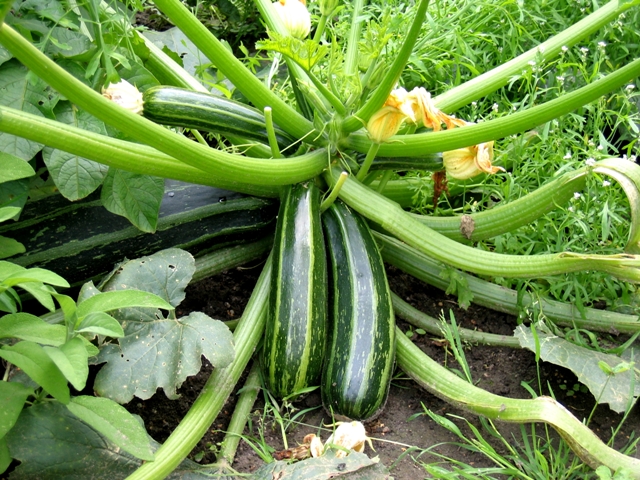
My Nana Barbara sent in two dishes for her entry: Courgette Bake followed by Vanilla Cream Terrine. She says the courgette bake works well both as a starter and as main course served with large hunks of crusty bread. My Nana is fantastic in the kitchen and as a kid I would love staying with her and Grandad as it always meant getting to eat lots of lovely cakes and pies.
Barbara’s Courgette Bake – perfect for anyone with a glut of courgettes on their hands
Chicken Basquaise is the delicious entry from Helene at French Foodie Baby. She warns that it might differ from traditional recipes but that’s what she likes so much about her mother’s cooking; she cooks from the gut. I love the way Helene relives her food memories through her blog and brings them into the present day as she cooks for her little boy Pablo.
Chicken Basquaise from French Foodie Baby
ThisStrawberries and Cream Birthday Cakecomesfrom my step-mum Sue and is the cake she bakes every June to celebrate my twin sisters’ birthday. I’ve always been very jealous of them having a summer birthday when strawberries are in season! Now wouldn’t you like this for your birthday cake each year?
Strawberries and Cream Birthday Cake from Sue Hamer
The final entry is one of mine: Hainanese Chicken Rice. It’s a dish I loved to eat when I was a little girl on trips to Penang with my mum and little sister. I had no idea how to make it so I turned to members of my Chinese-Malaysian family for a helping hand, and my Aunty Lorene and Cousin Sisi did the honours by providing this recipe. How would I ever survive without Facebook?!
Hainanese Chicken Rice from Bangers & Mash
There you have it – a fine collection of family recipes if ever I saw one! But there can only be one winner in the Care to Cook challenge, and the unenviable task of selecting a winner was given to 15-year-old Josh, who lives with one of TACT’s foster carers in the South West of England.
So a huge congratulations to Keith at the Reluctant Housedad for your fabulous entry, which Josh found he simply couldn’t resist! As winner of the Care to Cook family recipe challenge he will receive a copy of TACT’s Care to Cook recipe book, signed by the charity’s celebrity patron Lorraine Pascale.
Choosing one winner wasn’t easy but in the end our judge Josh couldn’t resist this Peanut Butter and Salted Caramel Chocolate Cheesecake from the Reluctant Housedad
And thank you to everyone who has taken the time to share their favourite family recipes, helping to raise awareness of this very worthwhile charity, which is working so hard to improve the lives of children and young people across the UK who haven’t had the best starts in life. More information of the work of TACT is available on their website.
We’re at the end of the third week of the school summer holidays. Can you believe we’re already halfway through? And this week we have travelled, by virtue of our imaginations, to the idyllic island of Penang in Malaysia for the next of our Around the World in Six Suppers.
Hainanese Chicken Rice is a dish I’ve been meaning to make for years. It’s a very simple poached chicken served with rice and chicken broth, which I remember devouring as a child during our holidays in Penang. Mum would take us down to the hawker stalls, away from the more touristy restaurants, and we would eat proper Chinese-Malaysian food with the locals. My Mum was born and grew up in Penang and would always refer to it as ‘home’. Whenever she talked about Penang, the stories would invariably touch on the food at some point!
I haven’t been back to Penang since my early twenties, and hopefully I’ll be taking my own family back there next year. But in the meantime, we’ll have to make do with my favourite Penang meal.
To make sure I got an authentic recipe, I turned to members of my Chinese-Malaysian family and my Auntie Lorene and Cousin Sisi came up trumps. Lorene now lives in America, while Sisi is in Australia – so you can see, we are a truly global family! So a big thank you to them for their help with the recipe and all the tips and advice.
It’s a wonderful dish and it transported me straight back to the days of eating it as young girl in Penang, along with the smell of frangipani flowers and calomine lotion, being taught to use chopsticks, picking fresh rambutans and mangoes from the tree, being morbidly fascinated by dead snakes in jam jars, falling off to sleep at night to the comforting whirring of the ceiling fan, and running away from my Mum, her sisters and cousins as they gourged themselves silly on stinky durian fruit sold by the hot, sticky roadside.
Hainanese Chicken Rice
A whole chicken, around 1.5kg
Kosher or sea salt
2 pieces ginger, around 3cm each
2 spring onions
3 cloves garlic, peeled and bashed
3 tbsp sesame oil
2 shallots, finely chopped
5 cloves garlic, minced
1 piece ginger, around 3cm, peeled and chopped
1 litre chicken stock (from poaching the chicken)
600g rice
salt and pepper
To serve:
bunch of fresh coriander, chopped
two or three spring onions, chopped
cucumber slices
tomato slices
soy sauce
chilli sauce or oil
Start by giving your chicken a really thorough scrub with coarse sea salt or kosher salt. Rub hard to get rid of all the yucky stuff on the skin of the chicken to give you a good clear broth later on. Don’t rush this job. A little effort now makes all the difference later on. Once you’ve finished scrubbing, give the chicken a good rinse with cold water.
Bring a large pan of water to the boil. Rub the chicken inside and out with salt. Insert into the cavity the spring onions, bashed garlic and ginger, and carefully place the chicken breast-side down into the water. Bring the water back to the boil, skim off any foam while cooking, and turn off the heat.
Let the chicken sit in the pot, covered, for around 40 minutes. To check if it’s cooked, poke the thigh with a skewer or fork. If the juices run clear, it is done. If not, leave for another five to ten minutes.
When the chicken is cooked, remove it from the pan and place in iced water to tighten the skin. Reserve the stock for cooking the rice and for the soup to accompany the meal. Rub a couple of tablespoons of sesame oil into the skin, before chopping through the bone into serving pieces.
In a large pan, heat the vegetable oil and a tablespoon of sesame oil over a medium heat. Fry the shallots, garlic and ginger until fragrant. Add the rice and stir until lightly toasted and the oil has been absorbed. Pour in a litre of chicken stock and season with salt to taste. Bring to a boil, cover and reduce the heat to low. Simmer until the rice is tender – about 20 minutes.
Heat the remainder of the stock for your soup, seasoning with salt and pepper to taste and sprinkling with chopped spring onions.
To serve, arrange the chicken on a serving platter, and garnish with fresh coriander, spring onions, cucumber and tomato – although Sisi says her son and husband hate coriander, so she leaves it out! Serve with the rice and soup, and small bowls of soy and chilli sauce.
So simple and so delicious.
As this is another wonderful family recipe, I’m entering it into TACT’s Care to Cook family recipe challenge – which aims to raise awareness of this amazing fostering and adoption charity working with some of the UK’s most vulnerable children and young people.

































 Bangers & Mash