Cheat’s ciabatta pizza

Now that I’m working full-time again, the only chance I really have to play around in the kitchen is at the weekends. But then if I spend too much time in the kitchen, I feel bad that I’m not spending enough time with the kids. So wherever possible I try to involve Jessie and Mia in the cooking too.

On Saturday, after spending the afternoon in Bath shopping for new clothes (my girls are growing so blinking fast at the moment!), we rustled up some quick ciabatta bread pizzas for an easy tea. And the girls enjoyed deciding on their own toppings.

PizzaCollage

I’m not really sure whether to call these posh open grilled sandwiches or ciabatta pizzas – I guess they’re somewhere in between. And they don’t really warrant a recipe. I simply spread some passata on sliced ciabatta (you may prefer French bread or even a slice of cottage loaf) before the girls got going with their own special creations. Up for grabs was whatever we found in the fridge; leftover tinned sweetcorn, ham and salami, some chopped wild garlic leaves we’d picked from the hedgerows, black olives, capers and of course lots of mozzarella cheese.

Mia likes to play safe when it comes to food and kept her pizza topping simple. She isn’t a big fan of strong flavours like olive and capers. Despite that, she did go crazy with the wild garlic, and ate it all quite happily.

ciabatta pizza

Jessie, on the other hand, has always been much more adventurous with food, and went for everything on offer. If there had been raw chillies, she’d probably have thrown some of those on there too.

ciabatta pizza

Cheat’s ciabatta pizza

Serves 4 (2 adults, 2 children with leftovers perfect eaten cold for breakfast!)

4 small part-baked ciabatta, sliced widthways
350g passata or crushed tinned tomatoes
3 x 125g mozzarella cheese

And any toppings you fancy – we went for…

cooked ham, roughly chopped
salami, roughly chopped
tinned sweetcorn
pitted black olives
capers
wild garlic leaves, roughly chopped (or any other fresh or dried herb)

Preheat the oven to 200°C/Gas Mark 6.

Smother the ciabatta with passata and decorate with your chosen toppings. Tear the mozzarella and place on top.

Place your ciabatta pizzas on a lightly greased baking tray and pop in the oven (or alternatively under a medium grill) for 10 to 12 minutes, until the bread is lightly toasted and the cheese has melted. Easy as.

ciabatta pizza

As our ciabatta pizzas feature ham, salami, sweetcorn and tomatoes, I’m entering them into this month’s Recipes for Life, a challenge hosted by me and run in conjunction with SWALLOW, an amazing charity supporting adults with learning disabilities. Each month we set three ingredients and challenge bloggers to use these to come up with tasty, healthy and easy to cook dishes that can be made by SWALLOW members in their cookery class and at home. And this month’s three ingredients just happen to be pork, sweetcorn and tomatoes…

recipes for life

If you like this, you might also like to try…

The full English pizza
Slow roasted tomato and oregano pizza
Spaghetti with wild garlic pesto
Wild garlic risotto
Wild garlic risotto

Drop scones

drop scones

One of the best things about owning an Aga is being able to cook drop scones at the drop of a hat. Of course you don’t need an Aga to make drop scones, a frying pan will do, but there is something so very satisfying about making them direct on the hot plate itself, which of course is always hot and ready to go.

These drop scones are incredibly easy and take literally minutes to prepare. They’re just as good for a teatime treat as they are a weekend breakfast, and the children adore them.

The recipe I use here is from The Aga Book by Aga supremo Mary Berry, although she calls hers Scotch pancakes.

Aga drop scones

Drop scones

Makes around 20

100g self-raising flour
25g caster sugar
1 egg, beaten
150ml milk
Sunflower or vegetable oil for greasing.

Place the flour and sugar in a large bowl. Make a well in the middle and pour in the egg and half the milk. Mix well until it forms a thick batter and then mix in the rest of the milk.

Lightly grease the Aga simmering plate with a little oil, or grease a frying pan and place over a medium heat. When the fat is hot, use a tablespoon to carefully spoon the batter onto the plate or pan, spacing well apart. Cook for only around 30 seconds until tiny bubbles form on the surface, then use a spatula to turn them over. Cook again on the other side for another 30 seconds until golden brown.

Keep the drop scones warm until you’ve worked through all the batter and serve with whatever takes your fancy. We like ours with berries and either honey or golden syrup, or you might prefer a little butter and jam.

drop scones

Birthday beats and eats

Phew! It’s been a crazy few weeks for birthdays in our family. In the last four weeks it’s been my birthday, my father-in-law’s, my husband’s, both my daughter’s and my father’s. With Easter thrown in the there too, I really have no desire to see any more cake or chocolate for quite a while. The 5:2 diet really hasn’t had a chance…

On Monday it was my husband Jason’s birthday. We celebrated with scrummy milkshakes and smoothies at lunchtime at Great Shakes in Wells and later a delicious ‘homemade’ dinner bought from COOK, followed of course by cake. I love the look of surprise on Jason’s face to see yet another birthday cake.

Birthday Collage

Yesterday it was my daughter Jessie’s go as she turned eight. Now how did that happen? It really does not seem eight years ago Jason and I returned home from hospital with our scrawny little bundle. We got home and put Jess in the middle of the living room in her car seat for a while, just looking at her, wondering what on earth we were meant to do next. And now look at her – our beautiful big girl with such curiosity, creativity and a thirst for life. It’s hard to keep up with her sometimes but we wouldn’t have it any other way.

Jessie’s big day involved a meal at a restaurant with her very best friends, followed by a movie. We watched Oz The Great and Powerful in 3D, thoroughly enjoyed by both the children and adults alike. The kids were especially thrilled with their 3D specs as they offered lots of opportunities for to pose for photo after photo as we attempted to get them all home after the film.

We took the children to Frankie and Benny’s for food beforehand – not normally my restaurant of choice but it happened to be right next to the cinema. I have to say though, for a group of kids, it was absolutely perfect and they had a whale of a time. Especially when our waitress switched off the lights and played Congratulations by Cliff Richard as she brought out the birthday cake. Jessie’s friends will be teasing her about how red she went for quite a while I bet!

JessCollage

Fortune teller (or whirlybird) kits in the party bags also went down well. Thanks to Lia at Dizzy Loves Icy for that idea. Coming up with silly fortunes kept them all entertained while they waited for their pizzas and burgers to arrive.

Jessie shares her birthday with her Grandad Chris, my Dad, who yesterday celebrated his 60th birthday. We didn’t get to see him unfortunately as he’s in London and we’re in Somerset but Sue, my Step Mum treated him to a slap up meal at Wild Honey in Mayfair, lucky thing.

As my Dad is renowned for his love of music, various members of my family have been extremely busy the last few weeks compiling a very special music compilation for him, featuring a different song to mark every year of his life, from 1953 right up to the present. We called the album Birthday Beats and the 60 tracks filled four CDs. Do you like the artwork?

BirthdayBeatsCollage

Artists on Birthday Beats range from Perry Como, Elvis Presley and Dave Brubeck in the 50s; through Charles Mingus, Sonny Rollins and The Beatles in the 60s; The Pointer Sisters, Al Green and The Jam in the 70s; Penguin Cafe Orchestra, Talking Heads and The Housemartins in the 80s; right through to Blur, Bjork and The Fugees in the 90s; and Taj Mahal, Ojos de Brujo and Medeski, Martin & Wood in the last decade (I hate to say noughties).

It was such good fun putting the album together and I think the final selection reflects just as much on the family that compiled it as it does on my Dad’s evolving taste in music through the last six decades.

And because this is a food blog, I really need to end this post with a recipe. So here’s a simple recipe for an easy peach pudding I remember my Dad making us when I went down to stay during the school holidays. It’s probably a bit far-fetched to describe this a recipe, as it’s simply three ingredients layered one on top of the other in a bowl. But when I was little I thought this was one of the most amazing desserts ever created and I still love it to this day.

easy peach pud

Easy peach pud

Serves two

4 digestive biscuits
Half a tin of sliced peaches, chopped
6 tbsp plain yoghurt

Break the biscuits into two bowls or glasses. Place the chopped peaches on top, pour over the yoghurt, and serve.

The perfect easy-peasy-peachy-squeezy pudding. Thanks Dad! And happy birthday Reeses and Hamers! Until next year…

Watercress and pistachio pesto

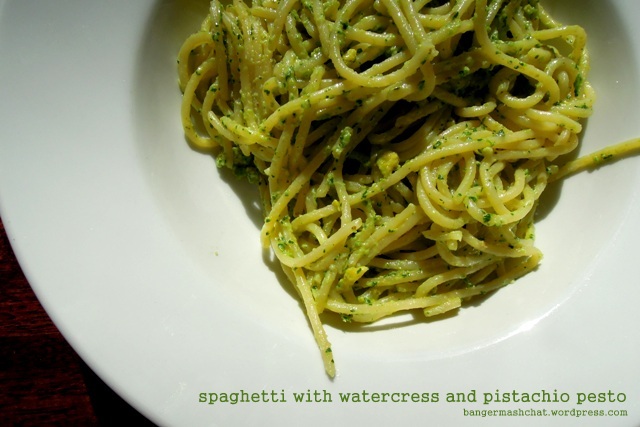
spaghetti with watercress and pistachio pesto

I was recently given a new hand mixer and so, naturally, the first thing I had to try it out on was homemade pesto.

Normally I’m a bit of a purist when it comes to pesto. I could eat basil and pine nut pesto every day and never tire of it. It brings back very fond memories of inter-railing around Europe with my best friend after our A-levels. The only food we could really cook in our basic hostel kitchens was pasta and pesto from a jar. Washed down with a cheap bottle of plonk, we couldn’t have been happier. And then we ate fresh pesto in Italy and we were happier still.

But as my husband isn’t much of  a pesto fan, I have started to experiment with different variations. Wild garlic pesto was a big hit last year and I look forward to picking some again from the local hedgerows when spring finally decides to turn up here in Somerset.

One of my favourite food bloggers is Louisa at Chez Foti who happens to be a bit of a pesto aficionado. I love the look of her stilton, walnut and parsley pesto and will be trying it soon. In this same blog post Louisa helpfully listed a whole menu of ideas for anyone wanting to dabble in a little pesto experimentation.

One of her suggestions was watercress, which is a particular favourite ingredient of mine. And so I came up with this recipe for watercress and pistachio pesto. I thought it might be a little peppery for the children but that wasn’t an issue at all. They wolfed it down and came back for more. A definite success. Bear in mind that if you do add the Ricotta at the end, you’ll need to use the pesto within a couple of days. If you leave it out, the pesto will keep in a glass jar in the fridge for a couple of weeks.

making watercress pistachio pesto

Watercress and pistachio pesto

Serves 6 to 8

80g watercress
1tsp rock salt
3 cloves of garlic, peeled
60g Parmesan, grated
60g shelled pistachio nuts
150 ml olive oil – the best quality you can afford
2 tbsp Ricotta cheese

In a blender, process the watercress, salt, and garlic until well chopped. Add the Parmesan, pistachio nuts and olive oil and blend until fairly smooth and creamy.

Scrape into a bowl and fold in the Ricotta cheese. Serve with pasta of your choice. Personally I always go for spaghetti with pesto.

spaghetti with watercress and pistachio pesto

If you have featured a pesto recipe on your blog, please feel free to include a URL in the comments below and I’ll be more than happy to  link up to it!

I am entering this recipe in the #TuscanyNowCookOff. It might not be the most authentically Italian pesto, but it might possibly get through on creativity!

Lemon meringue pie

lemon meringue pie

I’ve been meaning to try making a lemon meringue pie for ages now. I thought they were fussy, complicated puddings to make, but I finally got around to it last weekend and it turned out to be so much easier than I was expecting.

I used a recipe from master baker Dan Lepard, and it was indeed as simple as he promised. The pastry is perfectly light and crisp, while the meringue is soft, fluffy and marshmallow-like. I made one slight change and that was to add some lime juice to the proceedings. I like a lot of contrast in my lemon meringue pie. The meringue has to be verging on sickeningly sweet and so that must be counteracted with a really tangy sharp citrus. I like super tangy. Lime as well as lemon is perfect for that.

The pie went down well with the whole family, particularly Jessie who isn’t generally much of a pudding girl. She came back for seconds. And I enjoyed the leftovers for breakfast on Easter Monday – ever so decadent.

NB instructions for Aga cooks are at the end of the recipe.

lemon meringue pie

Lemon meringue pie

For the pastry

125g plain flour
½ tsp salt
25g icing sugar
75g butter
1 egg yolk
2 tsp cold water

For the lemon filling

100ml lemon juice
100ml lime juice
50ml orange juice
150g caster sugar
25g cornflour
3 egg yolks
25g butter

For the meringue

4 egg whites
125g caster sugar

To make the pastry, put the flour, salt and sugar in a bowl. Chop the butter into small pieces and rub into the flour. Mix in the egg yolk and water to form a soft paste. Wrap in clingfilm and chill in the fridge for half an hour.

Dan Lepard says to take a 20cm round deep tart case with a removable base but I used a cake tin. Grease your tart case or cake tin. Roll out the dough fairly thinly and line the tin’s base and sides. Press gently into the sides, trim the edges and then chill for another half an hour.

Preheat the oven to 170C or Gas Mark 3.

Line the pastry case with greaseproof paper and weigh down with baking beans. Bake the pastry case for 20 to 25 minutes. Then remove the paper and bake for another 5 to 10 minutes until the pastry is dry and golden. Leave to cool.

To make the filling, place the lemon, lime and orange juices in a saucepan with the sugar, cornflour and egg yolks and whisk until smooth. Place over a low heat and add the butter. Keep stirring while it comes to the boil. Pour the filling into the tart case, leaving a slight gap at the top. Leave to cool completely.

For the meringue, beat the egg whites in large bowl with an electric mixer until soft peaks form. Gradually add the sugar, a tablespoonful at a time, beating in well before the next lot of sugar goes in. You should end up with a thick and glossy  meringue.

Spoon the meringue on top of the lemon tart. With the oven still set to 170C or Gas Mark 3, bake for roughly 25 minutes until golden and the meringue has set but is still soft. Leave to cool before serving.

Aga instructions

If you’re using a two-door Aga like me, bake the pastry case on the floor of the roasting oven for 10 to 15 minutes, before removing the beads and baking for a further 5 minutes or so until the pastry is golden.

To cook the full pie, start it off in the middle of the roasting oven for about four minutes until the meringue turns a light brown. Then carefully move down to the top of the simmering oven for another 20 minutes until the meringue is set.

lemon meringue pie

If you liked this, you might also like to try:

Strawberry, rhubarb and lemon tart
Blackberry and cardamom pavlova
Peach pie
Peach pie

Egyptian dukkah spice mix

Dukkah with bread oil and vinegar

I discovered the delights of dukkah not so long ago at a great little pop-up restaurant in Frome called The High Pavement Evening Cafe, which I was rather excited to see will re-open later this year. Also written duqqa or dukka, this spicy Egyptian side dish consists of nuts, seeds, herbs and spices, toasted and then crushed up together to create something so simple and yet so incredibly delicious. I’m amazed I haven’t come across it before.

It was served to us at the start of our meal at The High Pavement as an accompaniment to bread alongside oil and vinegar. I was instantly hooked. When I tried making it myself at the weekend, I served it the same way. Homemade bread dipped in oil, then vinegar and then dukkah is just so, so good.

bread with dukkah

Admittedly I made it a little too spicy for the children and they weren’t impressed at all. Next time I’ll go a little easier on the paprika and perhaps they’ll get into it too. It is perfect finger food after all. But my husband and I got well and truly stuck in.

I found a hundred and one different ways to make dukkah on the internet; it seems to be the kind of dish you can play around with – lots. According to Wikipedia it’s typically made with hazelnuts but I didn’t happen to have any of those, so I went with almonds and walnuts. But you could use pistachio or just about any other type of nut you fancy really.

dukkah

Similarly there are a hundred and one different ways to use dukkah. Sprinkle it onto salads and soups, over hummus and soured cream, use it as a crust for fish or a rub for meat, or as a topping for flat breads. I took some to work in my packed lunch the other day, bringing to life an otherwise boring cheese roll. It is very versatile.

Dukkah

40g chopped almonds
40g walnut pieces
2 tbsp sunflower seeds
1 tsp fennel seeds
1 tbsp cumin seeds
1 tbsp white mustard seeds
3 tbsp coriander seeds
1½ tbsp sesame seeds
1 tsp caraway seeds
½ tsp sea salt
1 tsp paprika (you may wish to adjust if serving to children)

Dry fry the almonds, walnuts and sunflower seeds in a hot frying pan until they just begin to turn a darker, golden colour. Remove from the heat and allow to cool.

In the same pan, toast the fennel seeds for half a minute, then add the cumin seeds and toast for a further 30 seconds. Pour these into a bowl, separate from the nuts and sunflower seeds.

Next add the mustard and coriander seeds to the pan and toast for a minute or so, before tipping into another bowl.

Reduce the heat a little and toast the sesame and caraway seeds until the sesame starts to change colour. Place in yet another bowl.

Crush the fennel and cumin seeds in a pestle and mortar, before placing in an electric grinder along with the almonds, walnuts and sunflower seeds. Give them a quick whizz until you achieve a rough crumb texture and then pour into a bowl.

Lightly crush the mustard and coriander seeds in the pestle and mortar and add these to the dukkah bowl, followed by the sesame and caraway. Season with the salt and paprika (go easy if you have kids) and mix well.

There it is – you’re done. So, how will you eat yours?

I served mine in my gorgeous Brabantia dip servers, part of the fantastic prize I won last year at the MAD Blog Awards.

dukkah

If you liked this, you might also like…

Haricot bean and garlic dip
dips
Spicy Indian-style dips
Middle Eastern chicken salad with hummus dressing

April’s Recipes for Life challenge: get cooking with pork, sweetcorn and tomatoes

Take part in the Recipes for Life food bloggers challenge and you could see your dish featured in a new charity cookbook!

We’re already into month three of the Recipes for Life challenge and I’m rather excited about the three ingredients we’ve been set for April by the SWALLOW cookery club. They are: pork, sweetcorn and tomatoes.

Like last month, they might not at first appear the most obvious of culinary combinations. But give it a few moments’ thought and I’d be surprised if a whole host of tasty meal ideas don’t start whirring around your brain!

The rules of the challenge are the same as before; simply come up with a wholesome, delicious and easy-to-cook recipe featuring this month’s three key ingredients, and which members of the cookery club at SWALLOW can cook themselves.

Through its Fit for Life programme, SWALLOW runs cookery courses for adults with learning disabilities, giving them the skills and confidence to prepare simple, inexpensive and nutritious meals. They are looking for new recipes to cook on the course, and ultimately to include in their new cookbook.

So what meal could you rustle up with pork, sweetcorn and tomatoes? You can use any pork-based product you fancy – a whole joint or chops, bacon or ham, sausages or mince. The sweetcorn can be fresh, on the cob, tinned or frozen. And the tomatoes can again be fresh, tinned or perhaps sun-dried – you might even get away with a puree or passata. So you see, it’s really a rather versatile shopping list this month.

Recipes for Life: how to enter

  1. Display the Recipes for Life badge (shown above and below) on your recipe post, and link back to this challenge post.
  2. You may enter as many recipe links as you like, so long as they are based on the three main ingredients selected for this month and accompanied only by basic store cupboard items.
  3. Send your recipe URL to me at vanesther-at-reescommunications-dot-co-dot-uk, including your own email address and the title of your recipe or post. The closing date this month is Tuesday 23 April 2013.
  4. If you tweet your post, please mention #RecipesforLife, @BangerMashChat and @SWALLOWcharity in your tweet and we will retweet everyone we see.
  5. Feel free to republish old recipe posts, but please add the information about this challenge and the Recipes for Life badge.
  6. As entries come in, links to these will be added to this page and at the end of the month there will be a round-up of all entries received.
  7. SWALLOW staff and members will choose their favourite recipe at the end of each month, and the winner will receive a small prize.
  8. A selection of recipes entered each month will be featured in the SWALLOW cookbook to be published later this year, helping the charity to raise much needed funds for its ongoing work.

Pork chops are a firm favourite in our house – they’re almost as popular as sausages. When I was told the trio of ingredients for April, I knew I’d have to get in there first with some chops. So here’s my entry to get things started…

Buy your pork chops from the butcher and ask for them to be cut nice and thick – they stay much more moist and succulent that way.

I like to roast my corn on the cobs in the oven in a little butter with whatever herbs I have available; the end result is so much sweeter and tastier than if you simply boil them.

corn on the cob

The spicy tomato relish includes some optional extras such as olives and capers but don’t worry if you don’t have these or you don’t like them – the relish tastes just as good without. And some simple mashed potato on the side is perfect for soaking up all those delicious buttery, meaty juices.

Rosemary and garlic pork chops with roasted corn on the cob and spicy tomato relish

Serves 4

4 thick pork chops
3 sprigs rosemary
6 cloves of garlic, crushed
4 tbsp olive oil
1 lemon
salt and pepper

4 corn on the cobs
50g butter
fresh or dried herbs (I used fresh thyme and sage)
salt and pepper

For the tomato relish

1 tbsp olive oil
Half an onion, chopped
1 tsp paprika
1 400g tin chopped tomatoes
2 tbsp red wine or cider vinegar
2 tsp sugar
salt and pepper
30g capers (optional)
30g black olives, roughly chopped (optional)
Handful fresh coriander, roughly chopped (optional)

Start by preparing the marinade for the pork.

Place the pork chops in a large dish. Pull the rosemary leaves off the woody stems, roughly chop and give them a good pounding with a pestle and mortar. Put the rosemary in a bowl with the crushed garlic and olive oil. Chop the lemon in half and squeeze the juice into the bowl. Chop up the lemon skin, give it a good bash with the pestle and mortar and add to the bowl with a little salt and pepper. Mix it all together before pouring onto the meat.

Get your hands in and rub the marinade all over the chops so they are well smothered. Cover and leave for a couple of hours.

Prepare the corn on the cob by firstly placing them on large sheets of foil. Generously smear each cob with butter, season and sprinkle over your chosen herbs. Wrap the corns in the foil, leaving a little room for the steam.

Preheat the oven to 200°C/gas mark 6.

When the pork is marinated, place on a wire rack over a roasting tray and bake in the oven for 20 to 25 minutes, depending on how big your chops are. Turn halfway through the cooking time. The chops are cooked when there is no sign of pink inside and are nicely browned on the outside.

Roast the corn in the oven at the same time, placing them directly on the oven shelf. They should take around 20 minutes. Test the corn with a sharp knife and remove from the oven when they are just tender. Leave wrapped in foil until you’re ready to serve.

While the chops and corn are cooking, make the tomato relish. Heat the oil in a frying pan and gently soften the onion until it is golden. Add the paprika and cook for a minute or two before stirring in the chopped tomatoes, vinegar, sugar, salt and pepper. If you are using, also add in the capers and olives. Cook gently for 10 to 15 minutes until the relish has thickened. Mix in the coriander right at the end.

Keep the relish warm until the pork chops and corn are ready and serve on warmed plates, ideally with some mashed potato on the side. That’s what I call proper family grub – it’s definitely finger licking good!

April’s entries

  1. Slow Cooker Sweet & Sour Sausages from The Crazy Kitchen
  2. Sausage Chilli from The Garden Deli
  3. BBQ Pork Ribs with Sweetcorn Salsa from Under the Blue Gum Tree
  4. Slow Cooker Pork Creole from JibberJabberUK
  5. Sausage Pesto Pasta from The Crazy Kitchen
  6. Oven Baked Tortilla from The Crazy Kitchen
  7. Pulled Pork Wrap with  Tomato and Chorizo Salsa and Sweet Sweet Sweetcorn from Spurs Cook
  8. Pork, Sweetcorn & Tomatoes with Vermicelli Rice Noodles from Fun as a Gran

  9. A Very Retro Sweet and Sour Pork from Chez Foti
  10. Cheat’s Ciabatta Pizza from Bangers & Mash
  11. Sausage Chilli (Again) from the Garden Deli and Bangers & Mash
  12. Red Rice Accompanied by Pork, Sweetcorn and Tomato from Fun as a Gran

Round Up: March’s Recipes for Life Challenge

Beetroot, carrots and cheese. Those were the three ingredients selected by the cookery club at SWALLOW for this month’s Recipes for Life challenge. And they did indeed present quite a challenge.

But I should have known I could rely on you food bloggers to deliver the goods. We received a surprisingly diverse range of recipes this month, showing just how versatile these humble ingredients can be…

Sarah from The Garden Deli got the ball rolling with this sumptuous Carrot and Beetroot Soup with Cheesy Croutons. Featuring garlic and cumin, this beautiful soup is a proper winter warmer and I love the croutons for dunking topped with one of my favourite cheeses, Wensleydale.

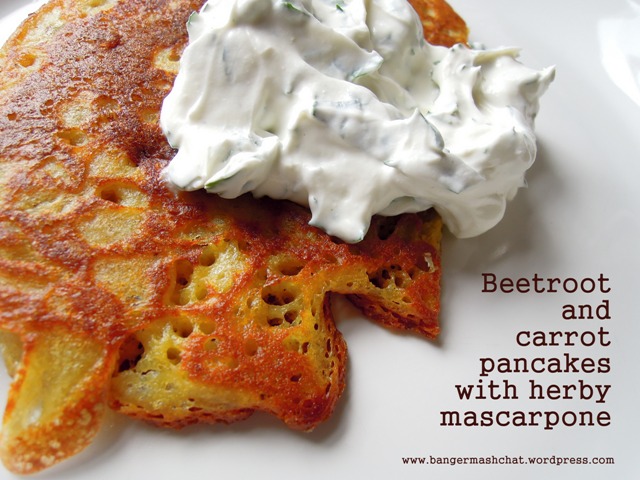
I experimented with some Beetroot and Carrot Pancakes for my first entry and, while they tasted pretty good – particularly with the herby mascarpone on the side – I was a bit disappointed the pancakes didn’t turn out pink like the batter!

Last month’s challenge winner, Chez Foti came up with this fantastic Roasted Roots and an Easy Roasted Roots Pizza. Louisa’s dish brings together sensational seasonal roasted root vegetables on top of a quick and easy wholemeal scone pizza base, not forgetting lots of lovely mozzarella. Yum!

Helen from The Crazy Kitchen really did go crazy with not one, not two, but three entries for Recipes for Life. Anyone who was stumped by the three set ingredients this month – look and learn! First up were these incredible Baked Cheesy Meatballs with Beetroot Sauce. Now don’t they look good? And a crafty way to sneak vegetables into unsuspecting children…

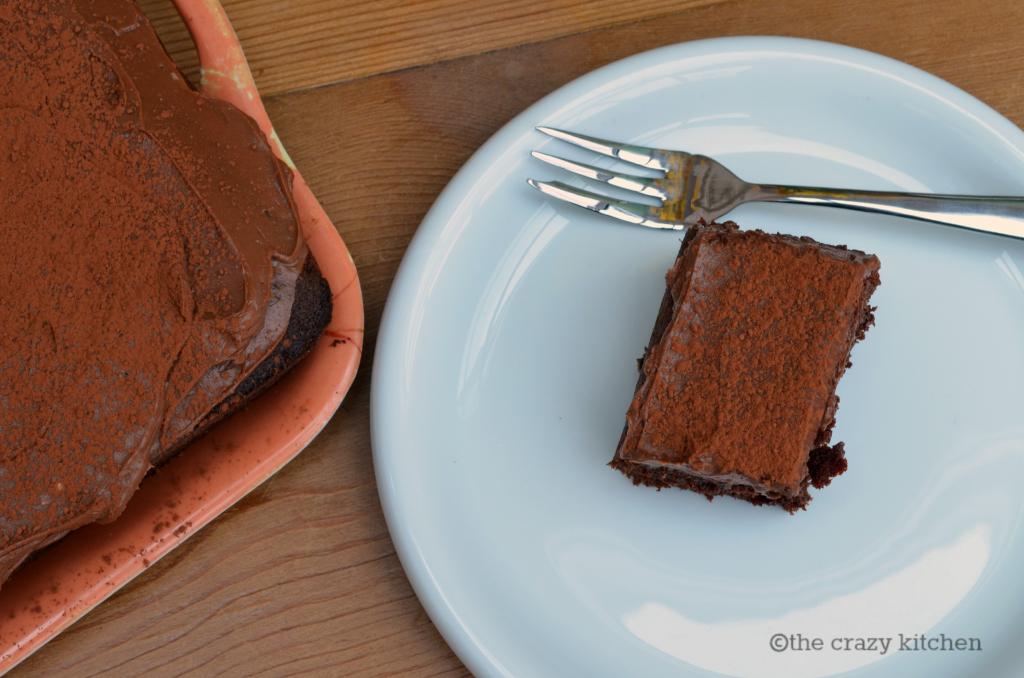
Another fiendishly clever way of disguising veggies comes in this gorgeous Two-of-your-five-a-day Chocolate Cake – the second entry from Helen at The Crazy Kitchen. “It’s sooooo good!” was the verdict of Helen’s 10-year-old, beetroot-hating daughter! Say no more!


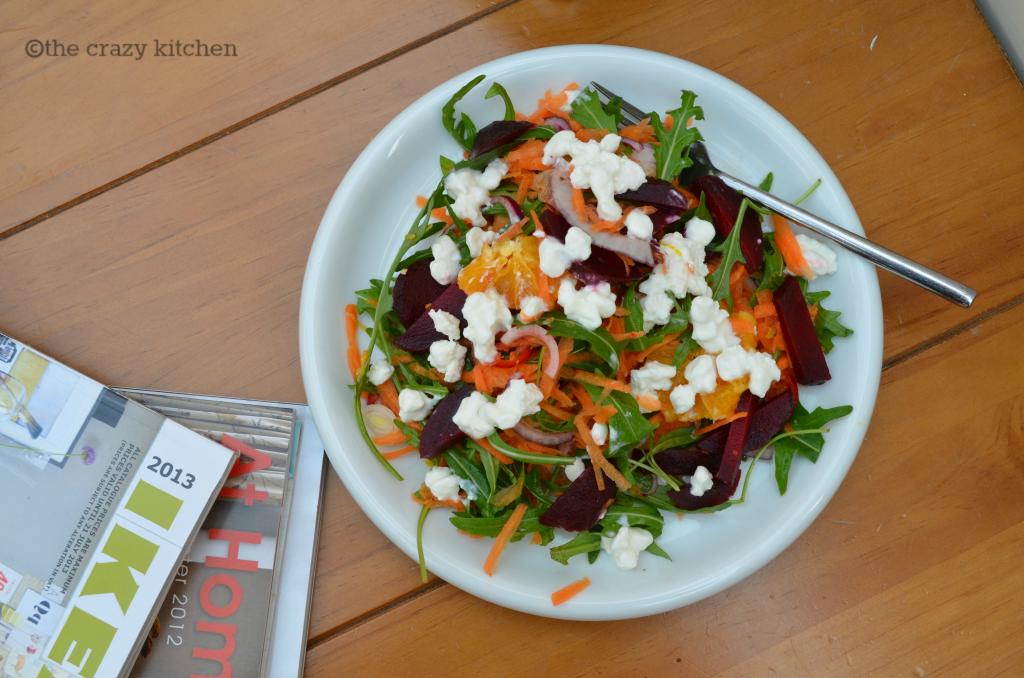
There’s been a lot of talk on Twitter and food blogs recently about the 5:2 diet. So much so, my husband and I are both giving it a go. This Beetroot, Carrot and Cottage Cheese Salad, the final entry from The Crazy Kitchen’s Helen would definitely make a delicious lunch for a 5:2 fasting day and I plan to give it a try very soon.

I love the look of this Roasted Vegetable and Goat’s Cheese Risotto from Under The Blue Gum Tree. It sounds so simple to make but you just know it’s going to be absolutely packed full of flavour, with the gorgeous creaminess of the goat’s cheese a perfect partner for the earthiness of the root vegetables.

I wish I could bring you pictures of this Beetroot, Carrot and Goat’s Cheese Tatin from Martin at The Tempest Arms as it sounds simply divine and should look stunning. But I promise to make it very, very soon and I will post photos when I do.

Meeting the lovely Choclette from Chocolate Log Blog was one of my highlights from the Bristol Blog Summit earlier this month, which also gave me the perfect opportunity to persuade her to enter Recipes for Life. She promised she’d try, and I was very pleased to see she was true to her word with these ingenious Beetroot, Carrot and Goat’s Cheese Muffins. As with all Choclette’s recipes, there’s some chocolate in there, as well as a little kick from a touch of cayenne pepper. I look forward to trying them out.

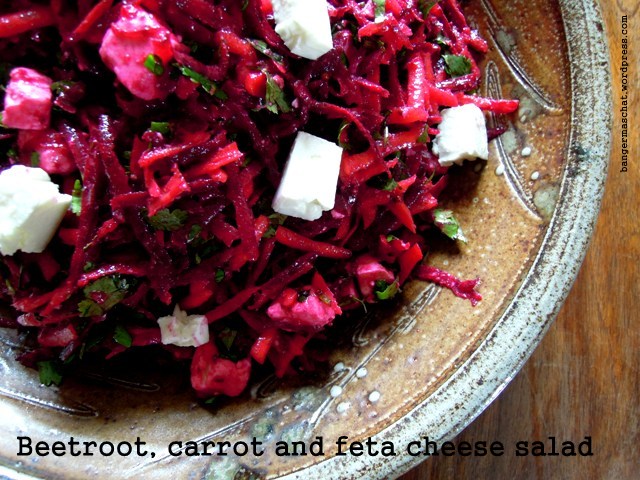
This is a dish we eat quite a lot in our house, so I just had to enter it – my Beetroot, Carrot and Feta Cheese Salad. It’s ever so simple and ever so tasty, and a great way to create a summery-feeling salad with winter vegetables.

The final entry came in at the very last minute but I was so glad to see it – a Carrot and Beetroot Cake with a Cream Cheese Topping from Lucy at The Bell Inn. Again I sadly don’t have photos of this one but when you read the recipe you just know it’s going to taste good and I absolutely adore beetroot and carrot in cakes. Another one to try very soon.

But of course, what you’re waiting to hear is who did the SWALLOW cookery club choose as this month’s winner? Well, Lucy at The Bell Inn came a very close second with her Carrot and Beetroot Cake but first place goes to… Helen from the Crazy Kitchen for her scrumptious Baked Cheesy Meatballs with Beetroot Sauce. The group said they particularly liked the sound of the oozy cheese in the middle of the meatballs. Me too!

So a huge congratulations to Helen for her well deserved win – a small prize will be arriving in the mail very soon. Thank you so much to everyone who entered their wonderful recipes this month, and watch this space for the next set of three ingredients for April’s Recipes for Life challenge.

Beetroot, carrot and feta cheese salad

Today is the last day to enter the March Recipes for Life challenge. So if you’re sitting on a delicious dish featuring beetroot, carrot and cheese – well, I hope not literally as that could get a little messy – then today is the day to let me know about it! Details of how to enter this month’s challenge are here.

For my last-minute entry, I bring you a fresh and zingy salad – one that we eat regularly in the Bangers & Mash house, or variations of it at least. It’s a surprisingly summery salad considering its winter root vegetable ingredients. This version uses of course beetroot and carrot, but you could also try it with turnip, swede, celeriac or any kind of red or green cabbage. It’s based on an Ottolenghi recipe and I love it for its versatility and its slightly sweet and sour dressing which is just mouth-wateringly tasty.

As I made it at the weekend for Recipes for Life, I tried it with some feta cheese this time. It worked extremely well – the soft tanginess of the feta is a perfect contrast to the earthiness of the beetroot and parsley. You can use whichever herbs take your fancy. The original recipe used parsley and dill but I went with parsley and coriander, simply because those are what I had in the fridge. It also features capers but you could leave these out if you don’t have or like them, or perhaps use olives or chopped gherkins instead. I left out the dried sour cherries from Ottolenghi’s version; sometimes I’ll use another dried fruit instead or chopped apple. But not this time, as I thought there was probably enough going on. Go experiment!

By the way, I use organic vegetables so I don’t bother to peel them for salads like these. But if you’re not sure what your veggies have been grown in, it might be best to peel them first.

Beetroot, carrot and feta cheese salad

Serves 4 to 6

3-4 medium beetroots, scrubbed and grated
3 large carrots, scrubbed and grated
large handful of fresh coriander, roughly chopped
large handful of fresh parsley, roughly chopped
200g feta cheese, cut into small cubes
30g capers
2 tbsp lemon juice
1 tsp cider vinegar
2 tbsp sunflower oil
2 tbsp olive oil
2 tsp wholegrain mustard
1 tsp sugar
1 clove garlic, crushed
salt and pepper to taste

This is so simple. Place the grated beetroot and carrot in a large mixing bowl with all the other ingredients (keep back a few pieces of cheese to place on top at the end) and mix together well using your hands. Ottolenghi describes it as ‘massaging’ the ingredients, so that the vegetables get the chance to absorb all the delicious flavours.

Leave the salad in the fridge for at least an hour before serving, when you can throw in the last few pieces of brilliantly white feta, which I think look fabulous alongside the pink pieces.

This salad will keep in the fridge for a couple of days. I think it tastes even better the next day. I like to eat mine in a tortilla wrap with hummus and cold meats. How will you eat yours?

Bye bye baby: a birthday party and chocolate cake for my five-year-old

My youngest turned five today. While of course I’m brimming with maternal joy and have loved sharing every moment of her anticipation in the run up and bubbling over of excitement on the day, my emotions are also tinged with a touch of sadness. It feels like my little baby is growing up too fast. When she was four I could just about get away with thinking of her as big toddler. But now she’s five, she’s a proper little girl. Bye bye baby.

We celebrated Mia’s birthday on Saturday with a party. It was a small do at the house with a handful of school friends from her reception class; quite an old-fashioned party really, without any party entertainers, bouncy castles or spectacular cake sculptures.

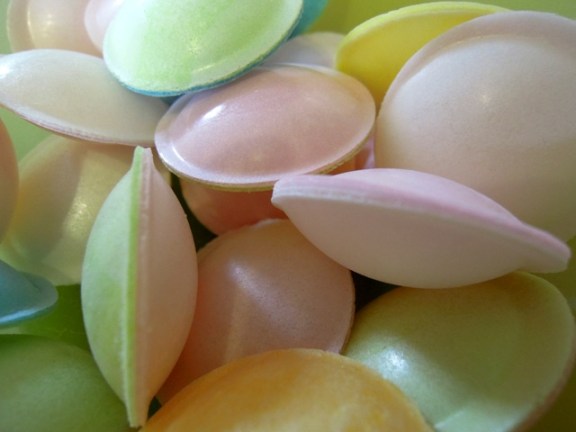
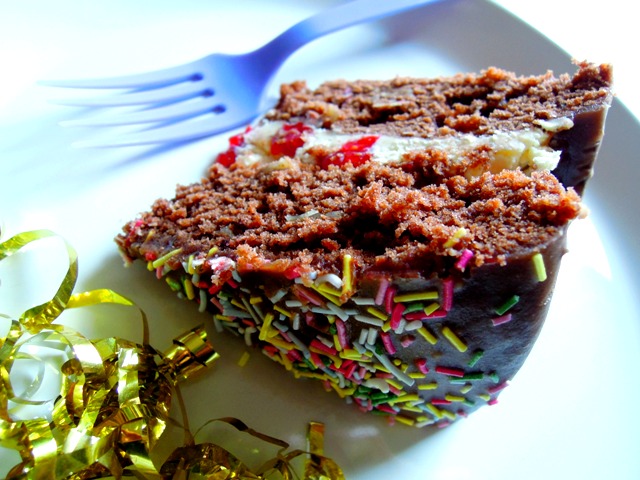
The highlights of our party were simple delights: playing with balloons, a messy chocolate cake covered in hundreds and thousands, fizzy flying saucers, old school games like pass-the-parcel and musical bumps, getting gluey making Easter bonnets, telling fart and poo and bottom jokes while gobbling chipolatas and party rings, and playing a new game we invented called pin-the-nose-on-the-Mia. Turning five is lots of fun!

The chocolate birthday cake is very easy to make, especially if, like me, you’re not a natural-born baker. It’s the kind of cake that actually looks better if it’s not too perfect. Fill it with whipped cream and your child’s favourite soft fruit – we went with raspberries. Pour over the icing and cover liberally with sprinkles, Buttons, Smarties or whatever your little one’s favourite happens to be – this also happens to be the perfect way to disguise any imperfections.

The end result is a celebration cake fit for a five-year-old.  It’s a tried-and-tested party cake recipe from one of Jamie Oliver’s early cookbooks, The Return of the Naked Chef. I first made it when my oldest daughter turned one, and have been baking it ever since.

Chocolate birthday cake

3 tbsp cocoa powder
200g caster sugar
200g soft butter
3 eggs
200g self-raising flour, sifted
1 tsp baking powder
2 tbsp flaked almonds
200ml double cream
1 tbsp icing sugar
2 large handfuls raspberries (or any soft fruit of your choice)

For the chocolate icing

100g butter
100g cooking chocolate
100g icing sugar
3 tbsp milk

Decorations – hundreds and thousands, Smarties, Buttons or the like

Preheat the oven to 180°C/gas mark 4. Grease and line the base of two 20cm cake tins with baking parchment.

In a cup mix the cocoa with 4 tablespoons of boiling water until smooth.

In a large bowl, beat the sugar and butter until light and fluffy. Add the cocoa mixture, eggs, flour and baking powder and mix well. Fold in the almonds.

Split the mixture between the two cake tins and bake for 20 to 25 minutes in the oven. The cakes are ready when an inserted skewer comes out clean. Allow to cool before removing the cakes from the tins.

To make the chocolate icing, place the butter, chocolate, icing sugar and milk into a bowl and place over gently simmering water in a pan. Stir until it’s all melted and blended together. Allow to cool a little.

Whip the double cream until it forms soft peaks and sweeten with icing sugar.

Remove the baking parchment from both cakes. Place one a wire rack, over kitchen towel or newspaper, and spread the whipped cream over the top, almost to the edge. Scatter the raspberries on top.

Place the second sponge on top and press down. Drizzle the chocolate icing over the top – you’ll be glad of the kitchen towel or newspaper at this point as the chocolate drips and gloops everywhere. Decorate with your chosen treats. Leave the icing to set before adding the candles and serving to your young birthday girl or boy and their party guests.