Ham hock terrine

This article first appeared in the Wells Journal on Thursday 23 January 2014.

ham hock terrine

One day I would like to own my own pig; one day when I’m all grown up and have a vast enough garden, so I can fence off an entire section for the pig to churn up. Oh, and a house big enough to accommodate a huge chest freezer too.

I like the idea of keeping a pig for home-reared pork and bacon. I’d love to learn about butchery and making my own ham and sausages, as well as having a go at things like chorizo or salami.

It’s a bit of a romantic ‘good life’ idea, I know, but the pig is an incredible beast when it comes to providing meat. I don’t think there’s any part of the animal you can’t eat; nothing gets thrown away. How’s that for good value?

Of course, nose-to-tail eating is rather trendy these days, but it’s a good trend. As Fergus Henderson, author of ‘The Whole Beast’ says,

“If you’re going to kill the animal, it seems only polite to use the whole thing.”

For now I must rely on my local butcher as my source of free range pork, and I enjoy exploring and cooking with different parts of the animal. I have yet to try the trotter but I am extremely partial to pig cheek, which is cheap as chips.

The first time I asked my butcher for cheek, a few years back, I came home with a couple of sections of pig head, complete with parts of an ear and snout. Thank goodness I’m not a particularly sensitive type, as it took quite a lot of hacking to extract the cheek. I’ve now learned to ask the butcher to trim it down for me.

Ham hock or knuckle is another cheap cut. It has a wonderful flavour and a little goes a long way. Plus when the hock is cooked, you’re left with a delicious stock which makes the perfect base for a soup.

Ham hock terrine is one of our favourite dishes. Whenever we have family gatherings where we are asked to contribute one of the courses, this terrine is what we normally turn up with. It’s a lovely starter served with homemade piccalilli (I followed Mark Hix’s simple recipe, which is very good) and a few leaves, or try it with crusty bread for a delicious light lunch.
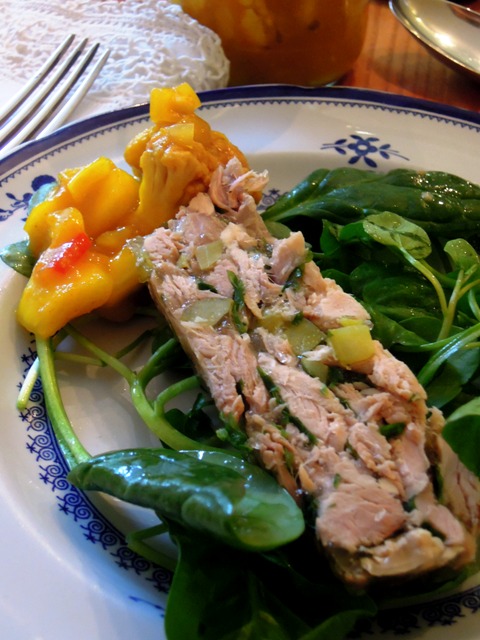
ham hock terrine

Ham hock terrine

Serves 10

2 ham hocks, about 1kg each
2 carrots, halved
2 celery sticks
1 onion, peeled and halved
handful peppercorns
2 large handfuls fresh parsley, roughly chopped
170g jar cornichons (baby gherkins), roughly chopped
2 gelatine leaves

Place the ham hock into a large pan, with the carrots, celery, onion and peppercorns. Cover with cold water and bring to the boil. Cover, reduce the heat, and simmer for 3 hours until tender. Take the ham out of the pan and set aside. Leave the stock to cool.

Wet the inside of a 900g loaf tin and carefully line with three layers of cling film. Make sure you leave excess cling film overhanging.

When the ham is cold, pull the meat off the bone and tear into strips into a large bowl. Discard the fat. Add the parsley and cornichons to the ham and combine. Spoon the mixture into the lined tin.

Soak the gelatine in a bowl of cold water for 5 minutes. Pour 300ml of the stock into a saucepan, warm through and remove from the heat. Remove the gelatine from the water, squeeze out the water and place in the cooking stock. Gently stir until melted and leave to cool.

Carefully pour the gelatine and stock into the tin. Wrap the overhanging cling film over to seal the terrine.

Cut some card large to just cover the terrine and wrap in foil. Place on top of the sealed terrine, and wrap the whole thing in more cling film. Set overnight in the fridge.

Use a sharp knife to cut the terrine into thick slices and serve with a simple rocket and spinach salad and a generous dollop of piccalilli.

Lemon roast chicken for Sunday supper and Monday lunch

lemon roast chicken beetroot carrot sweet potato

Before I had a family and had slightly more disposable income, I rarely took a homemade lunch into work. I’d usually pop out to the local sandwich shop, or on a Friday I might join colleagues for a pub lunch and a shandy. Those were the days!

Keeping a lid on our food budget means preparing a packed lunch most days, for me and my husband and the girls. And very often that means making the most of the leftovers from the night before. But lunchbox leftovers don’t need to be dull, and they don’t need to be a case of simply reheating last night’s dinner.

leftover lunchesI’ve teamed up with Most Wanted, the lifestyle magazine from money-saving site VoucherCodes.co.uk to devise a recipe that demonstrates how you can spend just a tenner on a delicious family meal for four that can then be magically transformed into a deliciously different lunch the following day.

The good folk at Most Wanted are keen to help people make the most of their money without compromising on life’s little luxuries. While a trip to the local deli might be a nice treat, regularly spending £5 on a salad or panini can’t be cost-effective. So they’re on the search for tasty recipes that create an abundance of leftovers you can eat for lunch without it costing a fortune.

I love a roast on a Sunday and, what’s more, they are ideal for leaving you with heaps of delicious leftovers for versatile weekday lunches, from soups and curries to sandwiches, wraps and salads. Personally I like to play with my leftovers a little, so I don’t find myself growing bored eating the same dish again and again.

This lemon roast chicken with beetroot, carrot and sweet potato is a colourful and cheery take on a roast dinner, making the most of those seasonal root vegetables. The veggies are roasted along with the chicken for an incredibly easy meal, full of rich, sweet, caramelised flavours.

lemon roast chicken carrot beetroot sweet potato

To give the chicken its incredibly fresh, vibrant flavour, I roast it with half a lemon stuffed inside, and then when the cooked chicken is resting, I squeeze the juice of the other half all over the skin. It’s so simple but it tastes glorious.

lemon roast chicken

Then to turn the roast into a different dish for Monday lunch, I’ve used the leftover meat and vegetables in a tasty bulgur wheat salad with fresh mint and coriander and lots of nutty, juicy pomegranate seeds. The colours are fantastic and I love the way the beetroot juices soak into the bulgur wheat turning it pink.

lemon roast chicken beetroot carrot sweet potato

What’s more, you should also have enough chicken left over to cook up a soup for Tuesday lunch, making a stock from the chicken bones.

And all this for under £10. Pretty good, eh?

lemon roast chicken carrot beetroot sweet potato

Lemon roast chicken with beetroot, carrots and sweet potato

Serves 4 with leftovers

1 medium chicken (around 1.5kg)
1 lemon
salt and pepper
25g soft butter
400g raw beetroots
450g carrots
350g sweet potatoes
olive oil
mixed salad leaves

Preheat the oven to 220°C / gas mark 7.

Sit the chicken in a roasting tin. Cut the lemon in half, and then one of the halves into quarters. Place the lemon quarters inside the chicken cavity and sprinkle some salt in there too.

Rub the butter over the skin and sprinkle with some more salt. Put the chicken in the oven and roast for around 1 hour and 20 minutes, or until the juices run clear when you poke a sharp knife into the thickest part of a leg. If the skin is browning too quickly, cover with a sheet of kitchen foil.

Peel the beetroot, carrot and sweet potato. Cut the beetroot and sweet potato into wedges, and slice the carrot into similar sized chunks.

Place the beetroot onto a sheet of foil and drizzle over a little olive oil and a grind of salt and pepper. Wrap loosely and place in another roasting tin.

Place the carrot and sweet potato at the other end of the tin, and similarly drizzle with oil and a little salt and pepper. Mix it up with your hands to make sure the vegetables are well coated.

Put the vegetables in the oven once the chicken has had around 50 minutes of its cooking time. Roast the vegetables for around 40 minutes, until they are tender and beginning to brown.

When the chicken is out of the oven, sprinkle with a little more salt and squeeze the juice from the other half of lemon all over the crispy skin. Leave to rest for 10 minutes before carving.

Serve the roast chicken and vegetables with a simple leaf salad. There’s no need for any dressing; simply pour over the lemony roast chicken juices. Don’t be greedy now – make sure you leave enough chicken and veggies for tomorrow’s lunch.

So now for those leftovers…

lemon chicken bulgar wheat roast vegetables

Lemon chicken and bulgur wheat salad with roast vegetables and pomegranate seeds

Serves 4

125g bulgur wheat
leftover roast vegetables – beetroot, sweet potato and carrot
handful each of fresh coriander and mint, roughly chopped
seeds from half a pomegranate
juice of half a lemon
olive oil
salt and pepper
leftover cold roast chicken

Rinse the bulgur wheat and place in a large bowl. Cover with boiling water to at least double the height of the bulgur wheat, and leave for 15 minutes. Drain the bulgur wheat and leave to cool.

To assemble the salad, simply place the bulgur wheat in a large bowl with the vegetables, fresh herbs and pomegranate seeds.

Squeeze over the lemon juice and drizzle with a little olive oil. Season to taste.

Mix it all together gently. Taste and adjust the seasoning if required.

If you’re serving this straightaway, lay pieces of shredded chicken on top of the salad and bring to the table.

If you’re taking the salad to school or work for lunch, I share the salad between the plastic boxes and then place the torn pieces of chicken on top before popping the lid on.

For some reason, I prefer to keep the chicken separate to the rest of the salad, but feel free to mix it all up together if you like.

So there you have my two ways with a roast chicken.

How do you use your Sunday roast leftovers?

Disclosure: This post is sponsored by VoucherCodes. I received a fee to buy the ingredients and develop the recipes. 

no food waste challenge


As these recipes are a brilliant way to ensure you reduce your food waste, I’m entering them into this month’s No Waste Food Challenge hosted by London Unattached and Elizabeth’s Kitchen Diary.

Spicy sausage pasta

spicy sausage pasta

This is my go-to recipe when we have friends coming over for dinner but I just don’t have time to cook anything too elaborate. It’s such a simple pasta dish – it’s central ingredient is the humble sausage after all – but honestly, it tastes a million dollars and always impresses. It is full of deep, smokey flavours – rosemary, oregano, chilli and paprika – while the cream and Parmesan give it a wonderfully indulgent edge.

With a large glass of Chianti, this is my perfect dinner party dish. Just make sure you buy the best pork sausages your budget can stretch to.

The children love it too, but I generally ease back on the dried chillies when I cook it for them.

spicy sausage pasta

Spicy sausage pasta

Serves 6

1 tbsp olive oil
1 red onion, peeled and chopped
6 good quality pork and herb sausages, meat removed from skins and broken up
1 tbsp fresh rosemary, finely chopped
2 bay leaves
2 dried chillies, crumbled
1 tsp dried oregano
1 tsp smoked paprika
2 garlic cloves, peeled and crushed
2 x 400g tins plum tomatoes
salt and pepper
250g dried fusilli
4 tbsp double cream
100g Parmesan, grated

Heat the olive oil in a large pan and gently fry the onion until soft.

Add the sausage meat, rosemary, bay leaves, chillies, oregano, paprika and garlic, and fry together over a medium heat. Stir well to break up the sausages. Continue to fry for around 5 minutes until the sausage is browned.

Pour in the tinned tomatoes, give it all a good stir and bring to the boil. Simmer gently for 15 minutes, stirring every now and again to help break up the tomatoes.

Meanwhile cook the fusilli according to the packet instructions, and drain thoroughly.

Stir the double cream into the sausage sauce. Pour the pasta into the sauce, along with half the Parmesan, and mix well to make sure all the fusilli is well coated in the sauce.

Serve with the rest of the Parmesan sprinkled on top. And tuck in immediately. Or keep warm until your guests arrive.

spicy sausage pasta

Paprika is one of the key ingredients and so I am entering this spicy sausage pasta into this month’s Spice Trail challenge.

spice trail badge square

Fig and honey smoothie

fig and honey smoothie

Since making the Cheeky Monkey smoothie, we’ve been experimenting with all kinds of fresh juices and smoothies at Chez Bangers. This one is currently one of our favourites.

I wasn’t sure my children would like the idea of a smoothie made from dried figs, so I told them it was a honey smoothie. They gulped it down in seconds and demanded another. They also asked whether there was chocolate in it. I guess that’s partly due to the colour, but the fig does give it a lovely richness which isn’t all that dissimilar to a chocolate smoothie.

So if you’re trying to encourage your children to consume a little extra fruit and fibre, this smoothie could be a good way to go…

fig and honey smoothie

Fig and honey smoothie

Serves 2

50g dried figs, roughly chopped
250ml milk
1 tbsp rolled oats
1 tbsp runny honey

Place the figs in a glass and cover with milk, around 50ml. Leave in the fridge for 2-3 hours, or even better overnight, to allow the figs to become all plump and squidgy.

Simply pour the figs, along with the milk in which they have been soaking, together with the rest of the milk, oats and honey into a liquidiser and blend well until smooth.

fig and honey smoothie

As my fig and honey smoothie is a great way to sneak some extra goodies into your children’s diets (and your own while you’re at it), I’m entering it into January’s Family Foodies challenge, where the theme is Hidden Goodies.

family-foodies

Thumbs up for…

Thumbs Up January Collage

Here’s a round-up of some my favourite new foods and drinks (mainly drinks to be honest) I’ve tried this month…

Mr Trotter’s Proper Potato Crisps

mr trotter crispsWe don’t buy all that many crisps in our house, as I’ve made a conscious effort to cut back in recent years. But on those occasions when I am in the mood for a salty potato snack, I will be reaching for a lovely big bag of Mr Trotter’s Proper Potato Crisps. Thickly cut and incredibly moreish, they are fried with the skin on and taste almost meaty, although they are suitable for vegetarians. I guess that comes from the yeast extract, listed as one of the ingredients in Mr Trotter’s ‘original seasoning’. My children loved them too but I reckon they are too good for little ones, and next time I’ll wait until they’re in bed before opening another packet.

You’ll find Mr Trotter’s range of crisps and pork crackling in Selfridges, Harvey Nichols, Fortnum & Masons, Chatsworth House and a growing number of pubs, farm shops, delis and garden centres. You can also buy them in bulk online.

Korean Ginseng Drink

korean ginseng drinkThis Korean ginseng drink arrived in a recent food box from Kitchen Nomad celebrating Korean cuisine. This was one of my favourite products in the box, along with a jar of delicious Kimchi, a traditional fermented vegetable side dish.

I haven’t actually tried drinking ginseng since I was a child and I recall being rather unimpressed back then. This time I wasn’t sure at first. It smelled a little like boiled parsnip. But when you get past that, it tastes ever so good. Sweet and honey-like, almost like a non-alcoholic mead. What’s more, ginseng is apparently very good for you and a brilliant energiser.

Available from Tradewinds Oriental Shop and all good oriental supermarkets.

Elements for Life Spiced Raw Hot Chocolate

raw hot chocolate spicedThis spiced hot chocolate from Elements for Life is quite simply divine. Featuring cinnamon, nutmeg and vanilla, it gives just the right hit of spices without overpowering the luxuriously creamy chocolate.

I make mine with warm milk but the chaps at Elements for Life recommend using oat milk for the ultimate thick and creamy hot chocolate. And since it contains low GI/GL coconut palm sugar, it is also ideal for diabetics due to the slow release of energy from the sugar, unlike most hot chocolates that contain refined cane sugar.

Admittedly it’s not cheap, coming in at £6.75 for a 175g tins but I reckon it’s worth it for an occasional treat.

Elements for Life products are available from a growing number of health food shops, farmers markets and delis across the country (see the list online) and you can also order direct from their website.

Mere Fish Farm Smoked Trout Terrine

mere fish farm smoked trout terrineThis delicious smoked trout terrine is one of the specialties of Mere Fish Farm in Wiltshire, and I think I might be addicted to it. I bought it last week from their stall at Wells Market and had it with a jacket potato that evening for supper, and I simply couldn’t get enough of it. All the next day I kept eating more of it on hot buttered toast, and my daughter Jessie insisted of having some in a roll for her school packed lunch. Honestly, it’s just too good for words.

The terrine is mixed to Mere Fish Farm’s own special recipe, using trimmings from their cold smoked trout, unsalted butter, low fat natural yogurt, lemon juice, fresh herbs and spices. It tastes rich and indulgent without being at all heavy.

If you are based in the West Country, or visiting this part of the world anytime soon, I thoroughly recommend you try to get hold of some. For details of stockists, visit their website. I’ll be back to their stall next week, I think, to sample more of their products and, of course, to pick up some more of this terrine.

Pixley Berries Cranberry & Apple Cordial

pixley berries apple and cranberry cordialThis gorgeous cranberry and apple cordial from Pixley Berries is as good to drink as it looks. It boasts more than 60% fruit, none of which come from concentrates, and not a single artificial ingredient either. It’s a wonderfully refreshing cordial, soft and sweet yet with a marvellous twang from the cranberry.

My children loved it too, but while they liked drinking theirs with chilled water, their Daddy and I rather liked ours poured over iced vodka once they were safely tucked up in bed.

You can find Pixley Berries range of cordials at Waitrose, Ocado and other independent retailers – full details on their website.

Yumchaa Chilli Chilli Bang Bang

chilli chilli bang bang rooibos teaThis rooibos tea from London-based Yumchaa is the perfect cuppa when you need a bit of a pick-me-up. Caffeine-free, Chilli Chilli Bang Bang not only has a fantastic name but delivers a fantastic punch of flavour from cinnamon, ginger, red thistle, sweet red pepper corns, and chilli flakes. It isn’t a fiery brew but it does deliver packs of taste, yet manages to be a lovely soothing tea at the same time.

You can pick up a bag of this, or any of Yumchaa’s fine teas and tisanes, from one of their London shops or market stalls. Full details on their website.

Disclosure: I was sent complimentary samples of Mr Trotter’s Proper Potato Crisps and Pixley Berries Cranberry and Apple Cordial for review purposes. No money exchanged hands and all opinions expressed are my own.

Jacki’s Hungarian goulash

goulash

We ate this goulash for Sunday lunch the other weekend. It was absolutely delicious but sadly I can’t take credit for the recipe. It was sent to me by my Twitter pal Jacki Harrison-Stanley for entry into The Spice Trail challenge, which this month is celebrating paprika.

As Jacki isn’t a blogger, I happily volunteered to post the recipe for her and just had to try out the recipe on my family. They loved it. And it was very simple to make, which is always a big bonus.

Jacki recommends serving her goulash with rice or a baked potato. We happened to have a whole load of spuds that needed using up, so I opted for mashed potato instead, made with plenty of butter and some of the leftover soured cream.

goulash

Jacki’s Hungarian goulash

Serves 5-6

700g braising steak, trimmed and cut into chunks
1 tbsp olive oil
2 large onions, roughly chopped
1 clove of garlic, crushed
1 rounded tbsp plain flour
1 rounded tbsp paprika
400g tin Italian tomatoes
1 medium green pepper, cut into strips
150ml soured cream
salt and pepper

Heat the oil in an ovenproof casserole dish and brown the steak on a high heat.

Remove the meat. Reduce the heat and cook the onions for 5 minutes. Add the garlic and return the meat to the casserole dish.

Sprinkle in the flour and paprika, and give it a good stir to soak up the juices.

Add the tomatoes and season to taste. Bring slowly up to simmering point and then cover with a tight-fitting lid.

Place the casserole dish in the Aga simmering oven for 2 hours or in a conventional oven at 140°C / gas mark 1.

After 2 hours, add the chopped pepper and then cook for a further 30 minutes.

Just before serving, stir in the soured cream to give your goulash a beautiful marbled, creamy look.

Sprinkle with a little paprika, and serve with rice or a baked potato.

My thanks again to Jacki for another brilliant recipe. 

spice trail badge square

As Jacki’s goulash is flavoured with paprika, it is being entered into this month’s Spice Trail challenge, a monthly event hosted by me!

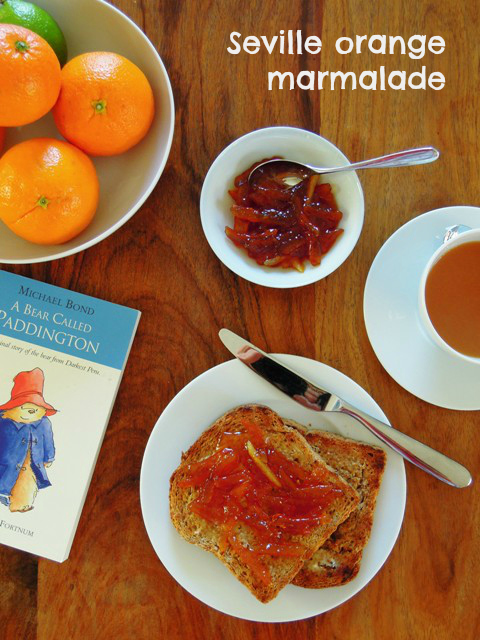
Seville orange marmalade

seville orange marmalade

“But whatever did you do for food?” asked Mr Brown. “You must be starving.”

Bending down, the bear unlocked the suitcase with a small key, which it also had round its neck and brought out an almost empty glass jar. “I ate marmalade,” he said, rather proudly. “Bears like marmalade. And I lived in a lifeboat.”

From A Bear Called Paddington by Michael Bond

Is there anything more British than the Paddington stories? And is there anything more British than marmalade for breakfast?

We are well into Seville orange season and everyone seems to be making marmalade, so I thought it was about time I had a go myself. I’ve made lots of jams and preserves but never for some reason got around to trying my hand at marmalade.

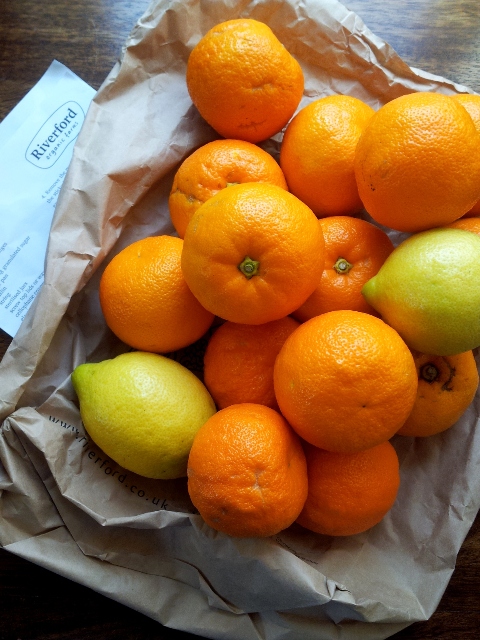
riverford marmalade kit

I received a marmalade kit from Riverford, which contains organic Seville oranges and lemons, and a recipe card. You just add your own sugar and jars. And they said on the website there’s no need to have made marmalade before; the Riverford recipe is pretty foolproof and you can cook along with Guy Watson (Riverford founder) in their YouTube video. Perfect.

Unfortunately the day I’d set aside to make marmalade I was absolutely full of cold and didn’t want to go anywhere near the kitchen. My husband Jason leaped to my aid and volunteered to make it instead. Result. Marmalade making is just the kind of thing he’s good at too. Any activity with lots of steps, where you need to follow detailed instructions and be a bit measured and scientific – that’s the sort of job he’s good at. And yes, our kitchen resembled a science laboratory while he was at it.

seville orange marmalade

And I can report that the final result was very good indeed. Perhaps the shredded peel was a little on the chunky side for my liking and he possibly boiled the marmalade a little too long, so it ended up rather dark, but a good first effort I’d say.

If you’d like to have a go yourself, you’ll need to move quickly as Seville orange season finishes in late February. Kits are available from Riverford and you’ll also find the recipe on their website. And do watch Guy’s video too. He gives lots of useful tips like…

  1. Make sure your pan is big enough. If the pan is too full, the marmalade will boil over and with all that sugar it’s a complete nightmare to clean off your hob.
  2. When you dissolve the sugar, don’t do it too vigorously, otherwise it all sticks to the bottom and you’ll end up with burned marmalade which tastes hideous.
  3. Don’t boil the marmalade for too long. If you go beyond the setting point, your marmalade will set hard like concrete.

So now we have a cupboard full of marmalade, I’m looking forward to very civilised breakfasts of marmalade on toast with a pot of tea, reading the newspaper. While my children throw their crusts at each other and moan about having to brush their hair before school…

And with some of that marmalade I plan to have a go at this gorgeous looking honey, ginger and marmalade cake recipe from Belleau Kitchen, as well as Riverford’s Seville orange marmalade pudding.

Do you have any other good recipes to share that use marmalade?

seville orange marmalade

Disclosure: Riverford provided me with a complimentary Seville Orange Marmalade Kit for this post. No money exchanged hands and all opinions are totally my own.

Roast vegetable sauce for pasta

roast vegetable sauce for pasta

I have been cooking this sauce, or versions of it, since I was weaning my two girls onto solids. They are now five and eight and still enjoy it just as much, although the portion sizes are considerably bigger now. Back in the early days, they would eat the sauce on its own and as they grew older I started stirring it into penne or fusilli to make a delicious pasta sauce. They still love it this way, especially with a huge heap of grated cheese on top, along with a drizzle of olive oil.

It’s one of the easiest sauces in the world to make. All the ingredients are simply roasted in one pan and then blitzed in a food processor with some stock. I don’t even bother to peel the garlic.

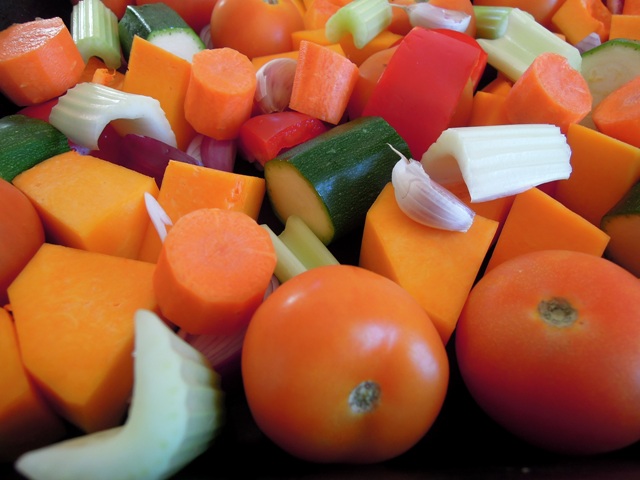
vegetables

It’s extremely adaptable too and you can experiment with whichever vegetables take your fancy – or whichever vegetables you might be trying to sneak past your unsuspecting fussy eater.

I generally cook up a big batch of this sauce and freeze it in individual portions; perfect for a quick tea after school when the kids have clubs to rush off to.

roast vegetable sauce for pasta

Roast vegetable sauce for pasta

450g tomatoes
1 butternut squash, chopped into large chunks
1 red pepper, cut into large chunks
1 red onion, peeled and cut into wedges
3 sticks of celery, chopped
2 carrots, chopped
2 courgettes (zucchini), chopped
3 garlic cloves
glug of olive oil
500ml vegetable stock (low salt)

Preheat the oven to 220°C / gas mark 7.

Place the tomatoes, chopped vegetables and garlic into a large roasting tray. Drizzle with olive oil and give it all a good mix to make sure everything is thoroughly covered. Roast in the oven for 30 to 40 minutes until the vegetables are tender and beginning to char a little.

Put the vegetables into a blender with the stock and blitz until smooth. Job done.

Simply stir into cooked pasta for an easy peasy supper.

Freeze the remainder of the sauce in individual portions. You should get around 12 portions out of it.

family-foodies

As this pasta sauce is an ideal way to introduce your children to vegetables and entice them to eat a few they might not be so keen on, I’m entering it into this month’s Family Foodies challenge, where the theme is ‘Hidden Goodies’.

The cheeky monkey smoothie

cheeky monkey smoothie

A delicious smoothie packed full of goodness – plus your chance to win one of eight Passion 4 Juice recipe books

If one of your New Year resolutions was to take a healthier approach to food, then starting the day with a delicious juice or smoothie is surely one of the easiest way to pack in a whole heap of goodies. For the last couple of weeks, this is what I’ve been doing and I feel fantastic. I’m gradually working my way through the Passion 4 Juice recipe book, created by my good friend Trish Tucker-May, which features some brilliant recipes for juices and smoothies made from both fruit and vegetables.

Together with her husband Joe and two young sons, Trish spends half the year in the UK taking their mobile juice bar from one festival to another, and then the other half of the year she does the same but back in her homeland of Australia. Now doesn’t that sound like an amazing way to live? Before she headed off to warmer climes down under, she gave me some of her fabulous recipe books to give away to readers of Bangers & Mash. I’ll tell you how you can get hold of a copy at the end of the post, but first over to Trish to tell you a bit more about why she loves juicing…

“I feel really lucky as we leave the UK and head Down Under for the summer of festival fun. Spending six months in the UK and six months in Australia, keeping people healthy at festivals, is an unusual but rewarding way to live my passion. But it seems right to me as I get to go home and see family and friends. Also escaping the UK winter has its benefits!

“I have been juicing and making smoothies for 30 years now and I love introducing people to new taste sensations. Here are some other great reasons to make juices and smoothies every day:

  • Best way to fulfil daily recommended fruits and vegetables
  • Rapid intake and assimilation of vitamins, minerals, phytochemicals, enzymes and antioxidants in the body
  • Very cleansing/detoxifying – assists in the removal of toxins
  • Weight loss
  • Very alkalizing – diseases thrive in acidic conditions
  • Clears the mind and balances moods and blood sugars
  • Improves your complexion
  • Increased energy
  • Improves your hair, skin and nails
  • Improves your overall health.

“Why not kick-start each day with a taste sensation that will revitalise, inspire and rejuvenate you? With our on-the-move lifestyles and chaotic schedules, it is difficult to find the time to prepare and consume a meal that has sufficient energy and nutrients to sustain a balanced and healthy way of life. Quick and wholesome refreshments, rich in vital nutrients, are in high demand. This is the kind of daily boost we need.

“If it’s a tangy wake-up call, a smooth pacifier or a zesty jump-start you’re after, your personalised fresh pressed juice will do the trick.

“In the Passion 4 Juice book,  I have collected some of our bestselling recipes, plus some of my favourite juices and smoothies from around the world. This handy little book is in a wipe clean format, so it doesn’t matter if it gets splashed with juice. Keep it next to your juicer or blender and have a bit of fun trying some of my favourites.”

As I mentioned, I’m enjoying working my way through the Passion 4 Juice book. My favourite juice concoctions so far have been The Morning After featuring ginger, carrots and pineapple and Buzz Juice with apples, celery and beetroot.

And the whole family loved this gorgeous smoothie recipe from Trish called The Cheeky Monkey, made with almond milk, banana, raw cacao, dates and spices. We served ours cold over ice, but Trish recommends this served warm as a lovely winter warmer. We also left out the chilli from the children’s helping.

cheeky monkey smoothie

The Cheeky Monkey Smoothie

1 banana
1 cup of freshly made almond milk
a pinch of nutmeg, cinnamon and chilli – the stronger for me the better
1 heaped tbsp raw cacao
1 tbsp peanut butter
3 dates

Blend all the ingredients in a liquidiser, and then warm in a pan on the stove top – don’t overheat but give it just a bit of warmth so it stays raw and delicious. This should warm you up on the coldest of winter days.

Win the Passion 4 Juice recipe book

All you have to do to win one of eight Passion 4 Juice recipe books is leave me a comment below, providing your ideas for new smoothie or fresh juice combinations. Trish will select her eight favourites to receive a prize.

The closing date for entries is Sunday 2 February 2014 and please note that books can only be shipped to UK addresses.

I can’t wait to hear your suggestions!

Winter minestrone with pancetta

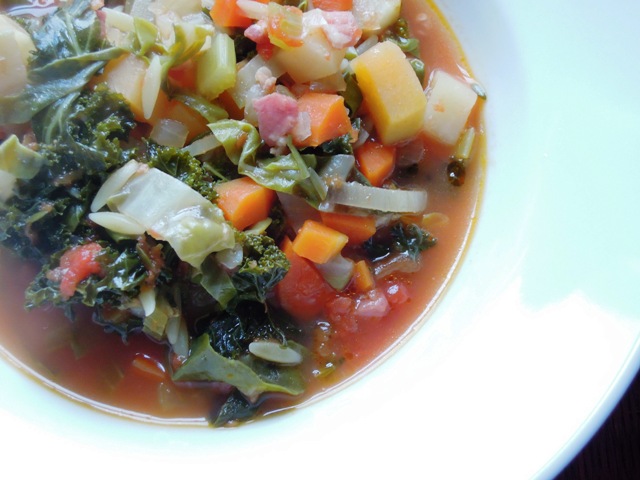
minestrone

This article was first published in my Eat the Season column in the Wells Journal on 16 January 2014.

I am rather partial to a big bowl of minestrone. It’s such a versatile soup and lends itself brilliantly to whatever vegetables are in season.

During the summer months I like to make minestrone using produce straight from our small veg patch – ingredients like peas, beans, asparagus and lots of lovely fresh herbs, such as basil, oregano or mint. It makes for a wonderfully light and crunchy dish, especially when you serve with a spoonful of pesto on top. And there’s something rather virtuous and wholesome about cooking up a pot of soup from things you’ve grown yourself. I come over all Barbara from The Good Life.

But winter minestrone is quite a different affair; much more comforting and satisfying. It transforms what can seem quite dreary winter vegetables into a fine meal, and succeeds in persuading my youngest daughter to actually enjoy leafy greens.

Everyone tends to have their own way of making minestrone. Some add rice or pasta, others don’t. Common ingredients usually include beans, onion, celery, carrot and tomato.

Minestrone of course hails originally from Italy. Almost every Italian region has its own version, which varies from a thick, mushy soup to something more like a broth with lightly cooked vegetables and sometimes meat too, such as sausage or bacon.

This is my recipe for winter minestrone, featuring pancetta for a rich, smoky flavour. I’ve also used the tiny, rice-shaped pasta, orzo, but feel free to substitute with rice or any other small pasta or even broken spaghetti.

winter minestrone

Winter minestrone with pancetta

Serves 6

2 tbsp olive oil
260g pancetta, diced
1 onion, peeled and diced
3 carrots, peeled and diced
2 sticks of celery, diced
3 cloves garlic, crushed
250g root vegetables, diced (I used swede and celeriac)
400g tin plum tomatoes, chopped
250g winter greens, finely shredded (I used Swiss chard and curly kale)
handful fresh thyme, picked from the stem
1 litre hot chicken or vegetable stock
2 large handfuls orzo
salt and pepper
Parmesan to serve

Heat the olive oil in a large saucepan and slowly fry the pancetta, onion, carrot and celery until soft.
Add the garlic and root vegetables and continue to cook while stirring to prevent sticking.

Stir in the chopped tomatoes and cook for about 5 minutes until they have reduced a little.

Add the winter greens, thyme and the hot stock, and bring to the boil. Simmer gently for 20 minutes.

Add the orzo and cook for another 10 minutes or so until the pasta is tender. Season to taste.

Serve hot with freshly grated Parmesan.

fsf-winter


As the soup is packed full of healthy vegetables, I’m entering it into January’s Four Seasons Food challenge, hosted by Eat Your Veg and Delicieux, where the theme this month is Virtuous Food. I reckon you can eat a bowlful of this minestrone and feel very virtuous indeed!