Slow roasted pork neck in thyme, rosemary & bay with mint flatbreads

Generally in January I yearn for rib-sticking, stodgy, winter warmers; the kind of hearty, satisfying food that provides an extra layer of insulation against the cold and damp outside.

But occasionally I find myself craving sunshine food; dishes that remind me of blue skies, eating al fresco and the scent of honeysuckle. And this slow roasted pork does exactly that. The sweet, fragrant and tender pork neck is shredded and served simply with flatbreads, salad and tzatziki, very reminiscent of incredible gyros we enjoyed on holiday in Kefalonia last summer.

Pork neck is a very cheap cut of meat but you’ll probably need to ask your butcher for it. Ours doesn’t have it out on the counter as it’s not all that popular; he normally uses it in his sausages. But it is perfect for slow cooking – so delicious and full of flavour, especially when you marinade it in plenty of herbs, garlic and lemon juice. Don’t be tempted to rush the roasting. For a wonderfully succulent texture, the pork neck will need around four to five hours in the oven.

Slow roasted pork neck in thyme, rosemary and bay

Serves 4

1kg pork neck
6 cloves of garlic, peeled
large bunch of fresh thyme, leaves stripped
2 large sprigs of rosemary
1 lemon
handful of bay leaves

Preheat the oven to 200°C/gas mark 6. You begin with a high temperature to get it started and then whack it right down low to slow cook.

Using a pestle and mortar, roughly crush the garlic cloves with the thyme, a handful of rosemary picked from the stalk and the juice of half the lemon. Put the piece of pork into a medium-sized ovenproof dish, pierce all over with a sharp knife and rub all over with the garlic and herb mixture so it penetrates the flesh.

Chop the remaining lemon half into half again and place in the dish alongside the pork with the rest of the rosemary and bay leaves. Cover tightly with foil and place in the oven. (If you’re using an Aga, place in the middle of the top oven.)

After 15 to 20 minutes, just enough time to really get the meat hot, turn the temperature down to 140°C/gas mark 1, or the middle of the simmering Aga oven.

Roast for four to five hours until the meat is tender and beginning to fall apart.

Remove the foil and increase the temperature to 200°C/gas mark 6 (back to the top Aga oven) again for another 10 to 15 minutes to brown the pork a little.

Shred the pork using a couple of forks and pile onto a large serving plate. Bring to the table with a simple salad, tzatziki and a stack of warm mint flatbreads (below).

Mint flatbreads

These flatbreads were inspired by a Yotam Ottolenghi recipe in his wonderful book Plenty. I’ve swapped coriander for mint, which perfectly complements the Greek-style pork and yoghurt.

280g plain flour
3tsp baking powder
1½ tsp salt
280g Greek yoghurt
1 tbsp dried mint
butter
olive oil

Place the flour, baking powder, salt, yoghurt and mint in a large bowl and mix together to form a dry dough. Add a little more flour it it’s a bit sticky. Knead the dough for a couple of minutes until it is smooth and stretchy. Wrap the dough in clingfilm and chill in the fridge for an hour.

Divide the dough into 10 to 12 pieces, form into balls and then roll with a rolling pin into round discs about 2mm thick.

Heat a knob of butter and a little olive oil in a large, heavy-based frying pan over a medium heat and fry the flatbreads, one at a time, for a couple of minutes on each side until golden brown. Add a little more butter and oil as required. Keep the flatbreads warm until you’ve cooked them all.

Enjoy with your slow roasted pork!

As this dish features lots of lovely herbs, I’m entering it into Lavender & Lovage’s Herbs on Saturday recipe challenge, which I also happen to be hosting this month!

Fusilli with Broad Beans and Mint

This is a quick and easy pasta dish for summer days when you don’t want to spend hours slaving over a hot stove. Flavoured with fresh mint and zingy lemon, it’s ideal for using up the last of those broad beans on the veggie patch.

Fusilli with Broad Beans and Mint

Serves 3 to 4

200g dried fusilli
100g shelled broad beans
3tbsp creme fraiche
juice of half a lemon
large handful of fresh mint, chopped
125g grated Cheddar cheese
glug extra virgin olive oil
salt and pepper

Bring a large pan of salted water to the boil and cook the pasta according to the packet instructions.

Meanwhile boil or steam the broad beans for a few minutes until just cooked, with a little bite, and drain. Refresh in cold water.

When the pasta is tender, drain – reserving a little of the pasta water, and return the pasta to the hot pan.

Add the broad beans, creme fraiche, lemon juice, mint, cheese and olive oil to the pasta and mix thoroughly until the pasta is well coated. Stir in a little of the pasta water to loosen the sauce if required. Season to taste and serve.

There you go – told you it was easy!

As this dish features lots of lovely broad beans, I’m entering it into August’s Simple and in Season – a wonderful blog challenge hosted by Ren Behan at Fabulicious Food, celebrating the best in seasonal produce.

And as mint is another star of this dish, I’m also entering it into August’s Herbs on Saturday challenge, hosted by Karen Burns Booth at Lavender & Lovage.

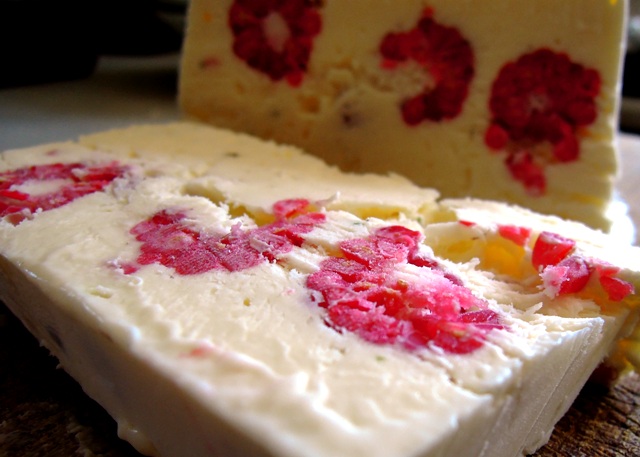
Raspberry, lemon and mint semifreddo

Semifreddo is a wonderfully easy ice-cream to make for anyone who, like me, doesn’t own an ice-cream maker. Usually it is made from eggs and whipped cream but this version uses condensed milk instead of eggs, making it even more of a doddle. It looks really rather impressive though, so no-one would ever guess it only took 10 minutes to make!

I got the idea for a semifreddo made from condensed milk from Kavey Eats. The theme for her Bloggers Scream For Ice Cream challenge this month you see just happens to be condensed milk, and I was intrigued.

The recipe I’ve come up with to enter the challenge is a light and summery combination of perfumey raspberries with zingy lemon, lifted further still by the addition of chopped fresh mint. It’s loosely based on a recipe I saw on the Carnation website.

And as the recipe also features lots of lovely mint, I’m also entering this semifreddo into Lavender & Lovage’s Herbs on Saturday challenge.

Raspberry, lemon and mint semifreddo

1 can (405g) sweetened condensed milk
juice of 3 lemons
grated zest of 1 lemon
300ml whipping cream
200g fresh raspberries
large handful fresh mint, finely chopped

In a large bowl, mix together the condensed milk, lemon juice, zest and whipping cream. Whisk until you have soft peaks.

Carefully fold in the raspberries and fresh mint.

Spoon the mixture into a 2 litre loaf tin lined with clingfilm, covering the top with more clingfilm. Freeze for at least four hours or preferably overnight.

Simply slice and serve.

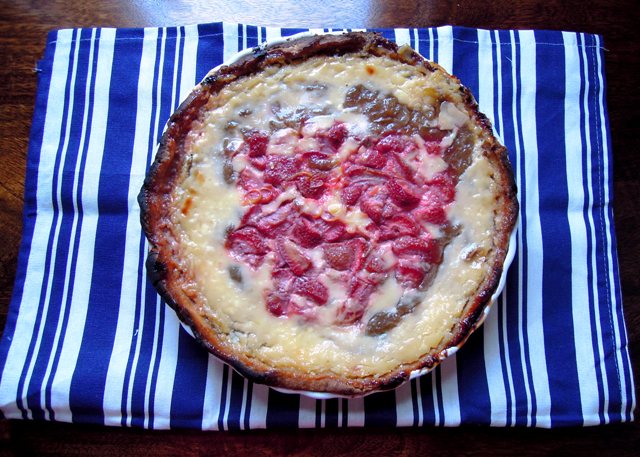
Strawberry, rhubarb and lemon tart

Lots of people have been talking about strawberries and rhubarb making a winning combination, so when my lovely friend Sarah gave me a big bunch of rhubarb from her garden the other week, I thought it was about time I found out what all the fuss is about.

They weren’t wrong. Sweet strawberries are the perfect foil for the tartness of rhubarb. And for me the creamy tanginess of a lemon tart provides a perfect base for this fruit frenzy.

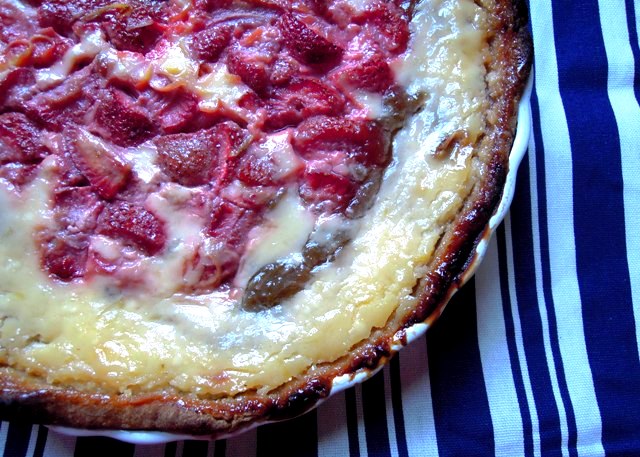
Alright, I have to admit though my strawberry, rhubarb and lemon tart isn’t the prettiest pudding around. Presentation, particularly when it comes to sweet things, isn’t always my strong point. And I did slightly over-colour the pastry. But then, I am a home cook after all. As long as it tastes good, then I’m happy. Very happy in fact.

Strawberry, rhubarb and lemon tart

Serves 8

For the pastry case

125g soft butter
100g icing sugar
Pinch of salt
250g plain flour
2 egg yolks
2 tbsp milk

600g rhubarb, chopped into inch-long chunks
6 tbsp granulated sugar
Splash orange juice
400g strawberries, hulled and quartered
170g caster sugar
4 eggs
170ml double cream
Juice and grated zest of 3 lemons

Start by making the pastry. In a large bowl, cream together the butter, icing sugar and salt. Then add the flour and egg yolks and rub in until the mixture resembles coarse breadcrumbs. Add the milk and work together to form a dough.

Wrap the dough in cling film and rest in the fridge for 30 minutes.

Preheat the oven to 180ºC/gas mark 4.

Grease a 30cm tart dish. Roll out the pastry into a large circle and carefully line the dish, pressing the pastry into the edges and making sure it comes fully up the sides. You may need to do some patching up here and there – I always do.

Blind bake the empty tart for 15 minutes until the pastry is coloured ever so slightly. Then leave to one side while you prepare the filling.

Place the chopped rhubarb in a saucepan with 4 tablespoons of granulated sugar and a splash of orange juice and heat gently. Cook for 10 to 15 minutes until the rhubarb is tender but still has a little bite in it.

In a bowl, scatter 2 tablespoons of granulated sugar over the chopped strawberries and gently mix together.

Whisk together the caster sugar and eggs in a large bowl and then stir in the cream, lemon juice and zest.

Spoon the strawberries into the middle of your pastry tart and arrange the cooked rhubarb around this. Then pour over the creamy lemon mixture and carefully transfer this to your oven. You should do here as proper chefs suggest and pour in the mixture when the tart is already in the oven to reduce spillage, but I invariably forget this bit and have to mop the floor afterwards.

Bake for around 45 minutes until the filling is firm but still has a little wobble to it, and if you can (unlike me) catch it before the pastry turns too dark around the edges. But hey, don’t worry if it does. My dad always told me the burned bits were good for your insides.

Leave to cool for an hour or so while the filling sets some more. Serve with some vanilla ice cream or a dollop of creme fraiche.

I’m entering this tart into the Tea Time Treats blog challenge hosted by What Kate Baked and Lavender & Lovage, as the theme this month is Summer Fruits. As Wimbledon approaches, what fruit could better represent the British idea of summer than the ubiquitious strawberry?

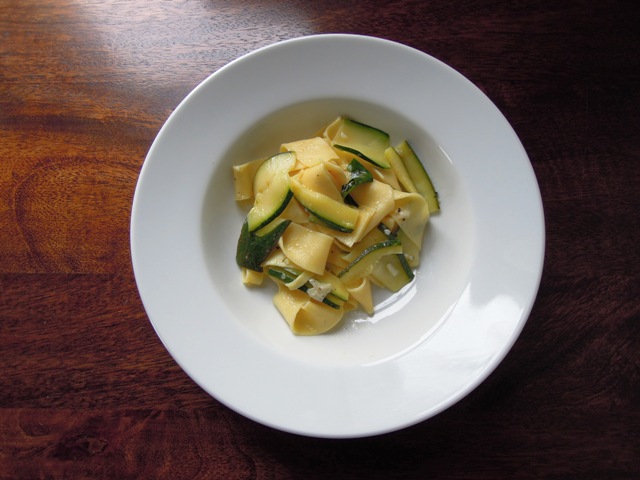
Pappardelle with courgette and basil

In the last year we have dramatically reduced the amount of meat we eat in the Bangers & Mash household. Don’t get me wrong, I could never give up meat entirely. I enjoy it far too much.

But there is no getting away from the fact that meat is expensive, both on the pocket and as a global resource. Good quality meat that has been responsibly reared and farmed is not cheap to produce. And I refuse to buy cheap meat because I dread to think what conditions the animals have been kept in.

So a major part of reducing the cost of our weekly meals has been to reduce the amount of meat we consume: less of it but good quality stuff when we do. I’m sure this must be much better for us from a health point of view too.

At first it was difficult, especially I think for my husband who has taken a little while to convince that you can have a fully satisfying meal without any meaty component. But for me it’s turning into quite an adventure, discovering a whole new world of vegetarian cuisine.

This pasta dish, pappardelle with courgette (zucchini) and basil, is one we eat quite often, particularly in the summer when courgettes are in abundance. I have actually been making it for years – it has been my staple dish whenever veggie friends came over for a meal. Now we eat it with or without the vegetarian guests.

It’s based on a Jamie Oliver recipe. He makes it with tagliatelle but I tend to use whatever pasta happens to be in the cupboard. Pappardelle is my favourite for this. Oh yes, and I use much more garlic than Jamie.

Pappardelle with courgette and basil

5 tbsp olive oil
3 cloves of garlic, crushed
4 courgettes, sliced very thinly
juice of 1 lemon
handful of fresh basil, torn
400g pappardelle (or pasta of your choice)
salt and pepper
100g parmesan cheese, grated

Bring a large pan of salted water to the boil and cook the pasta according to the packet instructions.

Gently fry the garlic in 4 tbsp of olive oil for a minute, then add the sliced courgette and cook for 2-3 minutes. Add the lemon juice and basil and cook for a few more minutes until the courgette is tender.

When the pasta is ready, drain and combine with the courgette. Season to taste, add most of the parmesan and remaining olive oil and mix well. Serve with some more torn basil and a sprinkling of parmesan.

Lemon and ricotta pancakes

If you are looking for a twist on the traditional pancake this Shrove Tuesday, why not give these delicious lemon and ricotta pancakes a go?

Adapted from a recipe in The French Women Don’t Get Fat Cookbook by Mireille Guiliano, they are temptingly light and fluffy with a hint of citrus zing.

Lemon and ricotta pancakes

Serves 4

4 eggs
250g ricotta cheese
35g plain flour
50g caster sugar
2 unwaxed lemons
50g butter for frying
Honey to serve

Separate the eggs into two large bowls. Whisk up the egg whites until they form soft peaks and put to one side.

Give the egg yolks a quick beat. Zest the two lemons and add to the yolks. Sieve the flour onto the yolks, then add in the ricotta and sugar. Gently mix together.

Fold in the egg whites gently so you don't lose all that air

Spoon a quarter of the egg whites into the rest of the pancake mixture and carefully fold in. Once combined, gently fold in the remainder of the whites.

Melt enough butter to cover the bottom of your frying pan. Spoon in the pancake mix. You need around a tablespoon of mixture for each small pancake, and you should be able to cook around four at a time, depending of course on the size of your pan.

Fry your dainty pancakes until golden

Fry the pancakes for a couple of minutes until tiny holes appear on the surface. Flip them over and cook for another two to three minutes until a gorgeous golden colour.

Keep the pancakes warm until you’ve cooked them all. Then serve immediately with a drizzle of honey and a good squeeze of lemon.

Homemade lemonade

This afternoon the kids and I made our own lemonade after school, as I happened to have some extra lemons that needed using up.

Yes I know it’s December, but lemonade doesn’t have to be the preserve of hot summer days.

I actually think all that vitamin C makes it a very sensible winter drink.

You don’t need much and it couldn’t be easier to make, especially if you’ve got children around who love to squeeze the lemons for you.

Lemonade

750 ml hot boiled water
4 lemons
100g caster sugar
Ice

Peel the zest from all the lemons in wide strips and put in a heatproof jug with the caster sugar.

Pour in the hot water and stir until the sugar has dissolved.

Add lots of ice and then the juice of the four lemons.

Strain into a separate jug to remove the pips and zest and when fully cooled serve over ice. Lovely served with some chopped mint.