The theme I set was brunch, and we received a surprisingly diverse and incredibly delicious array of not-quite-breakfast-yet-not-quite-lunch dishes, all equally perfect for this festive season when we’re allowed to roll out of bed just that little bit later than normal.
So without further ado, let’s crack on with the round-up…
Helen from Fuss Free Flavours delivered our first dish with these very timely Turkey, Cranberry & Stilton Christmas Brunch Muffins – an absolutely delicious way to use up those Christmas leftovers, and they don’t even require an egg!
Turkey, cranberry and Stilton Christmas muffins from Fuss Free Flavours
Next on the menu is this Beet Greens & Red Pepper Frittata from Eleni at On Top of Spaghetti. It’s easy to prepare, healthy and tasty, and ideal for brunch or perhaps a light lunch with a side salad. What’s more, it’s a great way to use those beet greens that many people don’t even realise you can eat.
Beet green and red pepper frittata from On Top of Spaghetti
As Louisa from Chez Foti says herself, these White Chocolate & Cranberry Christmas Cookies make for a “wickedly good brunch snack with a cup or two of coffee” and are just the ticket during the festive period when sweet treats are de rigeur, even at breakfast!
White chocolate and cranberry Christmas cookies from Chez Foti
I can’t believe I’ve never thought of combining beans and cheese on toast with a poached egg myself, but that’s exactly what Laura from Credit Munched has done in her Buck Rarebit. The combination sounds just so ‘right’ and perfect for a lazy brunch.
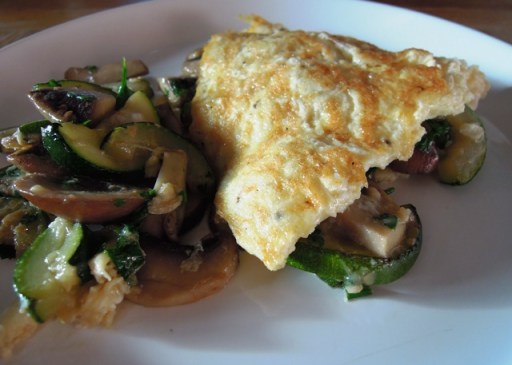
Courgette and mushroom omelette with garlic and parsley from Bangers & Mash
Now while these Swiss Scrambled Eggs, Croissants and Shakes from Fabulicious Food might look designed to be a hangover cure, they’re honestly not. Ren came up with this delicious breakfast-brunch to fill her family with much-needed vitamins and goodness to aid recovery from the winter flu bug. I’m sure they were fighting fit in no time…
Swiss scrambled eggs, croissants and shakes from Fabulicious Food
Mushrooms on toast, especially using good homemade bread, has to be a top contender for my favourite brunch dish. And these Mushrooms on Rye Toast from The Garden Deli look simply beautiful, don’t you think?
Mushrooms on rye toast from The Garden Deli
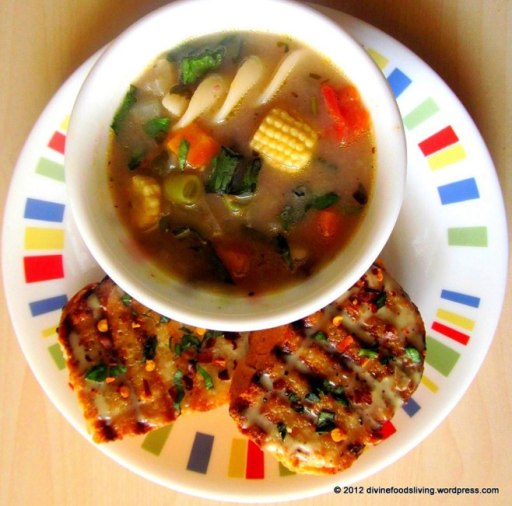
Sometimes brunch becomes much more like lunch than it is breakfast. And in times like these, wouldn’t you love a Minestrone Soup like this one from Divine Foods Living to set you up for the day?
Minestrone soup from Divine Foods Living
These Nduja Potato Cakes from Foodycat make for a hearty, grown up brunch, especially served with a Bloody Mary. I must admit to having to google nduja – it turns out to be a spicy, spreadable sausage made from pork and is a Calabrian variation of salami.
Nduja potato cakes from Foodycat
Elizabeth from Elizabeth’s Kitchen describes these Christmas Breakfast Muffinsas the best tasting muffins she’s ever made, and I have to say they do look incredibly good from her photos. Made from granola, marmalade, orange juice and apricots, they are the perfect breakfast in a cake.
Christmas breakfast muffins from Elizabeth’s Kitchen
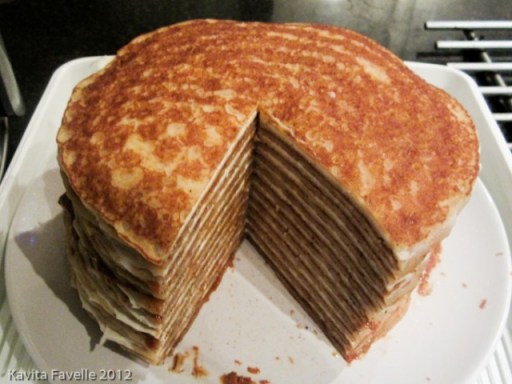
It might not look like your usual late breakfast dish, and indeed I did have to persuade Kavey from Kavey Eats to enter her spectacular Speculoos & Mascarpone Pancake Cakeinto this month’s Breakfast Club, but personally I think this would make a superb, albeit slightly decadent, brunch. I also think I could gladly tuck into this amazing creation at just about any time of day…
Speculoos and mascarpone pancake cake from Kavey Eats
I adore poppy seeds in any baked goods and they look particularly scrummy in these Lemon Poppy Seed Muffins from Mondomulia, and isn’t the photography simply stunning too? They’re perfect for a festive brunch, but I think they’d be great at any time of year. I might also try baking a batch for my daughters’ lunch boxes in the new year.
Lemon poppy seed muffins from Mondomulia
And last, but certainly not least, come these fantastic Brunch Quesadillas from Camilla at Fab Food 4 All. Filled with bacon, mushroom and cheese, these tasty tortillas would make an ideal brunch for New Year’s Day to help sort your head out after that one-too-many-glasses-of-fizz from the night before.
Brunch quesadillas from Fab Food 4 All
So there you have it. A particularly fine round-up of brunch recipes, I think you’ll agree. Thanks to Helen at Fuss Free Flavours for inviting me to host December’s Breakfast Club and to all you wonderful bloggers for linking up your yummy recipes.
Whenever I bake bread I always find myself marvelling at just how easy it is to make something that tastes and looks so good for such remarkably little effort.
While it might take a little time and is therefore not the kind of foodstuff I fancy making after a long day at work, baking bread is definitely my idea of a perfect weekend activity. And home-baked bread makes for a perfect weekend lunch, served still slightly warm from the oven with a spread of tasty cheeses, cold meats, olives and salad.
Baking often makes me a little nervous as the end result is usually meant to look neat and tidy. But thankfully bread is different and focaccia in particular should look a little rustic and rough around the edges. Which is obviously another reason why this is my kind of bread.
You can top your focaccia with whatever you fancy really – a light scattering of your favourite herbs, cheese, olives, or maybe someone caramelised onions and sun-dried tomatoes. But here I use my all-time favourite: basil and garlic.
Basil and garlic focaccia
500g strong white bread flour
15g salt
15g sugar
10.5g dried yeast (one and a half 7g sachets)
300ml lukewarm water
Semolina
2 cloves of garlic, finely chopped
Large bunch of basil, finely chopped
3 tbsp olive oil
Half a lemon
Salt and pepper
Put the flour, salt, sugar and yeast in a large bowl and mix together. Make a well in the middle and pour in the water. Gradually work the dry ingredients into the liquid to form a soft dough. If it’s still a little dry, add a drop more water; if it’s too sticky, add a little more flour.
Flour the work surface and tip out the dough onto it. Knead the dough for five to ten minutes until it is elastic and smooth. Return the dough to the bowl, cover with a clean tea towel and leave to rise in a warm, draught-free place for around an hour, until it has doubled in size.
Remove the dough from the bowl and give it a punch to knock the air out of it. Knead for another minute or so.
Split the dough into half. Roll each half into a rough circular shape about half an inch thick. Place the dough on a baking tray dusted with semolina.
In a small bowl, mix together the chopped basil, garlic, olive oil, lemon juice, salt and pepper. Smear generously over the top of each piece of dough. Then push your fingers deep into the surface of the dough to make those little holes you always see on focaccia, allowing the flavours to get down deep inside the bread. Leave in a warm spot for another 45 minutes.
Preheat the oven to 200°C/Gas Mark 6.
When the dough has risen again to just over an inch thick, bake in the oven for about 15 minutes until the top is a beautiful golden colour. Drizzle the bread with a little more olive oil and sprinkle sea salt over the top. Leave to cool slightly but try to eat while still warm if you can.
As my focaccia features lots of lovely fragrant basil, I’m linking up with September’s Herbs on Saturday blog challenge, hosted by Karen at Lavender & Lovage. I’m looking forward to working my way through the delicious looking recipes that have been submitted so far, including Recipe Junkie’s rosemary focaccia!
It’s the penultimate stop in my culinary world tour and this week we’re heading to the beautiful Spanish city Barcelona. The Catalan capital is one of the most amazing cities in the world, with its stunning architecture, fantastic restaurants and nightlife, and superb shopping.
I haven’t been back to Barcelona since I was 18, towards the end of a month’s inter-railing with my best friend Ruth after our A-levels, but it remains vivid in my memory. We had thoroughly exhausted ourselves trying to pack as many European cities into our four weeks’ travels as possible and by the time we reached Barcelona in our last week we needed to slow down. Barcelona was the perfect place to put down roots for a little while. While Ruth was ensconced in her first romance, I enjoyed wandering the streets of Barcelona simply breathing in the city.
One day I must return. But for now, I’ll imagine I’m there with my family. And what else would we be eating but tapas?
My sister Lottie lives in Toledo with her boyfriend Jose Luis. His mother Reme is a cook and has worked in a number of restaurants, so Lottie volunteered to ask her for suggestions on typical Catalan tapas for me to try out on my brood. The dishes she recommended I try were Pollo a la Catalana (Catalan style chicken with prunes and apricots) and Habas a la Catalana (broad beans with Jamon Iberica and Morcilla, a Spanish black pudding), both of which were absolutely delicious.
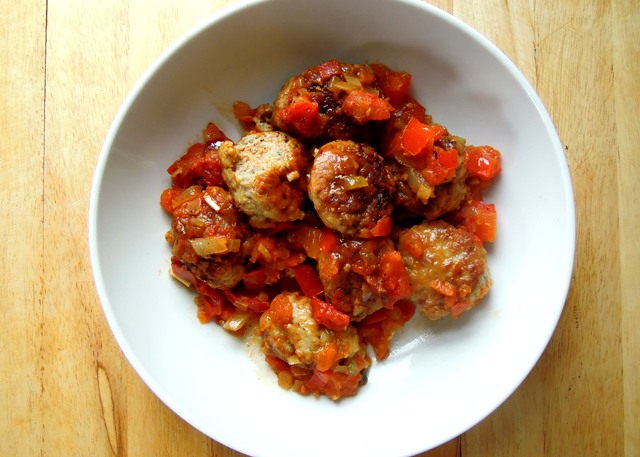
I also added some of my own personal favourites to the menu: Garbanzos con Espinacas (chickpeas with spinach), Albondigas (meatballs in tomato sauce), Gambas al Ajillo (garlic prawns), rosemary almonds, Manchego with Membrillo (quince paste or jelly), all of which were served with olives and bread – quite insanely I decided to go the whole hog and bake my own.
Preparing all the above made for a long, long, hot day in the kitchen. I cleared my husband and kids off for a few hours and cranked the music up loud while I cooked, and although I don’t intend on cooking quite so many dishes for one meal again in a hurry, I really rather enjoyed myself in a crazy kind of way.
So let’s get this recipe show on the road…
Simple Spanish bread rolls
Bread rolls
Makes 4 rolls
500g strong white bread flour
1½tsp salt ½tsp sugar 7g packet fast acting dry yeast
150ml warm water
1 egg, beaten and mixed with a little water
Mix the flour, salt, sugar and yeast in a large bowl. Gradually add the water, combining the ingredients until you get a soft dough. Add a little more water if you find you still have flour left at the bottom of the bowl. Likewise, if the dough is too sticky add a little more flour.
Knead the dough for five to ten minutes, until it is smooth and elastic. Form the dough into a ball and leave in the mixing bowl. Cover with a tea towel and leave to rise in a warm, draft-free place for about an hour.
Preheat oven to 200°C/Gas Mark 6.
When the dough has roughly doubled in size, knead again briefly. Divide into four pieces, form into balls and place on a lightly oiled baking sheet. Allow to rise again for a further 15 minutes.
Bake the rolls for 5 minutes, then remove from the oven and brush the tops with the egg mixture. Return to the oven and bake for another 15 minutes. Remove from the oven and allow the rolls to cool on a wire rack.
Rosemary almonds
Rosemary almonds
This is a favourite party snack, taken from Leon’s ‘Naturally Fast Food’.
250g whole almonds, with skins
3 sprigs fresh rosemary
25ml olive oil
sea salt
Preheat oven to 170°C/Gas Mark 3.
Spread the almonds on a baking sheet with two of the rosemary sprigs. Remove the leaves from the other sprig and keep to one side.
Toast the almonds in the oven for 5 to 7 minutes, until just beginning to brown.
Toss in the olive oil and salt while still hot. Remove the rosemary sprigs and add the reserved leaves. Return to the oven for 3 more minutes and then serve.
Chickpeas with spinach
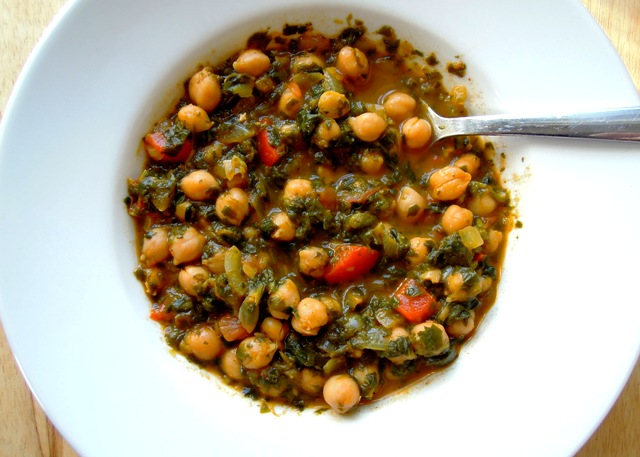
Garbanzos con Espinacas (chickpeas with spinach)
2 tbsp olive oil
½ onion, chopped
2 garlic cloves, 1 chopped and 1 left whole
1 tomato, peeled and chopped
1tsp paprika
½tsp ground cumin
¼tsp ground cayenne pepper
¼tsp saffron
4 peppercorns
1 x 410g tin chickpeas, liquid reserved
200g frozen spinach
salt
Heat the oil in a large pan over medium heat. Add the onion and chopped garlic and fry for a couple of minutes. Add the tomato and cook until slightly reduced. Stir in the paprika, cumin and cayenne.
Using a pestle and mortar, crush the saffron and peppercorns with the remaining clove of garlic. Dissolve the spices in 3 tablespoons of water and add to the pan with the chickpeas and their liquid from the tin, along with the spinach and salt to taste. Cover and simmer over a low heat for 20 minutes, adding more water if it looks a little dry. The mixture should be saucy, but not sloppy. Serve warm.
Spanish meatballs
Albondigas (Spanish meatballs in tomato sauce)
The meatballs I’ve eaten in Spain are normally a little spicier than this recipe but I wanted to keep it mild for my children. Feel free to add some chilli, paprika or cayenne to the recipe.
3-4 cloves garlic
parsley
white wine, just over half a glass
300g pork mince
2 slices stale bread
milk
1 egg (beaten)
salt and pepper
flour
olive oil
1 onion, finely chopped
4 tomatoes, roughly chopped
Preheat the oven to 190C/Gas 5.
Crush 2 of the garlic cloves with the parsley and mix with a dash of white wine. Add this mixture to the minced pork in a large bowl and combine well. Leave to stand for half an hour.
Place the bread in a dish and cover with the milk. Leave to soak for a few minutes and then squeeze out most of the milk.
Add the bread, egg, salt and pepper to the mince and knead until all the ingredients are mixed well together. Roll the mince mixture into small balls and roll each one in flour.
Fry in plenty of hot oil until they turn golden brown, drain and place in a casserole dish.
To make the sauce, heat a little oil in a frying pan. Add the onion and remaining clove of garlic and gently fry until golden.
Add the chopped tomatoes and about half a glass of white wine. Bring to a simmer and cook for 5 minutes
Pour the sauce over the meatballs and place in the oven for 20 – 25 minutes. Serve warm.
Catalan style chicken with prunes and apricots
Pollo a la Catalana (Catalan style chicken with prunes and apricots)
handful each of prunes and dried apricots white wine
olive oil
4 chicken thighs
2 cloves garlic
2 bay leaves
cinnamon stick
2tbsp runny honey
handful of pine nuts
1tbsp corn flour
dash of red wine vinegar
knob of butter
Place the prunes and apricots in a bowl and cover with white wine. Leave to soak overnight.
Preheat the oven to 200C/Gas 6.
In a frying pan heat the oil and brown the chicken thighs. Remove the chicken to a roasting tin, along with the garlic, bay leaves and cinnamon stick. Roast in the oven for 25 minutes until the chicken is cooked through.
While the chicken is roasting, prepare the sauce. Add the honey to the frying pan in which you browned the chicken and heat. Add the fruit, the wine in which they have been soaking and pine nuts.
When the chicken is cooked, remove to a serving plate and keep warm. Place the roasting tin over a medium heat, and stir in the corn flour to absorb the juices. Add a cupful of water and a dash of red wine vinegar to deglaze the tin and stir in the butter. Pour in the fruity sauce, mix together and then pour over the chicken and serve.
Broad beans with Jamon Iberica and black pudding
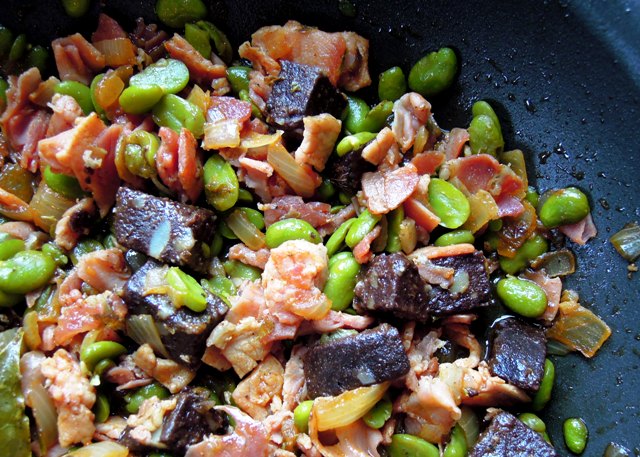
Habas a la Catalana (broad beans with Jamon Iberica and black pudding)
This is one of the recipes from Reme, my sister Lottie’s boyfriend’s mother. I couldn’t get hold of Morcilla, a Spanish black pudding, so I went with Bury Market black pudding instead!
120g shelled broad beans
3 rashers smoked streaky bacon, chopped
2 cloves of garlic, chopped
½ onion, chopped
1 bay leaf
olive oil
bunch fresh mint, chopped
½tsp paprika
glass of white wine
100g Jamon Iberica, chopped
100g Morcilla or black pudding
salt and pepper
Blanch the broad beans in boiling, salted water for a few minutes until tender. Double shell the beans to reveal the beautifully bright green innards. It’s a bit of a palaver I know, but it’s really worth it.
Heat the oil in a pan and fry the bacon, garlic, onion and bay leaf for about 5 minutes. Add the mint and paprika, broad beans, white wine and black pudding. Stir and cook for a few minutes before adding the jamon. Season to taste and serve warm.
Garlic prawns
Gambas al Ajillo (garlic prawns)
I based this dish on a simple recipe I found in ‘Tapas’ by Louise Pickford.
12 raw tiger prawns
2 tbsp olive oil
knob of butter
2 cloves garlic, crushed
1 tbsp fresh basil, torn
juice of 1 lemon
salt and pepper
aioli (garlic mayonnaise) to serve – again I cheated and bought a jar!
Wash and dry the prawns.
Heat the oil and butter in a frying pan, add the prawns and garlic and fry for 3 to 4 minutes until the prawns are pink.
Remove the pan from the heat, stir in the basil and lemon juice. Season to taste with salt and pepper. Serve warm with a dish of aioli for dipping.
Manchego cheese with quince jelly
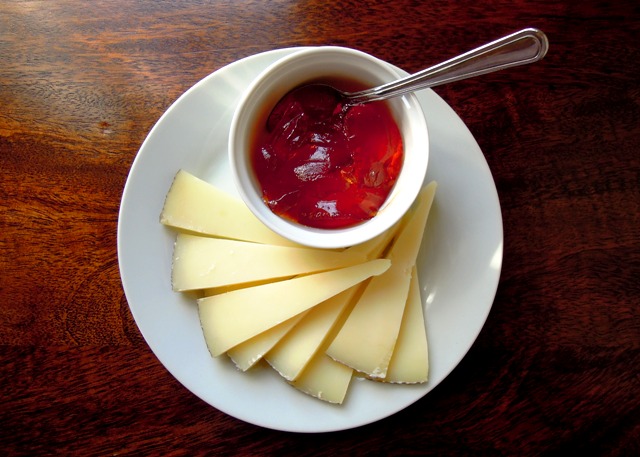
Manchego and Membrillo
Manchego is a tasty Spanish cheese made from sheep’s milk, which has a natural affinity with quinces. The idea of making my own membrillo really was a step too far, so I cheated and bought a jar of quince jelly instead. If you wanted to make your own, I reckon this recipe looks rather good.
So there you have it. My Barcelona tapas menu. I made way too much food for my family of four, but the leftovers were all gobbled up over the course of the next few days. The Catalan-style chicken in particular was very popular, and I’ll be making this dish again on its own for dinner, served simply with rice and salad.
I’ve almost completed my Around the World in Six Suppers adventure – can you believe the school holidays are nearing their end already? So where will the last dish come from next week? Watch this space to find out!
The next leg of our Around the World in Six Suppers summer tour takes us from New York to Newcastle upon Tyne, gateway to the ruggedly beautiful county of Northumberland.
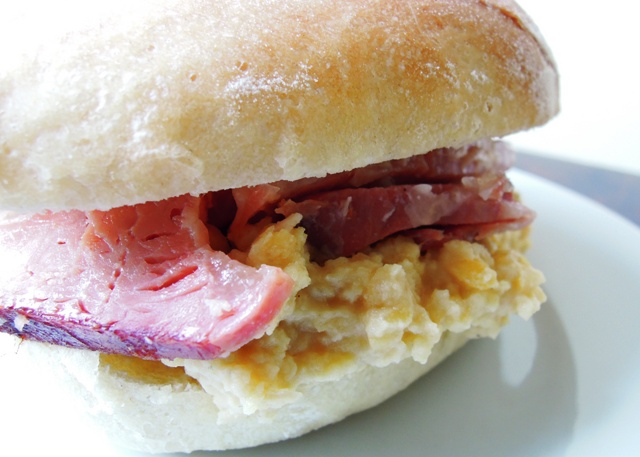
Yes, it’s the second week of the school holidays and for my second dish, inspired by a ‘virtual’ holiday destination, I’ve chosen the simple but oh so tasty stottie cake filled with succulent home-baked ham and good old-fashioned peasepudding.
I lived in the North East of England from the age of five until I was twelve, so many of my early memories are firmly lodged in this part of the world.
Trips to the Roman forts along Hadrian’s Wall, bike rides along the disused railway to Wylam, days spent on the long sandy beaches at Cullercoats and Whitley Bay, boat trips from Seahouses to see the puffins and seals of the Farne Islands, exploring the castles at Alnwick and Bamburgh, listening to the pipers at the Ovington Goose Fair…
It all sounds like a rather idyllic, Enid Blyton style childhood. Admittedly, these were also rather difficult years for my family for a number of reasons, but all in all, my memories of Newcastle and Northumberland are very, very fond ones. And I can’t wait to some day soon take my own family there for a proper holiday so I can properly show it off to them.
While Northumberland might not have an international reputation for its cuisine, one of my most vivid memories as a child is sharing a lovely soft stottie cake with my Mum, generously filled with ham and salty, stodgy peasepudding. And so this is the dish I have made this week to transport us to our second holiday destination.
Stottie Cakes
For those unfamiliar with the stottie I should explain it is not actually a cake. Rather it is a large, round, flattish bread roll, not normally seen outside of the North East. It is quite a heavy, doughy bread but I really like its heavy, chewiness. It is a very satisfying bread and when filled with the traditional ham and peasepudding it makes for a rather substantial meal.
Stottie cakes are easy to bake. I followed this recipe from the Ocado website and have used it again subsequently to bake bread buns for barbecued burgers, achieving perfect buns on both occasions.
My Mum used to buy stottie cakes for us from the butcher in the Grainger Market in the centre of Newcastle. I have no idea if you could get other fillings; ours always came stuffed with ham and peasepudding. Bizarrely I would normally refuse to eat peasepudding. I couldn’t stand the stuff. But in a stottie it was, somehow, transformed.
Home baked ham
There is nothing more delicious than a joint of home cooked ham. What’s more it is so easy to do. I simply took a 1.5kg gammon and soaked in cold water overnight. In the morning I gently brought the joint to a simmer in a large pan of fresh water, covered with a lid and put in the oven (preheated to 160°C/Gas Mark 2) for an hour and a half. You can tell if it’s cooked by sticking in a skewer; if it goes into the meat easily and the juices run clear, then it’s done.
Leave to cool a little and remove any string and skin. You can press the fatty surface of the joint with sugar and mustard powder if you like before baking, but I prefer to smother with a thin layer of sweet chilli sauce. I’m not sure what Geordie purists would make of that but I think it works well. Cover the lean meat with tin foil and place in a roasting tin. Bake in the oven (200°C/Gas Mark 6) for 10 to 20 minutes, until you get a good colour on top.
Peasepudding
For the peasepudding, I turned to this easy recipe from The British Food Trust. You’ll end up with leftovers, which apparently you can fry up, but I still can’t bring myself to eat it any other way except for in a stottie! I can’t wax lyrical about how wonderfully delicious peasepudding is, because I’m afraid it’s not. But it is the perfect slightly salty, slighty herby, stodgy accompaniment for ham, giving you the most amazing sandwich ever.
Now my kids can’t wait to visit Northumberland so they can try an authentic stottie cake. But I think I also sold it to them when I mentioned that the first few Harry Potter films were filmed in Alnwick Castle…
If you have no daughters, give them to your sons
One a penny, two a penny
Hot cross buns!
As regular readers of Bangers & Mash will know, I have a few insecurities when it comes to baking. Probably because around 50% of my efforts are complete flops. I put it all down to not being taught to bake as a child. But enough of the self-psychoanalysis. I am turning my baking life around. Who cares if a cake doesn’t rise occasionally and what’s a burnt biscuit or two between friends? The more I try, the better I get. Well, that’s the idea anyway.
One of my hands down successes recently has been hot cross buns. When I took these little beauties out of the oven, I can’t tell you how proud I felt. They looked just like proper hot cross buns. And they smelled amazing, simply filling the kitchen with sweet, spicy goodness. It’s going to be difficult bringing myself to eat the shop-bought variety again.
So if I can make these bad boys, anyone can.
What surprised me most wasn’t the fact they were easy to make. They were. But how quick they were to make. Isn’t bread supposed to be complicated? I did the first part before ballet lessons on a Saturday morning (OK there was a 15-minute kneading session, but I found that rather enjoyable), leaving the dough to rise while the girls did ‘good toe, naughty toe’. Then they took another ten minutes work when we got back, plus a little more rising time and then into the oven. You just need to factor in time for rising. They also freeze really well, so great to make in advance and simply whip them out when you need them.
This recipe is by The Fabulous Baker Brothers aka Henry and Tom Herbert, which appeared in the April edition of Delicious magazine. I’d been thinking about trying hot cross buns for a little while and when I saw them on the front cover I took it as a sign. I stuck pretty much to their recipe except I swapped zest for mixed peel, only because I still have a big pot left over from Christmas I’m trying to use up.
We ate some of the buns warm from the oven with butter and cheese for a light lunch, and some the following morning with strawberry jam. The rest went in the freezer for some easy homemade home-baked pleasure whenever I fancy!
For the cross 100g strong white bread flour
Pinch of salt and sugar
25g butter, melted
125ml water
For the glaze 75ml boiling water
1 tbsp caster sugar
Pinch of mixed spice
Into a big mixing bowl put the flour, yeast, salt, sugar, butter (make sure it’s really soft), mixed spice, milk, water and egg. Stir well (you’ll need to put some effort in here) until you have a loose dough. Add a little more water if the mixture looks dry.
Turn the dough onto a lightly floured surface and knead for 15 minutes until the dough is smooth. Gently work in the dried fruit and mixed peel. I stretched the dough out flat, scattered on a handful of fruit, folded the dough over and kneaded. And then repeated this until all the fruit was worked in.
Plop your dough back into the big mixing bowl, cover with a tea towel and leave in a warm place for at least 45 minutes until it has doubled in size.
Before......and after!
Line a baking tray with good high sides with baking paper. Turn the dough out of the bowl and cut in half using a plastic scraper. Divide each half into half again, then keep repeating until you end up with 16 pieces.
Roll the pieces firmly in your hands to make pert round shapes. Arrange them in the baking tray in a four by four formation with half an inch between each bun. Cover the tin with a tea towel and leave in a warm place for 30 minutes or so until the buns have doubled again in size.
Preheat the oven to 210ºC/gas mark 6-7.
Combine the dry ingredients for the cross in a bowl and gradually whisk in the melted butter and water until you get a smooth mixture. Pour into a piping bag with a small nozzle. Cross the buns by piping continuous lines across the length and breadth of the tin.
Bake for 15 minutes until golden. While they’re in, make the glaze. Boil the water with the sugar and mixed spice for half a minute, then put to one side. As soon as the buns come out of the oven, brush the tops with the spicy glaze.
The Little Loafis hosting the Fresh from the Oven challenge this month and as the theme this time is hot cross buns I thought I might enter mine. Now, the Little Loaf is an amazing baker so I’m a little nervous with my amateur offering but hopefully she’ll appreciate my enthusiasm!



















 Bangers & Mash