Mini lunchbox pasties and tarts

Mini CollageWhen my oldest daughter first started primary school, I rather enjoyed packing her lunch boxes each week, seeing what new and tasty things I could think up to put in there. And yes, you guessed it, the novelty wore off after about half a term.

But every now and again I do try to put in a little extra effort. Most of the time my daughters are grateful for that effort, although we do have the occasional disaster when I wish I hadn’t bothered and had simply given them a cheese roll instead. These mini pasties and tarts get the thumbs up from my two though. So if you do find you have a little extra time on your hands at the weekend and you’re in a baking mood, make up a big batch of these to see  you through the week. They also freeze well too.

mini pasties

Mini lunchbox pasties filled with beef, carrot and boiled egg

Makes around 20

For the pastry

250g plain flour
pinch of salt
65g butter, cubed
60g lard or hard vegetable fat, cubed
4 tbsp iced water

For the filling

1 tbsp olive oil
1 small onion, finely chopped
1 large carrot, peeled and finely diced
250g minced beef
1 tbsp black treacle
1 tbsp Worcestershire sauce
1 tsp dried oregano
salt and pepper
1 hard-boiled egg, chopped

1 beaten egg, for brushing onto the pastry

For the pastry

Put the flour and salt into a mixing bowl. Rub in the butter and lard/vegetable fat using your finger tips until the mixture resembles large breadcrumbs. Gradually mix in the cold water using a knife until it comes together to form a dough. Bring it all together with your hands into a ball, wrap in clingfilm and place in the fridge for 20 minutes.

For the filling

Heat the olive oil in a large frying pan and saute the onion and carrot until soft and golden. Add the minced beef and fry until browned.

Next add the black treacle, Worcestershire sauce, dried oregano and season with salt and pepper to taste. Cook for a couple more minutes and then stir in the chopped egg. Remove from the heat and allow to cool.

Preheat the oven to 200°C / gas mark 6.

Flour your work surface and roll out the pastry until about 2mm thick. Using a cup or small bowl about 9-10cm in diameter as a template, cut out circles of pastry. 

Into the middle of each pastry circle, spoon some of your beef filling. Fold the edges of the pastry up and pinch together to seal it into that classic pastry shape. Place each pasty onto a large baking sheet and when they’re all complete, brush the pastry with a little beaten egg.

Bake the pasties in the oven for 10-15 minutes until they are a beautiful golden brown colour. Enjoy hot or cold.

mini pasties

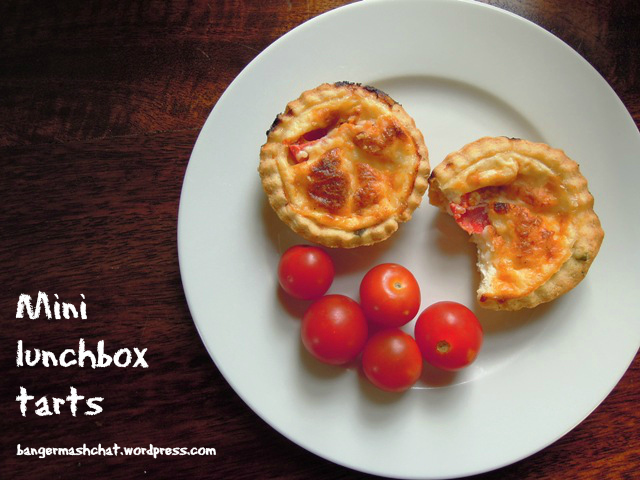
Next come the mini tarts. They are very versatile and you can add your children’s favourite ingredients. As well as cherry tomatoes, used here, we also include ham, sweetcorn, peas, chopped sausage, spinach, courgette, peppers – the options are pretty much endless.

mini tart

Mini lunchbox tarts filled with cheese and cherry tomatoes

Makes 12

For the pastry

110g plain flour
pinch of salt
50g butter, diced
cold water to mix

For the filling

2 large eggs, beaten
100g Cheddar cheese, grated
salt and pepper
12 cherry tomatoes, cut in half

For the pastry

In a large bowl, mix together the flour and salt. Rub in the butter to form breadcrumbs. Combine with water to form a dough. Wrap in clingfilm and rest in the fridge for 20 minutes.

Preheat oven to 200°C / gas mark 6.

Grease each of the cups of a 12-bun muffin tin with a little butter and dust with flour.

Flour the work surface and roll out the pastry to around 2mm thick. Cut out circles using a fluted pastry cutter, slightly larger than the diameter of the cups in the muffin tin. Press the pastry circles into the muffin tin.

Mix together the eggs and half the grated cheese, and season with salt and pepper. Pour into the pastry moulds. Pop two halves of cherry tomato into each tart and sprinkle with the remainder of the cheese.

Bake in the oven for around 15 minutes until the pastry is golden and the filling is set. Enjoy hot or cold.

mini tart

These tarts and pasties are my entry into this month’s Family Foodies challenge, which I am co-hosting with Lou at Eat Your Veg. The theme this month is Lunchbox Ideas. We’ve already received some great entries – why not pop over and take a look? Or how about sharing your own favourite lunchbox filler?

family-foodies

Amaretto Christmas cake for Stir Up Sunday


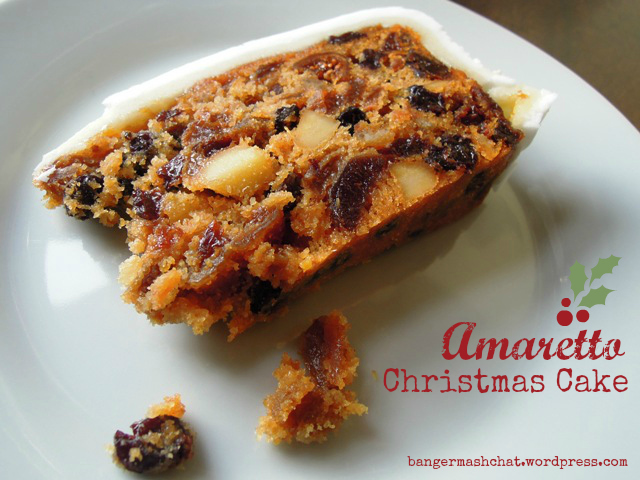
Tomorrow is Stir Up Sunday and this is the Christmas cake recipe I will be baking. I made it last year and, even though I’m not generally the biggest fan of rich fruit cakes, I thought it was absolutely delicious and so it has to be made again.

It’s essentially Guardian columnist Felicity Cloake’s recipe from her How to cook the perfect… series, but instead of using whisky I flavour my cake with amaretto, that deliciously perfumed, sweet-tasting almond-flavoured liqueur. It’s the drink I most associate with Christmas. My husband and I buy a bottle for the festive season every year, and we just about make it last until twelfth night.

Stir up Sunday traditionally falls on the last Sunday before Advent, which this year is 24 November. The name is thought to come from a prayer in the Book of Common Prayer, which is always read in church this Sunday:

Stir up, we beseech thee, O Lord, the wills of thy faithful people; that they, plenteously bringing forth the fruit of good works, may of thee be plenteously rewarded; through Jesus Christ our Lord. Amen.

Since the prayer readies Christians for the start of Advent, this day has also become synonymous with the start of other Christmas preparations, including the mixing of the Christmas pudding. With just over four weeks to go until the big day, it’s also the perfect time to bake the Christmas cake, giving sufficient time for ‘feeding’ with your alcohol of choice – be it rum, brandy, whisky or, in my case, amaretto.

Last year I let the children help me decorate the top of the cake with figures made from coloured icing sugar. We ended up with a penguin and a snowman but I have absolutely no recollection as to what the third character was meant to be! I didn’t have the heart to leave it off the cake as my youngest was just so proud of it.

decorations Collage

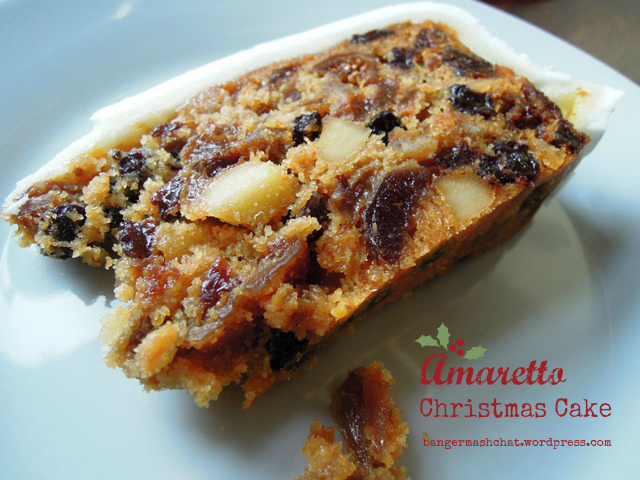
Amaretto Christmas cake

250g currants
250g sultanas
100g dried figs, chopped
100g glacé cherries, halved
100g mixed peel
125ml amaretto, plus extra to feed
125g soft butter
125g demerara sugar
4 eggs, beaten
130g plain flour
½ tsp baking powder
1 tsp mixed spice
pinch of salt
50g ground almonds
grated zest of 1 lemon
50g blanched almonds, roughly chopped
25g crystallised ginger, chopped

Start by soaking the fruit in the alcohol. Place the dried fruit and mixed peel in a bowl, cover with the amaretto, and leave to soak overnight.

Preheat the oven to 140C / gas mark 1. Grease and line a 20cm cake tin with baking parchment.

In a large mixing bowl, cream the butter and sugar together until pale and fluffy. Gradually add the eggs, beating well after each addition.

Sift the flour and baking powder into another bowl and then stir in the mixed spice, ground almonds and salt. Fold this into the butter and sugar mixture. Give the soaked fruits a good stir and add these, along with any remaining amaretto, the lemon zest, chopped almonds and ginger. Stir well.

Pour the mixture into the tin and smooth the surface. I appreciated Felicity’s tip of scooping out a small hollow in the middle of the mixture to prevent it doming during baking.

Bake for about an hour, before covering with foil and baking for another half an hour or so. The cake is ready when a skewer inserted into the middle comes out clean. Leave to cool in the tin.

With a skewer, poke some holes deep into the cake, and generously brush the surface with more amaretto. Remove the cake from the tin and with the baking parchment still in place, wrap in greaseproof paper and store in an airtight tin.

Feed again with amaretto every week  until it’s time to ice the cake just before Christmas. I cheat at this stage and use a layer of shop-bought marzipan, followed by a layer of shop-bought royal icing. But if you’d like to make your own icing, I can recommend Delia Smith’s recipe. Sorry – I’ve never made my own marzipan, so wouldn’t know where to point you for that!

amaretto christmas cake

This cake has become one of our family Christmas traditions. What are yours?

Tea-Time-Treats-Logo-new-2013-300x300

I’m entering this cake into Tea Time Treats, hosted by Karen at Lavender & Lovage and Kate at What Kate Baked as it contains heaps of dried fruit which just happens to be this month’s theme.

A trip to Cordoba for Cheryl’s paella

cordoba Collage

It seems like a while ago already, but a couple of weeks back my daughters and I spent half term in Spain visiting my mother, Cheryl, who is lucky enough to live in the beautiful city Cordoba in Andalucia.

We left Bristol Airport amid severe winds and rain and arrived in Spain delighted to find ourselves in glorious sunshine. It felt like an Indian summer to us, so we found it quite amusing that the Spanish were all complaining about how chilly it was getting.

My mum works as an art teacher in the British School of Cordoba, where unfortunately they don’t get half-term breaks, although the fabulously long summer holiday more than makes up for this. When mum went off to school in the mornings, the girls and I would have a lazy breakfast in her apartment before idling around the city. A favourite spot to while away the hours was the courtyard outside the city’s famous Mezquita, a stunning mosque converted into a Catholic cathedral in the 13th century.

mezquita

Despite the throngs of tourists, this is a truly magical and serene spot, where we’d enjoy our lunch sat on the stone steps, and then I’d simply sit back and watch the children play together in the shade of the orange trees.

Then we’d make sure we were back to the apartment in time for when my mum got back from school so we could spend the rest of our afternoons together. The girls always nag their Nana to take them to La Ciudad de los Niños – the City of Children. It’s their favourite place whenever we visit. It is one of the most incredible play parks I have ever been to, and the children could spend hours, if not days, here. If you ever visit Cordoba with children, you must pay it a visit.

ciuidad de los ninos ?????????? ??????????

Then we’d spend our evenings trying out different restaurants and tapas bars, and there are lots to choose from in Cordoba. Jess and Mia found it enormously exciting they were allowed to stay out late. Most places only starting service at 9pm, yet they’d still be full of families. It’s just something you don’t see when you go out at night here.

We enjoyed lots of wonderful tapas and seafood eating out in Cordoba, but to be honest my culinary highlight has to be the fantastic paella cooked at home by my mum. It’s a brilliant one-pot wonder and mum adds a little red chilli to her version, which I reckon is a marvellous addition. Mum’s like me – she says chilli improves pretty much any dish. I clearly inherited my love of chilli from her.

cheryl's paella

I got my mum to write down her recipe, and here it is:

Cheryl’s paella with chicken and prawns

Serves 6

pinch of saffron
1 tsp paella spice mix (or a combination of paprika, onion and garlic powder and cayenne)
2 litres hot chicken stock
1 lemon
2 tbsp olive oil
1 medium onion, finely chopped
4 cloves of garlic, crushed
1 red chilli, finely chopped
6 skinless chicken thighs (with bones), quartered
500g paella rice
handful of fresh parsley, chopped
1 large tomato, diced
salt and pepper
10 king prawns

Dry fry the saffron in a hot pan and then place in a measuring jug with the paella spice mix, hot stock and a squeeze of lemon juice.

In a large, deep pan heat the olive oil and fry the onion, garlic and chilli until soft.

Add the chicken pieces and brown, before stirring in the rice. When the rice is well coated in the oil, add half the parsley and diced tomato. Stir well and then pour over the chicken stock. Bring to the boil, give it all another stir and cover with a lid.

Gently simmer for around 20 minutes, stirring occasionally. When the rice is almost cooked, lie the prawn on top, replace the lid and cook until the prawns turn pink.

Serve garnished with the rest of the chopped parsley and a wedge of lemon.

Bueno appetite!

cheryls paellaAs my mum’s paella features chilli, I’m entering it into The Spice Trail, my new blog challenge, which this month has chilli as its theme.

spice trail badge square

As it’s also a wonderful one-pot wonder, this paella is also perfect for November’s Four Season’s Food, hosted by Eat Your Veg and Delicieux.

fsf-autumn

And finally as chilli is the theme for this month’s Taste of the Tropics at Chef Mireille’s Global Creations, I simply have to enter it into that challenge too!

Taste of the Tropics Logo.jpg

Sloe gin – because good things come to those who wait

sloe gin Collage

Patience is a virtue they say. Good things come to those who wait. But I happen to be a rather last-minute kind of girl and a little on the forgetful side. Forward-planning doesn’t come naturally to me. This sloe gin is a case in point.

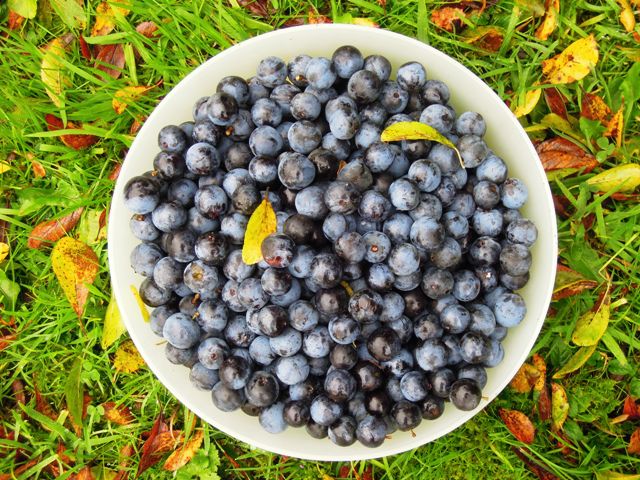
I had every good intention to make friends and family bottles of sloe gin for Christmas presents this year. We have a large blackthorn in the garden, which has been bursting with berries this autumn. I thought I had plenty of time. However, here we are, already in mid-November and my sloe berries are still sat in the freezer having been picked at the weekend, and of course sloe gin takes at least two months (preferably three months) to make.

So then I thought, well I can cheat. There’s always a shortcut to everything these days, isn’t there? I Googled ‘quick sloe gin’ and found a couple of posts suggesting you could bake the sloes for a little while in the oven to get the maceration going. But when I looked through the reader comments, I wasn’t impressed to see remarks about “ending up with jam rather than gin” and “what a waste of good sloes”.

sloes

It would seem there are no shortcuts. Sloe gin is slow gin for a reason. And I’m prepared to wait for it. I just need to figure out what to make for Christmas presents instead…

sloe gin

Here is the sloe gin we bottled last autumn. It really is beautiful stuff. Sweet and syrupy, almost medicinal-tasting, it must surely be good for you? I love to drink mine neat, or in a gin and tonic.

And here is how I made it last autumn. You can picture me making it again this weekend, giving us something to look forward to come the New Year, once all the festivities are over. There’s really not that much to it. It’s simply a waiting game.

Sloe gin

450g sloes
225g caster sugar
1 litre gin

Prick the skin of the sloes with a needle and pop them in a large sterilised jar or bottle. Pour in the gin and sugar, seal tightly and give it a really good shake.

Hide it away in a cool cupboard and shake every couple of days for the first week. Then shake it on a weekly basis for the next two to three months – the longer you leave it the better.

Finally, use muslin to strain the sloe gin into sterilised bottles.

Cheers!

sloe gin and tonic

Cooking with apples

Apple Collage

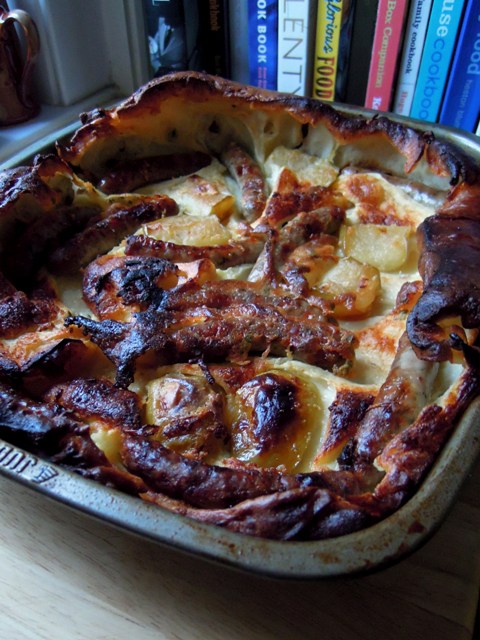
Katie’s Sausage & Apple Toad in the Hole, Michelle’s Apple Cake and my Nana’s Eve’s Pudding

Our apple season here has been and gone, but for a good couple of months there was quite a frenzy of apple cooking and apple eating in the Bangers & Mash household.

We have a lovely Discovery apple tree in our garden, which gives us a good crop of pretty red apples fairly early in the season. We can normally start picking them from around mid August. Well, most years. Last year we only had six apples from the tree but it was a terrible year for apple growers all over the UK. This year we had a splendid harvest.

apples

Discovery is a wonderfully sweet and crisp apple. The skin is so red it leeches into the white flesh turning it pink. And when you juice them, the apple juice is the most gorgeous shade of pinky-red.

The only problem is Discovery apples don’t store well, so I do find that late summer and early autumn become our apple-obsessed months, with practically every meal or snack featuring apple in some form or another. We’ve been baking, chutneying, pureeing, drying, juicing, freezing and crumbling! But as soon as they’re gone, I miss them terribly.

So when an invitation came from Waitrose to try some of their English apples, it couldn’t have come at a our better time.

Waitrose runs a Grow & Sell campaign with schools, encouraging seven to eleven year olds across the UK to grow their own produce and sell it to Waitrose customers. They are now taking this a step further and encouraging families to grow their own apples at home. So along with my apples I was also delighted to receive a Scrumptious apple tree to plant out in the garden alongside our Discovery tree, which will extend our apple season next year considerably.

Scrumptious is perfect for smaller gardens as you don’t actually need another tree nearby as a pollinating partner to produce a bumper crop of apples. The sweet eating apples are ready to pick in September and the tree is also happy in a large pot so long as it is kept well fed and watered.

With my bumper bag of Coxes apples from Waitrose I decided to try out some recipes from their website, where I found some rather tempting dishes from top food bloggers.

toad in the hole

This Sausage and Apple Toad in the Hole from Katie at Feeding Boys caught my eye straightaway. You probably won’t be surprised to hear that toad in the hole is a bit of a favourite in our house. I’ve never thought to include apple before and it was a big hit with all my family. We made ours with Waitrose pork and herb chipolatas and it’s certainly a dish I’ll be making again.

apple cake

I also baked this yummy Apple Cake from Michelle at Utterly Scrummy. It’s a delicious cake to serve slightly warm with yoghurt or ice cream, or I think it would work equally well as a pudding with lashings of homemade custard. My daughters also appreciated it cold as an after-school snack.

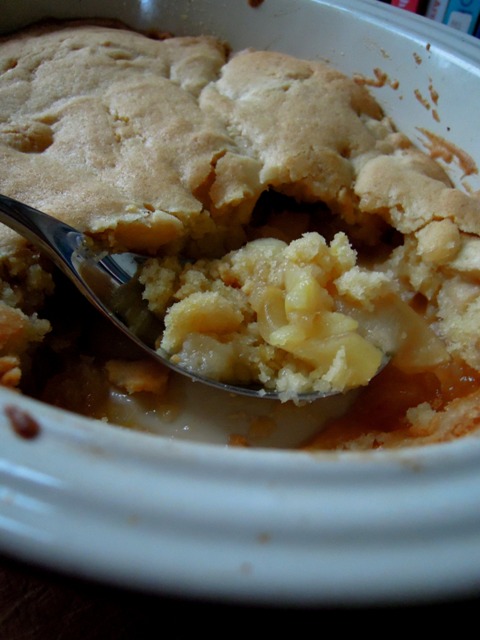
eve's pudding

Eve’s Pudding is always very popular with my clan and so I used the rest of the apples to rustle one up. It’s a recipe my Nana Barbara gave me and it’s a proper, old-fashioned, comforting sort of a pud – what I call a ‘hug in a bowl’ – with sweet, juicy pieces of cooked apple enveloped in a soft, fluffy sponge. Just the kind of pudding I crave when the weather turns nippy. What’s even better is it’s so easy to make.

My Nana’s Eve’s Pudding

450g eating apples, peeled and cored
60g demerara sugar
grated rind of 1 lemon
1 tbsp water
85g butter
85g caster sugar
1 egg, beaten
115g self-raising flour

Preheat the oven to 170°C / gas mark 4.

Slice the apples thinly into a greased ovenproof dish. Sprinkle over the demerara sugar, grated lemon rind and water.

In a large bowl, cream the butter and sugar together until pale and fluffy. Add the egg a little at a time, beating well after each addition.

Fold in the flour with a metal spoon and carefully spread the mixture over the apples.

Bake for 40-45 minutes until the apples are tender and the sponge mixture cooked. If you’re using an Aga, bake in the bottom of the roasting oven with the cold plate in the middle of the oven for 15 minutes, and then move to the bottom oven for 25-30 minutes.

Serve warm with cream or ice cream.

What are your favourite recipes to cook with apples?

Disclosure: Waitrose provided me with a complimentary apple tree and £10 shopping voucher for this post. All opinions are totally my own.

A vintage tea party, a royal wedding and a coffee, cardamom and walnut cake

vintage tea party

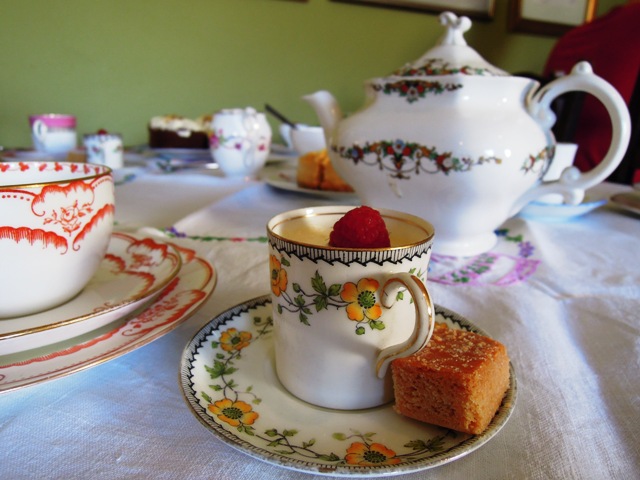
Is there anything nicer than tea and cake? In my book, it’s difficult to find a more pleasant way to while away an afternoon, especially when the tea is served in beautiful vintage china and the assortment of cakes on offer rivals the finest French patisserie.

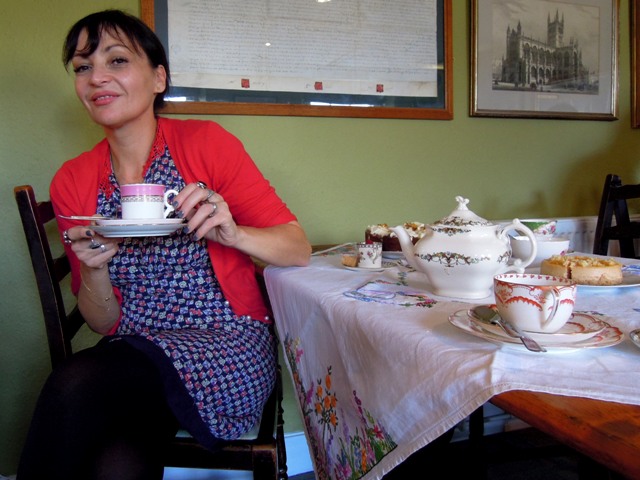
As you can probably tell, one of my personal highlights of the Wells Food Festival earlier this month was the wonderful vintage tea party at the Fountain Inn. I adore vintage but it can be a tricky look to get right and there’s a fine line between vintage chic and bring-and-buy shabby. So this was the perfect opportunity to get a few tips from the experts.

All the charming china at the tea party was on loan from Sara Kirkby, who runs a vintage crockery hire business called Elsie Florence based in Wincanton, Somerset.
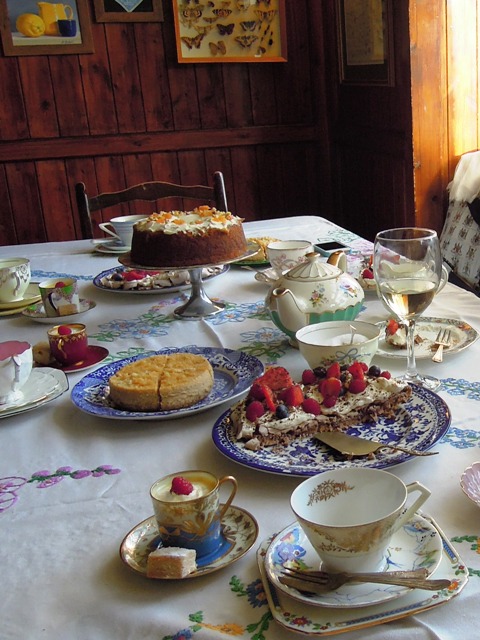
vintage tea party

With a degree in fashion and textiles, Sara attributes her appreciation of all things vintage to her grandmother. “As a child, I would use my bedroom wall as a fashion mood board,” Sara tells me. “My granny was my soul mate and my love of vintage and the start of my huge china collection comes from her.”

After college, Sara worked as a surface print designer and then a design consultant in fashion and interiors, working in both London and Hong Kong. Following the birth of their son and daughter, Sara and husband Steve bought an old town house (one could say vintage) in Somerset, which was in need of lots of work.

“With an original double shop front it was then that I started Elsie Florence, named after my granny,” Sara explains. (There’s a fantastic photo, by the way, of her grandmother on a motorbike on Sara’s website.) “I use the windows for styling vintage china displays and have a store room one side and a show room on the other.”

What is it about vintage that makes it so popular, I wonder?

“For me there is something magical about vintage,” says Sara. “It stirs emotions and always captures one’s eye. It makes people reminisce. Latterly vintage has become so popular because of fashion trends. Wedding budgets are different for everyone and the trend now seems to be smaller weddings but the detail is the key which the vintage theme provides. Vintage afternoon tea suits this trend and always impresses guests and appeals to all generations. Quite often each guest will have a tea cup and saucer as a place name or a favour to take home. What is there not to love?”

And Sara’s advice for anyone trying to create their own vintage look?

“With vintage styling I think you must have an eye. You can get it so wrong and it can end up like a jumble sale. Less is more in some cases and mixing vintage pattern with plain white can allow the eye to appreciate the delicate patterns. I have spent years sourcing vintage china and I will only buy a piece I adore. This is now a collection of over 600 teacups!”

The Wells tea party was hosted by former model and fashion designer, turned vintage guru, Pearl Lowe. Like Sara, Pearl has been in love with vintage from an early age. “I’ve always loved pretty things,” she tells me. “I don’t like the minimalist look. For me things have to be beautiful and decorative. That’s why my house is absolutely brimful of beautiful things. My husband tells me ‘That’s enough!’ but I can’t stop!”

pearl lowe

“History was always my favourite subject at school,” Pearl continues, “and I’ve adored old houses and old clothes since I can remember. My grandfather sold antiques and my mother did up old houses, so perhaps it is in my DNA.”

Pearl is currently setting up her house for a vintage Christmas-themed photo shoot for the Sunday Telegraph’s Style magazine. “It’s incredible how quickly you can transform a room with just a few simple additions.

“You can pick up boxes of beautiful old crockery for next to nothing at auction rooms,” Pearl advises. “The auction rooms in Frome is fantastic. And then with a pretty vintage lace tablecloth, some scented candles, a few jam jar posies of garden flowers and fairy lights strewn around the place – you’ll find you’ve created a gorgeous vintage look in next to no time.”
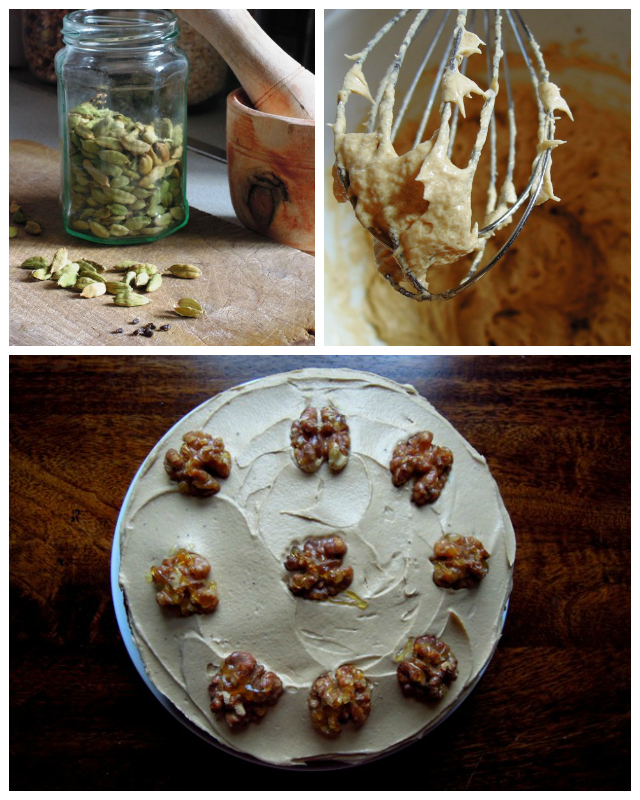
Coffee Walnut & Cardamom Cake Collage

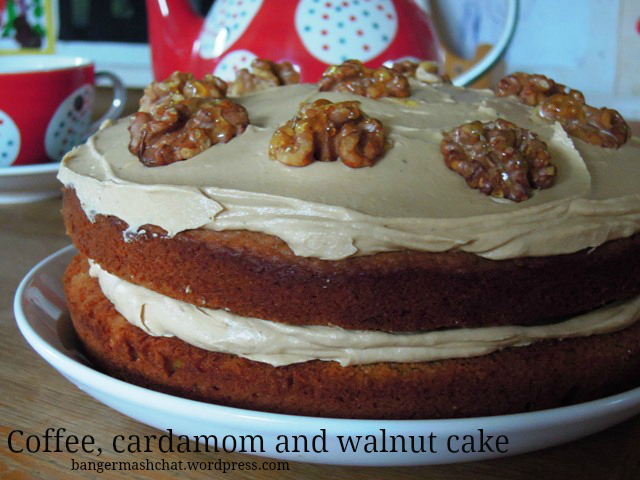
If you do plan to throw a vintage tea party yourself, I think I might have the perfect cake for you to serve your guests. It’s the coffee, cardamom and walnut cake I baked for the cake competition at the Wells Food Festival. The recipe is from professional cake baker Fiona Cairns and all the entrants in the Taste category were tasked with baking this same recipe. Sadly, I didn’t win – it was the first baking contest I’d ever entered, so I honestly wasn’t expecting to – but nonetheless it’s a simply delicious teatime cake; the cardamom raises the classic coffee and walnut combination to a whole other level.

The winner of the Taste category was Helen Roberts and even without tasting it, you could easily see hers was a cut above the rest.
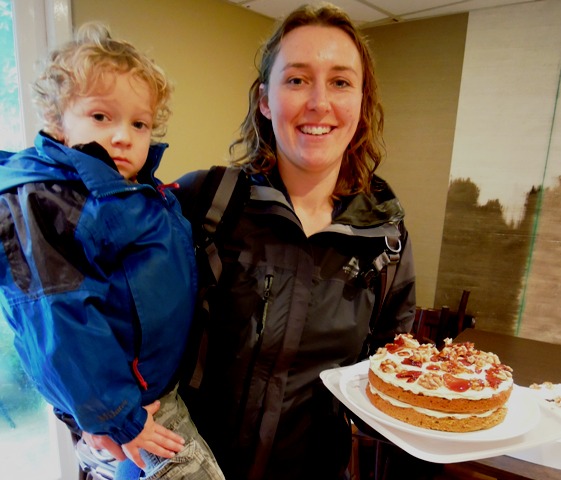
cake competition

When I asked her for the secret of her success was, she reckoned it was down to the caramelising of the walnuts. You’ve got to let the caramel turn really dark golden brown apparently and Helen says she used a sugar thermometer to make sure she got hers to precisely the right temperature before drizzling onto the walnuts. Now I know for next time.

And according to Fiona Cairns, originator of the recipe and judge of the cake competition, it was also down to the balance of flavours. I must admit I didn’t taste my cake batter at all while I was baking, placing my trust entirely in the quantities specified in the recipe. In hindsight, perhaps I should have added a little more coffee and a little less cardamom. But do you know what? Fiona also said all the entries were delicious, and considering I’m not really that experienced a baker, that’s good enough for me! So if you do fancy trying out the recipe for yourself, you’ll find it at the end of this post.

As well as judging the cake competition, Fiona Cairns was also the guest speaker at the vintage tea party, sharing her experiences as creator of the royal wedding cake for the Duke and Duchess of Cambridge.

fiona cairns

It was fascinating to hear Fiona’s story. Trained as an illustrator, Fiona then went on to train as a pastry chef in a Michelin-starred restaurant for three years. She started her cake making business from her kitchen table 25 years ago. “Baking wasn’t trendy back then,” Fiona recalls. “There weren’t cupcakes everywhere, and no-one had heard of the Great British Bake Off. How things have changed!”

Fiona set up the business with her husband. “He was the one who spotted the business potential for my cake making,” explains Fiona. “I couldn’t have done it on my own. I’m just not a business-minded person; creative types quite often aren’t.”

Today there are more than a 100 people working in Fiona Cairns’ bakery and from the very early days, she has been supplying high-end stores such as Harrods, Fortnum & Mason and The Conran Shop. “I always aim for the top,” Fiona smiles.

Despite making plenty of cake for celebrities over the years, Fiona isn’t really known for making wedding cake. She says this is precisely the reason she was chosen to make the royal wedding cake for the Duke and Duchess of Cambridge.

“We received plenty of calls asking if we were in the running, but we really had no idea we might be,” says Fiona. “It was such a surprise to get the call in February (bearing in mind the wedding was in April) from Clarence House to inform us we were being considered. And at this point we were invited for tea with Kate. I was so nervous going into Clarence House, I actually managed to walk right past Prince William without even noticing him!”

Fiona says that Kate was very clear on her wishes for her cake; she wanted the whole wedding to tell a story. The language of flowers was to feature throughout the cake decoration, and the Duchess chose 17 flowers to be included, such as the four national flowers (the English rose, the Welsh daffodil, Scottish thistle and Irish shamrock). Lily of the valley symbolising sweetness and humility was also to feature on the cake, and echoed in Kate’s bouquet and in Westminster Abbey. There would also be acorns, taken from the Middleton crest.

“I was told the cake was to be simple but elegant,” says Fiona. “And the Duchess was very clear that there was to be no glitter!” Fiona was also given a piece of lace to take away with her to see if she could transpose designs from it onto the cake. It was only later she learned this was actually a piece of lace from Kate’ wedding dress.
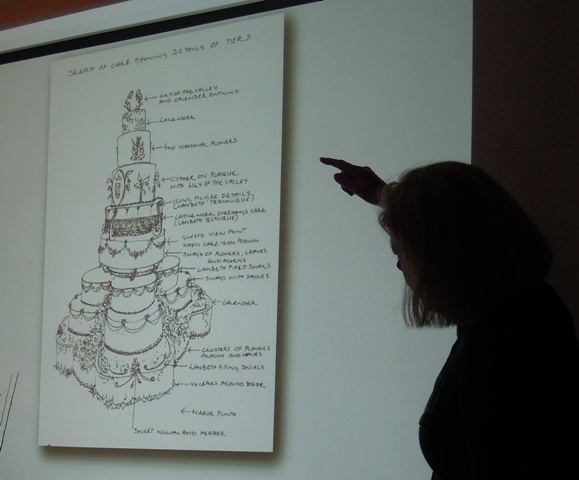
wells food festival

Four days later, Fiona received the official call to say she had been selected to make the royal wedding cake, and from that point her life was pretty much turned upside down. “There were lots of visits to London and we had to make up so many excuses, as we weren’t allowed to tell anyone what we doing. Everything to do with the wedding was top secret!” Fiona and her team had to work on the cake in a secret room for seven weeks.

Word got out to the media about a month before the big day that Fiona was creating the royal wedding cake and so Clarence House had to make an official announcement. “The world’s media absolutely swarmed on us,” remembers Fiona. “Of course there was lots of interest from the British press, but I think we got most attention from the US and Brazil. It was crazy and we had to take on a PR agency to field all the calls.”

wells food festival

Building the cake the day before in the Picture Gallery was one of the most stressful days of Fiona’s life. “This was the first time the actual cake had been put together and we had spare bits of everything with us, just in case. When the photographer climbed up a ladder to take the official photograph of the cake, I was so scared he was going to topple over and fall right into it! Once the cake was complete, it was just so difficult having to walk away from it.”

It wasn’t until the royal pastry chef Kathryn Boyden sent word to Fiona that the Duke and Duchess had seen the cake and told her it was “beyond all their expectations” that she could finally relax and enjoy the wedding with her husband.

Fiona’s life and business has been transformed since then. She’s gone on to publish books and host TV cookery programmes, created a Jubilee celebration cake for Harrods’ window, make the cupcakes for Heston Blumenthal’s Jubilee picnic, and this year her company will be baking more than 24,000 Christmas cakes!

It was a real delight to meet Fiona at the Wells Food Festival, and equally lovely to sit with her mother during the vintage tea party, who is clearly so proud of what her daughter has achieved. And I’m very grateful to Fiona for providing me with her top baking tips, which have transformed my approach to baking!

If you’d like to try Fiona’s coffee, cardamom and walnut cake recipe, here it is…
coffee cardamom and walnut cake

Coffee, cardamom and walnut cake

For the cake

175g unsalted butter, really soft, in pieces, plus more for the tins
50g walnuts, roughly chopped
15 cardamom pods
175g caster sugar
1 tbsp instant coffee, dissolved in 1 tbsp boiling water, cooled
3 large eggs, lightly beaten
50g ground almonds
125g self-raising flour, sifted

For the caramelised walnuts

50g walnut halves
100g caster sugar

For the buttercream

5 cardamom pods
150g unsalted butter, softened, in pieces
250g icing sugar, sifted
1 tsp vanilla extract
2 tsp Camp coffee essence (or 1 tbsp instant coffee, dissolved in 1 tbsp of boiling water and cooled)
1 tsp double cream

Preheat oven to 180°C/gas mark 4. Butter two 20cm round sandwich tins and line the bases with baking parchment.

Keeping them separate, place the nuts both for the cake and the caramelised nuts on baking tray and roast for six minutes. Watch carefully, as they can turn from beautifully toasted to bitter and singed quite rapidly. Set aside to cool.

Lay the walnut halves you have toasted and cooled for the caramelised walnuts on a baking tray lined with baking parchment.

Have a sink or washing up bowl of cold water to hand. You are about to make a caramel, so take great care: hot caramel can be dangerous.

Put the sugar and 100ml of cold water in a saucepan and dissolve the sugar over a gentle heat, stirring with a metal spoon. Once it has all dissolved, increase the heat to a boil, stop stirring and occasionally brush down the sides of the pan with a pastry brush dipped in cold water to prevent crystals forming. Boil until the mixture turns a beautiful caramel gold and has thickened. Immediately plunge the base of the pan into the cold water to stop the cooking. Then using a teaspoon, drizzle the caramel over the walnuts on the tray. (You’ll need to be speedy here; I found the caramel thickened very quickly.) Leave to set.

De-seed all 20 cardamom pods for the cake and buttercream. Grind the seeds to a powder in a mortar and pestle and sift to remove husks. Keep one-quarter aside for the buttercream.

In a food mixer (or a bowl with a hand-held electric whisk), cream together the butter, sugar and coffee until very light and fluffy. Take a good five minutes, which is longer than you might expect.

Gradually add the eggs, then the almonds and cardamom for the cake. Gently fold in the flour and chopped nuts; don’t over-mix, but fold until they are just combined.

Divide the batter between the tins, smooth the surfaces and bake in the pre-heated oven for 20-25 minutes, or until a skewer comes out clean.

Leave the cakes in their tins for a couple of minutes, then turn out onto a wire rack and remove the baking parchment. Leave to cool.

To make the buttercream, in a food mixer (or in a bowl with a hand-held electric whisk), beat the butter and icing sugar for a good five minutes – again this is longer than you might expect, but it leads to a far fluffier, buttercream.

Add the vanilla, cardamom, coffee and cream and beat until smooth. Spread over both cake, then place one on top of the other. You can spread the buttercream over the sides of the cake too, if you like. Decorate with the caramelised walnuts and shards of the caramel.

Recipe from SEASONAL BAKING by Fiona Cairns, published by Weidenfeld & Nicolson

Wells Food Festival and a Greek pumpkin and feta pie – Zimaropitta

As you may have gathered from recent posts, I’m ever so slightly excited about the very first Wells Food Festival, which takes place this coming Sunday.

One of the many reasons I’m looking forward to this culinary extravaganza is the festival also marks the opening of a brand new foodie establishment in  Wells.

Locals might have been wondering what’s been happening to the Sun Inn over the last few weeks. The pub on Union Street has been closed a little while and is currently being refurbished and transformed into a Greek idyll. Just in time for the festival, the pub will reopen as The Greek Taverna at the Sun, and as a big fan of Greek food I for one cannot wait.

I lost no time in catching up with the Sun’s new owner, Olga, who will be running the pub with her brother Yianni, to find out more about their plans.

“It is very much a family business,” Olga explains. “We want our customers to feel like they have just been invited to our house for a meal. Our mother will be the main cook because of course no-one cooks like a Greek mum! We believe that food is not just about what you cook, but that it always tastes better when you can enjoy it in a friendly, relaxed environment.

“We will be serving authentic Greek home-cooked food, good wine, cakes, ‘real coffee’, cocktails, and all the drinks you’d expect to find in a pub,” Olga tells me. “The Sun Inn will still be a pub but it will also serve quality home-cooked food. Outside lunch and dinner times, we’ll also offer meze (a selection of small dishes) that people can have with their drink if they don’t wish to have a full meal.”

Olga’s mother had her own restaurant back in Greece for over seven years, while Olga and her brother Yianni have run a small boutique hotel together. They clearly have heaps of experience, but what brings them to Somerset?

“My brother and I have both lived on and off in Wells for some time,” says Olga. “My sister-in-law lives here with her family and this is how we first discovered Wells. We fell in love with the place. It is a very interesting, small city surrounded by amazing nature. What we like most about it is that people are so friendly and make you feel like part of the family. We have been refurbishing the pub for the last three weeks and during this time it is has been amazing how many people have offered to help us.”

How does Olga think Wells will respond to their Greek food? Why is she so keen to share Greek cuisine?

“We love Greek food, not just because we are Greek, but also because we believe it is simple, healthy and delicious,” replies Olga passionately. “We know that British people love Greek food but what they get most of the time in the UK is Greek food cooked in a British way. We will be cooking authentic Greek food using local ingredients; we believe food tastes better if ingredients are sourced locally. Somerset has many farms producing excellent fruit, vegetables, meat and dairy. To give you an example instead of buying sausages imported from Greece, we decided to give our traditional family recipe to one of the local sausage producers who will be making them just for us.

“Also the financial situation in Greece in the last few years has taught us a big lesson: supporting local businesses is the only way to keep the community ‘alive’.”

I asked Olga if she could give us a taste of the kind of food we can expect to find at the new Sun Inn, and she has very kindly provided her recipe for Zimaropitta.

“Because your blog is about lovely, tasty food that doesn’t take long to prepare, I thought we can make an easy pumpkin pie with feta cheese,” says Olga. “Simple, inexpensive ingredients you can mix together in one bowl and cook in the oven is my idea of healthy fast food. This is what this recipe’s all about. We used a marrow bought straight from the producer in Wells Market and local Somerset feta cheese from Queen Street Deli.

“I would serve it with some tzatziki (yoghurt garlic dip) and a green salad. You can replace the flour with any wheat-free variety for a gluten-free version.”

Zimaropitta Collage

Zimaropitta – feta and pumpkin pie

1kg grated pumpkin (not any of the sweet varieties), marrow or courgette
3 eggs beaten
300g feta cheese, crumbled
250g milk
250g semolina
250g self-raising flour
150g cornmeal (optional)
salt to taste (if your feta is not salty)
a little water might be needed to bring the dough to a porridge like consistency

Preheat the oven to 180°C/gas mark 4.

The traditional Greek way of grating a pumpkin or a marrow is to cut it in half lengthways and use a spoon to scrape off the soft part  little by little. Of course, it might be easier just to cut it to pieces, peel and use a box grater.

Then mix all the ingredients in a bowl and add some water if you think it is needed. It should have a thick, porridge-like consistency before you pour it into a buttered ovenproof dish. Bake in a preheated oven for about 45 minutes to 1 hour.

“There you go,” says Olga. “A piece of… pie! And a great way to persuade children to eat pumpkin too.”

Thanks so much to Olga for her delicious recipe. I can’t wait to give it a go myself, as I know this is just the kind of thing my family will adore. I wish Olga, Yianni and their mum every success with their new venture and look forward to seeing the newly refurbished pub when I come over for the festival at the weekend. If you’d like to keep up-to-date with what’s happening at the Sun Inn, do visit their Facebook page.

And if you’d like to find out what else is happening this Sunday at the Wells Food Festival, take a look at the website at www.wellsfoodfestival.co.uk.

wells-food-festival-logo

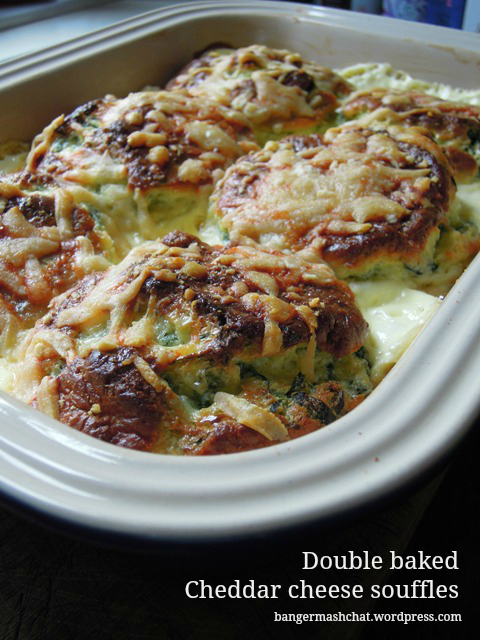
Wells Food Festival and double baked Cheddar cheese soufflés

Double baked Cheddar cheese souffles

Soufflés have something of a reputation for being a little on the tricky side. If any of the Master Chef contestants ever say they’re going to bake a souffle, there’s always a sharp intake of breath and concerned expressions. But really, they’re not all that hard to do. Admittedly this was only the second time I’ve ever attempted them but both times they’ve been a great success. So you see, if I can make them, anyone can.

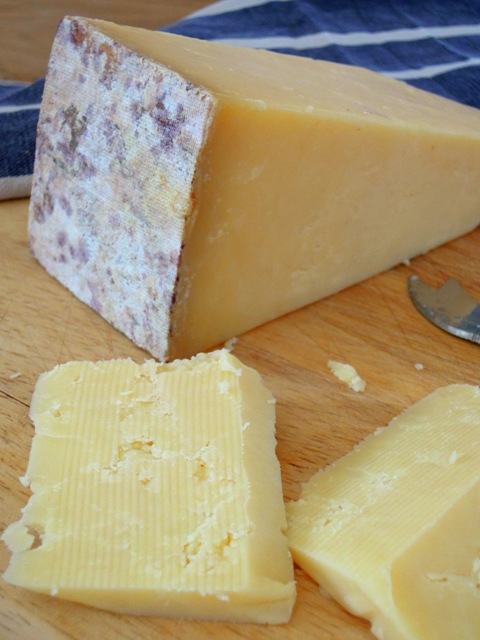
I used a lovely local Cheddar cheese in these soufflés. Dan Holland who owns the Queen Street Deli in Wells recommended Montgomery Cheddar, which is handmade on Manor Farm in North Cadbury. It’s a traditional, unpasteurised Somerset Cheddar, matured for 12 months to give it a gorgeously deep, nutty flavour.

Montgomery Cheddar

The Queen Street Deli is another local business taking part in the Wells Food Festival on Sunday 20 October. Dan is organising the cheese stand at the festival, which will highlight the fantastic wealth of Somerset cheeses we are lucky enough to have on our doorstep.  During the day, local cheese makers will take turns on the stall to share their knowledge and passion with visitors.  Dan is also selecting and sourcing the cheese for the Somerset Sunday Lunch in the town hall, which he describes as a great honour and a chance to showcase a few of his favourite and most popular cheeses.

Queen Street Deli

The Queen Street Deli is a small friendly shop, offering the best of local and continental food.  Dan opened it in 2008 when he decide to leave teaching maths at the local school and went for a complete career change, working with food – something that had been a bit of a dream for a while.

Despite the recession, he has managed to grow the business over the last five years, thanks to the support of his very loyal customers. “The greater percentage of our customer base is people who live in and around Wells, rather than tourists, which is great and hopefully means we are getting it mostly right!” Dan tells me. “Recently the opening of new supermarkets in Wells has created more challenging times but we are looking forward to a busy Christmas period and will be taking the usual orders for cheese, ham and hampers.”

I asked Dan what he thought this first Wells Food Festival means for the food and drink of Somerset.

“Hopefully it will reinforce and build on the reputation that Wells and Somerset already have as an area that produces and creates excellent artisan food and drink,” says Dan. ” It will certainly emphasise the diversity and range of quality products that we have all around us and be a real opportunity for the local businesses to promote themselves to a wide audience.”

So what are Dan’s personal favourites when it comes to Somerset’s food and drink?

“Obviously I have a slight bias towards cheese,” Dan replies. “We have some great Cheddars such from the likes of Barbers, Keens and Montgomery but I still think Westcombe is my fave.  I also really love the range of cheese produced by the Somerset Cheese Company in Ditcheat. Their Rainbows Gold is very popular in the deli at the moment; rich curd made with Channel Island cows milk then washed in Golden Chalice ale from Glastonbury.

“Beyond cheese I really like Mendip Moments Ice Cream and James Chocolates, two very local companies that produce interesting and tasty products that everyone loves. My latest top recommendation for eating out is Matt’s Kitchen in Bruton. There’s no menu as such – everyone eats what Matt is cooking that night, there’s a friendly, relaxed atmosphere and lovely food.”

Armed with a decent chunk of Montgomery Cheddar, I returned home all inspired to bake my soufflés to hopefully celebrate a true taste of Somerset. The recipe is based on one I found in Mary Berry’s New Aga Cookbook for Swiss Double Soufflés, substituting her Gruyère for the Cheddar. It’s a perfect dish to cook in the Aga, but don’t worry – instructions for conventional ovens are also included below.

As the name says, these soufflés are double baked: first in ramekins in a bain-marie, and then again in a the cream sauce. So it’s no great disaster if your soufflés flop a little, as the double baking means they won’t end up all puffed up anyway. But they still taste beautifully light and airy, albeit rather rich and luxurious at the same time. They made for the perfect Saturday lunch, served with crusty bread and a simple salad, and they went down well with the children too – despite them containing spinach, which is not Mia’s favourite vegetable.

cheese souffles

Double baked Cheddar cheese soufflés

100g spinach, washed and finely shredded
300ml milk
40g butter
40g plain flour
salt and pepper
freshly grated nutmeg
50g mature Cheddar cheese
3 eggs, separated
butter for greasing

Topping
50g mature Cheddar cheese, grated
300ml double cream

If you’re using a conventional oven, preheat to 220°C/gas mark 7.

Place the spinach and milk in a pan and bring to the boil. Stir well, remove from the heat and leave to one side.

Melt the butter in a large pan. Remove from the heat and stir in the flour. Return to the heat and cook for a minute, stirring constantly. Add the spinach and milk, a bit at a time, and bring to a gentle boil, stirring all the time. Simmer to thicken the sauce. Remove from the heat and mix in the salt, pepper, a good grating of nutmeg, and Cheddar cheese. Once these are well mixed in, stir in the egg yolks.

In a large clean bowl, whisk the egg whites until stiff and then carefully fold into the sauce.

Generously butter six small ramekins and spoon in the souffle mixture. Place them in a small roasting tin and pour boiling water into the tin until it is halfway up the sides of the ramekins.

If you’re cooking in an Aga, place the bain-marie in the roasting oven on the grid shelf on the oven floor for 15-20 minutes. After 10 minutes of the cooking time, when the soufflés are a good golden brown colour, turn the tin around and slide in the cold plain shelf on the second set of runners. Cook until they are springy to the touch.

If you’re cooking in a conventional oven, simply place the bain-marie in the oven for 15-20 minutes and cook the soufflés until golden and are springy to the touch.

Remove from the oven and leave for 5-10 minutes in the ramekins to allow the soufflés to shrink back a little.

Butter a shallow ovenproof dish which is just big enough to take the soufflés without them touching. Sprinkle half the grated Cheddar onto the bottom of the dish.

Carefully remove the soufflés from the ramekins using a small palette knife and place in the ovenproof dish. Season the cream and pour over the soufflés. Sprinkle the remaining Cheddar on top and bake in the roasting oven if you’re using an Aga, this time without the cold plain shelf, or in your regular oven, for 15-20 minutes until the soufflés are golden brown.

Serve with bread and salad.

Double baked Cheddar cheese souffles

wells-food-festival-logo

As these double baked soufflés are not to be rushed and are best made when you have some time on your hands, they definitely fit the bill as a Weekend Slowie, which is the theme this month for the Family Foodies challenge over at Eat Your Veg. So here you are, Lou – hope you like them!

family-foodies

Love heart double chocolate cupcakes

There’s been a bit of a baking frenzy in our house recently. There was a PTA cake sale at my daughters’ school last week and we decided to get all creative with these love heart cupcakes with a double chocolate and cream cheese topping. Jess hates buttercream so cream cheese is a good alternative.

Sometimes I just can’t be bothered to bake for the cake sale and at the last minute we’ll resort to buying plain fairy cakes or biscuits, which the kids will decorate with gaudy-coloured icing and a few sprinkles. But other times I go the whole hog. And this was one of those times. I was definitely spurred on by my earlier success with a classic Victoria sponge and also by a big bag of chocolate goodies from the kind people at Dr Oetker. My youngest daughter Mia, who is a self-confessed chocoholic, couldn’t believe her luck when she opened up the parcel.

chocolate

Dr Oetker are running a competition, challenging UK bakers to come up with their most creative chocolate cupcake and I thought I might try my chances. One lucky baker will win the fantastic prize of a trip for two to New York City, the home of the cupcake. The closing date is 17 October 2013 if you fancy having a go too. Pop over to their Facebook page for more details on how to take part. Having seen the other hugely impressive entries, I don’t think I have even the slightest smidgen of a chance of winning anything but it’s the taking part that counts, as they say.

Love heart cupcakes collage

The cupcakes were a big hit at the school cake sale. Admittedly they’re a bit more of a faff than I’d usually go in for when it comes to decorating cupcakes but it was worth it to see the children’s faces when they spied them. And if you fancy a pretty-looking sweet treat, the love heart cookies on their own seem to go down rather well with the little ones.

love heart cookies

Love heart cookies

Makes around 40 cookies – so you’ll have plenty left over to enjoy later

250g butter, softened
140g caster sugar
1 egg yolk
2 tsp vanilla extract
a drop or two of red food colouring
300g plain flour
pinch of salt
25g dark chocolate
hundreds and thousands

Preheat the oven to 180°C/gas mark 4.

In a large bowl, beat together the butter, sugar, egg yolk and vanilla extract. Add a couple of drops of red food colouring and combine well.

Sift in the flour and salt and mix thoroughly to form a dough. You’ll need to get your hands in at this point.

Roll out the dough between two sheets of baking parchment until it is roughly half a centimetre thick.

Use a small heart-shaped cutter to cut out your cookies, or work freehand using a sharp knife.

Line a baking tray with more baking parchment and carefully lift the cookies onto the tray, spacing them apart a little.

Bake in the oven for 10 to 12 minutes until just firm to the touch. Remove from the tray and leave to cool completely on a wire rack.

Place the dark chocolate in a small bowl and melt in a microwave. Using a teaspoon, drizzle chocolate onto each love heart cookie and then sprinkle on some hundreds and thousands.

Chocolate chip cupcakes

Makes 12 – six chocolate cupcakes with white chocolate chips and six plain cupcakes with dark chocolate chips

125g butter, softened
125g caster sugar
2 eggs
125g self-raising flour
½ tsp vanilla extract
2 tbsp milk
2 tsp cocoa powder, mixed with a few drops of water into a paste
25g white chocolate chips
25g dark chocolate chips

Preheat the oven to 200°C/gas mark 6.

Put the butter, caster sugar, eggs, flour and vanilla extract into a food processor and whizz until smooth. Add the milk and mix again.

Split the mixture equally between two separate bowls. Into the first add the cocoa paste and mix in carefully. Then add the white chocolate chips and stir until well dispersed through the mixture. Into the second bowl of plain mixture add the dark chocolate chips and again stir in.

Line a 12-bun muffin tin with 12 muffin cases.

Spoon the mixture into the paper cases and bake in the oven for 15 to 20 minutes until the cupcakes are springy to the touch and just golden on top.

Remove the cakes from the tin and leave to cool completely on a wire rack.

Double chocolate and cream cheese marbled topping

100g cream cheese
200g icing sugar
75g white chocolate
75g dark chocolate

Scoop the cream cheese into a large bowl and sieve in the icing sugar. Beat together until thoroughly combined. Place half the mixture into a second bowl.

Place the white chocolate and dark chocolate into two separate bowls and melt in the microwave. Add the white chocolate to one bowl of topping mixture and the dark chocolate to the other. Combine well.

Place alternate spoonfuls of white chocolate and dark chocolate topping into a piping bag until it is full. Swirl a generous amount onto each of the cupcakes.

And finally, top with one of  your pretty love heart cookies.

Love heart double chocolate cupcakes

Disclosure: Dr Oetker provided me with a complimentary selection of cooking chocolate and cake decorations for this post. No money exchanged hands and all opinions are totally my own.

In the parcel I received 72% Extra Dark Fine Cooks’ Chocolate, 26% White Fine Cooks’ Chocolate, Dark Chocolate Chips, White Chocolate Chips, and Hundreds and Thousands, all of which I used in this recipe.

Wells Food Festival and how to bake the perfect Victoria sponge

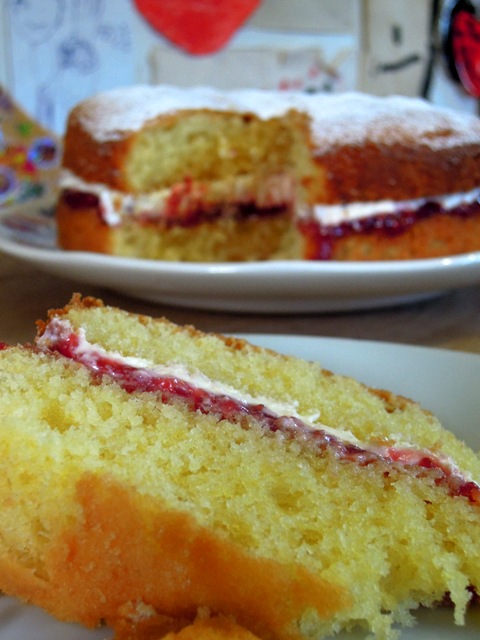
Victoria Sandwich

I was all prepared to title this blog post How not to bake a cake. Then something bizarre happened. I actually followed a recipe. Properly. To the letter. I organised all the ingredients in advance, took the butter and the eggs out of the fridge the night before, sifted the flour from a height, didn’t over-mix the batter. And guess what? My Victoria sponge was the lightest, fluffiest, most perfect cake I’ve ever eaten. Or at least, baked myself.

This amazing recipe comes from cake-maker extraordinaire Fiona Cairns, possibly best known as the creator of the royal wedding cake for the Duke and Duchess of Cambridge. So she knows what she’s doing. Fiona will be coming to Somerset to judge the cake baking competition at the Wells Food Festival on Sunday 20 October. I’m featuring a series of posts on the blog in the run up to the food festival and to help promote the cake competition, I thought it would be a nice idea to share some of Fiona’s cake baking tips.

Why I was surprised that by actually following these tips myself I could turn out a decent cake I’m not really sure, but I was. I think over the years I’d convinced myself that baking just doesn’t come naturally to me. I bake like I cook, you see. I take a recipe and play around with it, or cut corners. Now that’s fine if you’re cooking a casserole or a curry, but not a sponge cake, loaf of bread or batch of biscuits. Sometimes I get lucky but, more often than not, they’re a disaster. So my number one tip for baking the perfect cake has to be, first and foremost, stick to the recipe.

Victoria Sandwich

Now over to Fiona for her baking tips.*

Always read the recipe

Always read right to the end and only then assemble all the ingredients and equipment you need. This makes life easier, less stressful and more enjoyable.

Temperature of mixing bowls and ingredients

A warm kitchen, equipment and ingredients make a great cake. So, when baking a cake, stand your mixing bowl and beater or whisk in a bowl of warm water, then dry thoroughly before you start. Conversely, cooler ingredients and temperatures result in perfect biscuits. Hence, marble and cold hands are good for biscuit making. Is this why Scottish shortbreads are famous? Try to think ahead and remove eggs and butter from the refrigerator the night before. But, if the urge to bake suddenly strikes, stand the eggs in a bowl of warm water, and blitz the butter in the microwave.

Scales and measurements

Baking is an exact science. I’m afraid you can’t sling in an extra spoonful of this or that for good measure; you must weigh everything out precisely. A good set of digital scales is invaluable.

Tins

There is a huge variety on the market; buy the best you can. Really good-quality tins will last many years, conduct heat well and won’t warp. Non-stick, loose-bottomed or springform tins make baking so much easier. Try to use the size of tin specified. If you don’t have the correct size, err on the side of a slightly larger tin (the cake will be shallower) and reduce the baking time by 5-10 minutes.

Light as air

When sifting flour, lift the sieve up high; this allows air to coat the particles of flour as they float down.

Don’t hang around…

Once a cake’s in the tin, put it in the oven immediately as, when moist, the raising agents start to work. (A dense fruit cake batter isn’t so sensitive.)

…but be patient!

Don’t be tempted to open the oven door to peep at your cake too often. Leave this until the final 5-10 minutes. If you keep opening the door at the start, you will affect the rise and texture of the cake.

When is it ready?

Insert a thin skewer into the very centre of your cake. If it emerges clean, the cake is cooked. Long-baked fruit cakes may need extra attention: cut a piece of foil to fit the surface. Pierce a hole in the centre and open it up. This lets out steam while protecting the surface from drying out or scorching.

* Tips taken from Fiona Cairns’ Bake & Decorate.

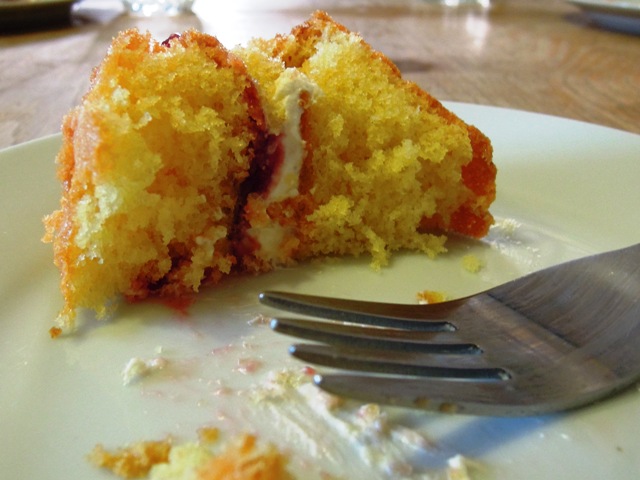
Victoria Sponge Collage

Baking a beautiful cake and serving it up to my family filled me with a deeply wonderful feeling of joy. I can really see why people become obsessed with baking as a way of bringing pleasure to others. The next cake I bake will probably be a complete disaster and my new-born confidence will disappear without a trace, but for the time being I’m wallowing in the feeling of having turned a corner on my way to becoming a domestic goddess.

Here is Fiona Cairns’ recipe for this classic teatime cake:

Victoria sponge

Serves 8

For the cake

175g unsalted butter, softened, plus more for the tin
175g self-raising flour
1 tsp baking powder
3 eggs, lightly beaten
175g golden caster sugar
1 tsp vanilla extract

For the filling

150ml double cream
4 tbsp raspberry or strawberry jam
icing sugar, to dust

Preheat the oven to 180°C/gas mark 4.

Butter two 20cm sandwich tins, then line the bases with baking parchment.

For the batter, you can either use an electric mixer with a beater attachment or a food processor, or a bowl and an electric whisk.

Sift the flour and baking powder into the bowl, then add the butter (in knobs), the eggs, sugar and vanilla. Beat together until thoroughly blended. Take care not to over-mix so  you will have a light sponge. Pour the batter into the tins and level the tops.

Bake for 20-25 minutes, until the cake springs back to the touch or a skewer inserted into the middle comes out clean.

Remove from the oven and leave for a couple of minutes, then run a knife around the rims to loosen the cakes from the tins and turn out onto a wire rack. Peel off the paper and leave until completely cold.

Lightly whip the cream until it forms soft peaks. Fill with jam and cream and sandwich together, so the cream forms the uppermost layer. Be sure to sandwich the flat bases together. Dust the top with icing sugar.

Victoria Sandwich

Following my success with the Victoria sandwich, I might even be tempted to enter the cake-baking competition at the Wells Food Festival myself. There are two categories: best taste and best decoration. Entries in the best taste category must all follow Fiona Cairns’ recipe for coffee, cardamom and walnut cake, which sounds like my kind of cake. If you’re interested in entering, you’ll need to email info@wellsfoodfestival.co.uk for the recipe and entry instructions. More details are on the Wells Food Festival website.

Judging by Fiona Cairns will take place during the morning of Sunday 20 October and she’ll announce the winners at Pickwicks cafe in Wells at 2pm. All entrants will get the chance to meet Fiona. The winner of each category will win a pair of tickets to the vintage tea party hosted by Pearl Lowe at the Fountain Inn and Fiona’s talk  about the making of the royal wedding cake, as well as a copy of one of Fiona books.

wells-food-festival-logo

As this Victoria sponge is ideal for a spot of weekend baking, when you can take a little more time over things in the kitchen, it’s a perfect recipe to enter into this month’s Family Foodies challenge for which the theme is Weekend Slowies. Family Foodies is a new monthly food blog challenge hosted by Lou at Eat Your Veg, and she has very kindly invited yours truly to co-host with her. Do pop over there to take a look at the other Weekend Slowies and perhaps you’ll be tempted to enter a dish yourself?

family-foodies