Braised pig cheeks with carrot and parsnip mash

braised pig cheeks with carrot and parsnip mash

This was one of the first recipes I featured on the blog many moons ago. It’s a rich, deliciously intense dish, in which pig cheeks are slowly braised in red wine, vegetables and caraway until they are so exquisitely tender they fall apart at the touch of a fork, and, if you weren’t upfront with your dinner guests, they would never dream they were eating offal. Don’t get me wrong. I’ve never actually tried tricking anyone into eating pig cheeks before, but it would be rather interesting to see how it worked out. Anyway, I know my lot love this dish and they are generally pretty squeamish about eating ‘funny bits of animal’.

I thought I should enter these pig cheeks into this month’s Spice Trail challenge, which is calling for people’s favourite caraway recipes, as this is undoubtedly one of mine. The plan had been to simply link up my previous recipe post (badly lit photos and all), but then I spotted some pig cheeks on the butcher’s counter – rather unusual as I normally have to put in a special request for them.  So I took that as a sign I had to make the dish again, especially for The Spice Trail. Such a hardship, I ask you. The things I do for this blog.

braised pig cheeks with carrot and parsnip mash

I always serve these braised pig cheeks with some kind of vegetable mash. It just seems to work so well with the rich sauce, and creates the most blissfully comforting of dishes. When I featured it on the blog previously I went for celeriac mash; this time it is carrot and parsnip. It could simply be mashed potato. Your call.

Braised pig cheeks with carrot and parsnip mash

Serves 4-6

6 pig cheeks, trimmed of fat
salt and pepper
flour for dusting
3 tbsp olive oil
2 onions, peeled and chopped
1 leek, washed and cut into 1cm chunks
2 carrots, peeled and cut into 1cm chunks
2 celery sticks, cut into 1cm chunks
2 garlic cloves, sliced
100g tomato puree
½ bottle dry red wine
300ml beef stock, hot
½ tsp black peppercorns
2 tsp caraway seeds
1 bay leaf

For the mash

4 carrots, peeled and chopped
1 large parsnip, peeled and chopped
50g butter
splash of milk
salt and pepper

Preheat the oven to 140°C/gas 1.

Season the pig cheeks and dust with the flour. Heat 2 tbsp oil in a large ovenproof pan and fry the cheeks until golden brown. Remove from the pan and keep warm on a plate.

Add a little more oil to the pan and add the onions, leeks, celery, carrots and garlic and fry gently until just beginning to brown. Pour in a little of the red wine and the tomato puree. Cook gently to reduce the wine and caramelise the puree. Gradually add the rest of the wine, reducing down each time until you have a lovely rich dark sauce.

Return the cheeks to the pan and pour over enough stock to cover. Add the peppercorns, caraway seeds and bay leaf and bring to a gentle simmer.

Cover with a lid and cook in the oven for four hours. Stir occasionally and add more stock if it begins to dry out.

Towards the end of the cooking time, boil the carrots and parsnip in a pan of salted water for around 10 minutes. Add the butter, milk and a little seasoning, and mash well or puree with a hand blender.

When cooked, remove the cheeks from the pan and keep warm. Pass the sauce through a fine sieve into a clean pan. Bring the sauce to the boil and reduce until it is good and thick. Season to taste with salt and pepper.

Serve the cheeks on the mash and generously spoon over the sauce. Enjoy!

braised pig cheeks with carrot and parsnip mash

This is my last entry for February’s Spice Trail challenge, which celebrates cooking with caraway.

spice trail badge square

And I am also entering this dish into Ren Behan’s Simple and in Season event as both carrot and parsnip are certainly in season right now.

SimpleinSeason

How I make bangers and mash

bangers and mash

It’s only taken me a couple of years, but finally bangers and mash makes an appearance on my blog. There’s been a sausage pasta, sausage chilli, sausage bake, sausage and noodle soup,  and even a Star Wars sausage stew, but this is the first time that classic pairing of the humble sausage with mashed spuds has been allowed to take centre stage.

bangers and mash

It’s not really a recipe though, is it? I guess that’s why I’ve never featured it before, despite it being the namesake for my blog and a dish we eat almost every week. (In case you’re interested, here’s a blog post from 2011 on why I chose to call this blog Bangers & Mash.)

This month’s Family Foodies challenge, hosted by Lou over at Eat Your Veg and me, is all about the food you cook to show your family how much you love them, and I simply couldn’t not enter my good old bangers and mash. If my children are feeling low or have had a demanding day, then bangers and mash is one of those tried-and-tested dinners that is sure to put a big, beaming smile back on their faces. It works for my husband too. It’s a hug on a plate, all covered in gorgeous gravy.

Here’s how I make mine…

bangers and mash

The bangers

I tend to buy my sausages (and indeed most of my meat) from the local butcher, and I always go for the best I can possibly afford. I would rather spend more on good, free range, locally reared meat and eat less of it, than buy cheap, lower welfare meat which never tastes as good. While pork sausages must have a minimum meat content of 42 per cent pork, I try to make sure my sausages contain at least 70% meat. Fried sausages are of course quite delicious but I usually grill mine as it’s ever so slightly better for you.

The mash

It’s important to choose a good floury potato for your mash, such as King Edwards or Desirée. Peel and boil them until just tender, drain and then add a generous knob of butter to the hot potatoes and allow to melt before mashing them with a dash of milk, a dollup of wholegrain mustard and some salt and pepper. I rather like my mash to be a little lumpy. It’s not an excuse honest; in fact I have a slight aversion to the super smooth ‘creamed’ potato you get in restaurants – but each to their own!

The gravy

I must hold my hands up here and admit to using gravy granules fairly often. It’s different when you’re cooking a roast; there are lots of lovely meat juices from which to make your gravy. When you’re cooking sausages, it’s not quite the same. But it is still possible to make a delicious gravy from scratch (well, using a stock cube or frozen stock) and if you’ve got the time, it’s well worth that little extra effort. I like to make my gravy with red onions and redcurrant jelly for some sticky sweetness, which goes so well with sausage, although you could swap for white onions and Balsamic vinegar instead. Here’s my recipe…

Red onion gravy with redcurrant jelly

1 tbsp vegetable oil
2 large red onions, peeled, cut in half and sliced
1 tbsp corn flour
500ml hot beef stock
2 tsp redcurrant jelly
salt and pepper

Heat the oil in a heavy-bottomed saucepan and add the onions. Turn the heat down low, cover with a lid and leave the onions to cook gently for around half an hour or so, until soft and translucent. Give them a quick stir every now and again.

Stir in the corn flour and cook for a few minutes, before pouring in the hot stock and redcurrant jelly. Cook for another 15 minutes to thicken. Check for seasoning before pouring into your gravy boat and then smothering all over your bangers and mash. Delicious!

bangers and mash

As I mentioned before, I’m entering this dish into February’s Family Foodies challenge (hosted by Eat Your Veg and me) where the theme this month is LOVE.

family-foodies-valentine

Caraway and linseed bread

caraway and linseed bread

While I adore caraway in slow-cooked meaty dishes (such as my braised pig cheeks in red wine or my family favourite Bolognese), when I think of caraway I do tend to think of bread. As I said before, one of my earliest memories of caraway is smelling it in a little Jewish bakery in Stamford Hill in North London as a child.

But until this week, I’ve never actually baked my own bread with caraway. To be honest, we’re quite boring with our bread, most of which is made in the breadmaker, carefully timed so that we have a freshly baked loaf awaiting us in the morning. That’s probably the only thing I have in common with David Cameron. Thank goodness.

I am married to a man who loves his gadgets and so it is no surprise we own a breadmaker. It is also no surprise, therefore,that  it is my husband who makes most of our bread in said breadmaker. But on those occasions when I decide I want to make bread, I usually do it the old fashioned way, by hand, in an oven. If I didn’t work almost full-time, I’d probably bake more bread this way. But I do, so I don’t.

My husband prefers his loaves fluffy and white. I like mine brown, seedy and substantial. The children eat whatever’s going, thankfully.

I guess I really should have tried a rye bread for my first experimentation with caraway in breadmaking. But that might have been a step too far for my other half. I’ll work up to that. For my first caraway bread, I decided on a simple wholemeal loaf with a spattering of caraway and linseed. I’m not completely sure why I ended up with this particular combination, but it’s probably got something to do with picking up a big bag of linseed in Holland and Barrett when I actually went in to purchase something entirely different, and needed to use it up somehow. Apparently it is one of the most potent sources of omega 3 fatty acids found in nature and offers a whole host of health benefits besides. I just thought they tasted rather nice.

So here’s my caraway and linseed bread recipe. It’s less of a sandwich or toast bread and more of a satisfying bread and cheese and soup bread, if you know what I mean. But I did find myself creeping into the kitchen late at night and tucking into a slice or two, with nothing more than a generous spread of salted butter. And the scent of caraway transported me right back to that Stamford Hill bakery and heading back home with Dad to finish my Puffin Post competition entries…

caraway and linseed bread

Caraway and linseed bread

250g strong white bread flour, plus extra for dusting
250g wholemeal bread flour
7g fast action dried yeast
10g salt
50ml sunflower oil
300ml water
20g caraway seeds
50g linseed

Put the flour, yeast and salt into a large bowl and mix together. Pour in the sunflower oil and water and combine with your hands to form a dough. If it’s too dry, add a drop more water. If it’s too sticky, add a little more flour.

Lightly flour your work surface and knead the dough for around 10 minutes, until the dough is smooth and elastic.

Return the dough to the mixing bowl, cover loosely with cling film or a clean tea towel and leave in a warm place for about an hour, until the dough has doubled in size.

Uncover the risen dough and punch it back down. Flour the surface again and knead the dough for a couple of minutes. Gradually knead in the caraway and linseed until evenly dispersed through the dough.

Shape the dough into a round and place on a well-floured baking tray. Cover the dough again with cling film or a tea towel and leave again until it has doubled in size.

Preheat the oven to 220°C/gas mark 7.

Bake the bread for 10 minutes, then reduce the heat to 190°C/gas mark 5 and bake for 20 to 30 minutes until the loaf is browned and sounds hollow when tapped on the base.

When I do it in the Aga, I bake the bread near the top of the top oven for 10 minutes and then move to the bottom of the oven for the remainder of the time.

Leave to cool on a wire rack.

spice trail badge square

This caraway and linseed bread is another of my entries for this month’s Spice Trail challenge.

Bolognese for ballerinas

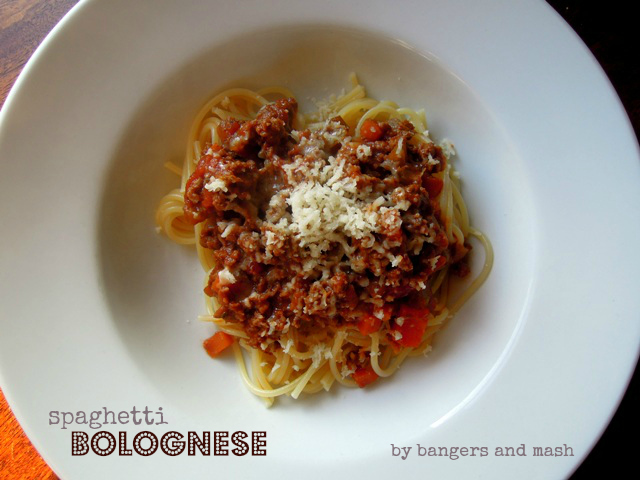
spaghetti bolognese

We’re nearing the end of the school half-term holidays. It’s been a lovely week of movies (Mr Peabody and Sherman in 3D at the cinema and Cloudy with a Chance of Meatballs 2 on DVD, both of which get a big thumbs up from my girls), baking (my eight-year-old Jess created a superb Victoria sponge with her very own recipe mango buttercream topping, while Mia elected to make double chocolate chip cookies although Mummy did most of the work), library outings, times tables testing, story writing, soft toy safaris, Sir Frances Drake research, and dance shows.

Baking Collage

Jess and Mia have been rehearsing for months and months for their big dance show with the Susan Hill School of Dancing. This finally culminated in much-anticipated performances at the end of the half term break at the Forum Theatre in Bath. The girls and their friends had a day of dress rehearsals on Thursday, followed by matinée and evening shows on Friday and Saturday. I helped out back stage on the Thursday and Friday, which was great fun but truly exhausting. I thought being responsible for two children was full on, but looking after a group of 13 five-year-old girls was something else, and not to be repeated too quickly!

Sadly, Jess was forced to miss her Saturday performances as she fell ill with a bug – she was absolutely gutted, but at least she got to dance on the Friday. Unfortunately I didn’t get to see her as I was back stage, although friends who were in the audience tell me she danced beautifully. So this weekend, poor old Jessie has spent most of the weekend on the sofa under a duvet. She’s off her food – always a sure-fire sign she’s unwell – although I have succeeded in tempting her with a little fresh melon and chicken soup with rice. I’ll post the recipe for the soup very soon.

Dance Collage

Earlier in half-term week my mission had been to feed my two ballerinas with lots of nourishing food to keep their energy levels up for all that dancing. And so the obvious dinner after their gruelling Thursday of dress rehearsals had to be their all-time favourite, spaghetti Bolognese.

Spaghetti Collage

Spaghetti Bolognese has been both of their favourite meals since they were old enough to pick up a fork and spoon. Whenever I make it, I always make sure there’s some left over to go in the freezer for an easy supper another day.

spaghetti bolognese

Everyone has their own Bolognese recipe. Mine varies depending on what I have in the house.

Sometimes mine will have a drop of red wine in there, and sometimes it won’t. Sometimes there will be peppers or mushrooms (much to Jessie’s dismay as she’ll have to pick them out), or perhaps some smoked bacon. If I have a Parmesan rind lurking in the fridge, I’ll chuck that in during the cooking to give it a scrumptious flavour boost. I don’t always add caraway seeds, but I thought I would this time so I can enter it into this month’s Spice Trail challenge, which has caraway as its theme. I think the caraway adds a lovely intense and slightly sweet flavour to the Bolognese, and I quite often use it in casseroles and other slow-cooked meat dishes.

Bolognese sauce

1 tbsp olive oil
1 onion, peeled and finely chopped
2 carrots, peeled and finely chopped
2 celery sticks, finely chopped
2 garlic cloves, peeled and chopped
500g minced beef
400g tin chopped tomatoes
beef stock cube or pot
½ tsp caraway seeds
dash Worcestershire sauce
Parmesan rind (optional)
salt and pepper

Heat the oil in a large saucepan and gently fry the chopped onions, carrots and celery until soft – around five minutes. Add the garlic and fry for a couple more minutes before adding the minced beef. Stir to break up any lumps and cook for two to three minutes until browned.

Pour in the chopped tomatoes. Half fill the tomato tin with hot water and pour into the pan. Sprinkle in the beef stock cube, or ‘plop’ in the stock pot. Add the caraway seeds, a dash of Worcestershire sauce and the Parmesan rind if you happen to have one left over.

Give it all a good stir and allow to simmer for half an hour or so. If it starts to look dry, add a little more water. Before serving, give it a taste and add a little salt and pepper if needed, and remove the Parmesan rind if used.

Serve with pasta, ideally spaghetti, and a grating of fresh Parmesan cheese on top.

spice trail badge square

I’m adding this Bolognese to February’s Spice Trail, hosted by yours truly, as it features caraway seeds.

family-foodies-valentine

I am also sharing this with February’s Family Foodies, hosted by Eat Your Veg and me, which this month has a Love theme. Spaghetti Bolognese is definitely a dish cooked with love for my loved ones, big and small.

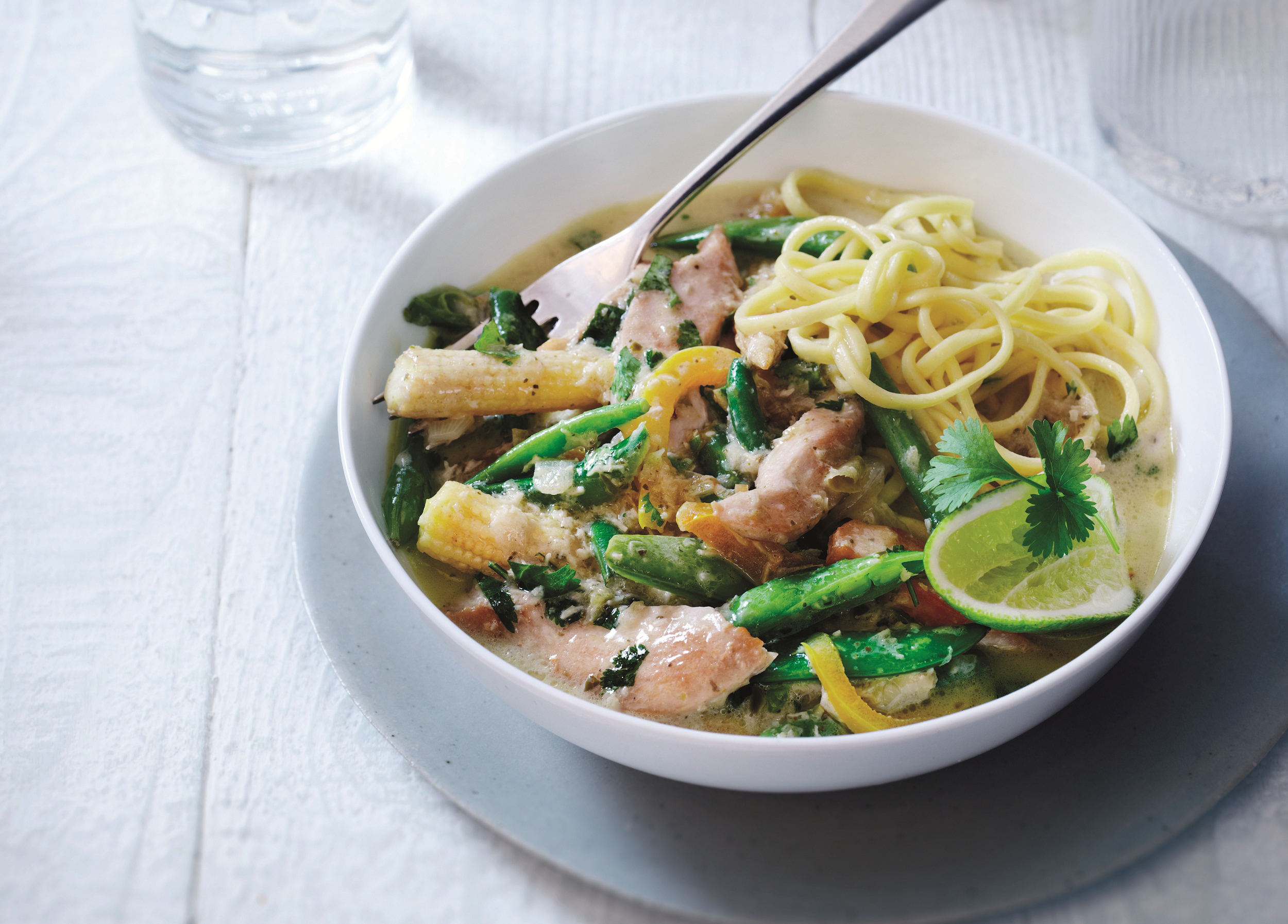
‘Count on us’ Thai green curry

Thai Curry-Recipe Card
Photo courtesy of M&S

It hasn’t been particularly healthy here on the blog as of late; rather a lot of chocolate and cake and pizza about. I swear that’s not an honest reflection of my family’s dining habits in recent weeks, but it is true that my new year’s resolutions of eating more healthily have slipped somewhat.

So when M&S got in touch to see if I’d like to review one of their new healthy eating recipes, it sounded like a rather good idea. M&S have put together four easy recipe cards for under-400 calorie meals, which means they are particularly suited to anyone on the 5:2 diet.

I opted to test drive the Thai green curry recipe, which uses a jar of count on us Thai green curry sauce. Back in the days before I used to cook much, only about nine years ago before the children came along, I wouldn’t have though twice about opening a jar of shop-bought sauce when I was making a curry. But not these days. I find most jars lack any decent flavour and are never nearly hot enough for my taste. And Thai green curry is right up there at the top of my favourite curries list. The best one I’ve had recently was at the Pan Asia restaurant in Bath, where the bling decor is as fresh and zingy as their dishes.

So M&S would have to turn out something pretty tasty to impress my husband and me.

But do you know what? It was actually pretty good. I was about to continue that sentence with for a sauce from a jar. But no, I stop there. It was pretty good, full stop. OK, so it wasn’t as hot as I’d have probably made it myself if I was starting from scratch, but I do tend to like things hotter than most and the chilli flakes scattered on top took care of that. We were very liberal. It also needed the fresh lime and coriander to create those tingles on the taste buds you’re looking for when you have a green curry.  What I probably appreciated most though was how quick it was to make. We had it one evening after the children had gone to bed, and I really wasn’t in a cooking mood, and it took less than 20 minutes.

At just 385 calories per portion, it’s definitely a winner in my eyes. I’ve got my eye on their jalfrezi sauce to try out next.

Here’s the recipe or download the M&S recipe card as a PDF.

Thai green curry with chicken and vegetables

1 tsp sunflower oil or olive oil
250g skinless chicken breast (2 fillets), cut into strips
300g assorted vegetables, eg baby corn, sugar snap peas
1 small pepper, deseeded and finely sliced
350g jar M&S count on us Thai Green curry sauce
1tsp fish sauce
generous handful freshly chopped coriander
red chilli flakes & lime (to garnish)

Heat the oil in a large non-stick frying pan or wok and when very hot add the chicken. Stir-fry for 2-3 minutes or until the chicken is
lightly coloured. Remove to a plate.

Add your choice of vegetables, such as baby corn to the hot pan, stir-fry for 2-3 minutes before adding the more tender sugar snap peas and pepper; stir-frying for a further minute or two.

Stir in the count on us Thai Curry sauce. When bubbling, add back the chicken, heat through for 2-3 minute then stir in the fish
sauce and chopped coriander.

Serve with egg noodles. Garnish with chilli flakes and a wedge of lime.

Photo courtesy of M&S

Disclosure: M&S provided me with all the ingredients for this dish in return for trying out their recipe. All views expressed are completely my own and are 100% honest.

Cherry-stuffed poussin with braised lettuce

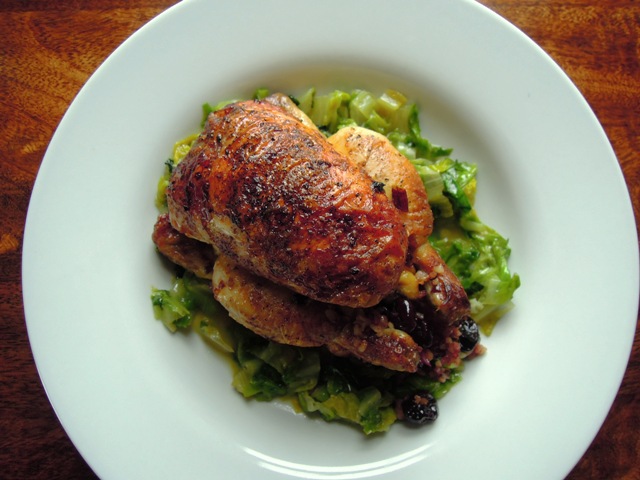
poussin

Love is in the air with Valentine’s Day just a couple of days away. This cherry-stuffed poussin is one of the most romantic meals I can think to serve my husband, but I admit it probably isn’t a first date dinner.

Devouring a whole bird can be a slightly messy affair and getting to the best bits will certainly entail eating with your fingers. Yes, you’ll end up with juice running down your chin and hands. I can’t see a problem with that at all. There’s something rather sexy about getting messy with food.

But if you’re looking to impress your new beau, you might want to think about something a little tidier.
The idea of stuffing the poussin with cherries and nuts came from a beautiful book by Bethany Kehdy, The Jewelled Kitchen; a collection of Lebanese, Moroccan and Persian recipes.

Kehdy stuffs her chicken with albaloo, barberries, pistachios and rice. I’ve adapted her recipe a little to use dried cherries, which are slightly easier to get hold of, cashew nuts, as those are what I happened to have in, and bulgur wheat because, well I can’t seem to get enough of bulgur wheat at the moment. I really like its tender, chewy texture and use it a lot in salads. It’s particularly good with feta cheese and pomegranate seeds.

poussin

There is a hint of pomegranate in this stuffing too, in the form of pomegranate molasses, which bring a heavenly sweet and sour tang to the dish. All in all, this stuffing brings a beautifully fragrant, almost exotic, element to the poussin – just perfect for wooing your lover.

The poussin is so delicious, I’ve served it very simply with braised lettuce. You’ll notice there are no stodgy carbohydrates in this meal, as I really don’t think you want to end up completely over-stuffed and unable to move at the end of Valentine’s Day.

poussin

Cherry-stuffed poussin with braised lettuce

Serves 2

60g dried morello cherries
80g bulgur wheat
½ tbsp sunflower oil
small red onion, finely chopped
2 garlic cloves, crushed
30g cashew nuts
1 tbsp pomegranate molasses
½ tsp cinnamon
salt and pepper
2 x 450g poussins
25g soft butter
olive oil
½ tsp cinnamon
4 spring onions, finely sliced
40g butter
2 little gem lettuces
150ml hot chicken stock

Preheat the oven to 220°C / gas mark 7.

Place the dried cherries in a cup of hot water and leave to soak for 10 minutes and then drain.

Place the bulgur wheat in a bowl and pour over boiling water to at least double the height. Leave for 15 minutes, then drain.

Fry the onion in the oil until soft. Add the garlic and fry gently for another minute. Remove from the heat. Add the cherries, cashew nuts, bulgur wheat, pomegranate molasses and cinnamon and give it all a good stir. Season to taste.

Place the two poussins in a small roasting tin and carefully spoon the stuffing into each of the cavities. Truss up the poussins to keep the stuffing inside.

Rub the skin with the butter and drizzle with a little olive oil. Sprinkle the skin with cinnamon, salt and pepper. Roast in the oven for around 40 minutes. Poke a skewer into the thickest part of a leg and if the juices run clear, the poussin is cooked. Leave to rest in the tin for 10 minutes.

In a saucepan, gently cook the spring onions in the butter until soft. Shred the lettuces and stir into the buttery spring onions. Cook for a minute or two until the lettuce is wilted, then pour in the hot stock. Simmer for five minutes or so until the lettuce is tender and the stock has reduced. Taste and season if needed.

Serve the poussins on a bed of braised lettuce, remembering to untie them first. You may wish to pull out a little of the stuffing to reveal the treats inside.

This recipe was first published in my Eat the Season column in the Wells Journal on Thursday 6 February 2014.

The Valentine scribble cake

Valentine Scribble Cake Collage

When I want to give my children a treat, I bake them a big chocolate cake.

When I want to show my children how much I love them, I’ll leave them in charge of decorating said chocolate cake.

valentine scribble cake

Et voila! Here you have our Scribble Valentine Cake! Mia came up with the name.

My daughters don’t think Valentine’s Day should be just for their mummy and daddy. Surely it’s a celebration for the whole family; we all love each other, don’t we? Especially when it usually means there are gifts of chocolates involved.

So this year in the run up to V Day, we decided to make a rather large family chocolate cake.

Yes, I know the end result is garish and gaudy but Mia had a blast being given (almost) free rein to decorate it, and all of us were more than happy to eat it.

scribble cake

It is a simple chocolate sponge sandwich, filled with strawberry jam and whipped cream. We then covered it with a white chocolate icing, which was supposed to be coloured a tasteful shade of pink but ended up a very vibrant red. I’d like to blame the children, but to be honest it was my hand that slipped as the food colouring went in.

Mia then went to town creating her own Jackson Pollock style artwork, dribbling first melted plain and then white chocolate on top of the cake, and of course all over herself and the floor at the same time. For the final piece de resistance, Mia added some lovely Thornton’s Valentine’s chocolate truffle cups to spell out I heart you on top. We also had a bag of Thornton’s strawberry jelly hearts but Mia decided against using those as well at it might be slightly OTT. You see, she can be quite a discerning child really. Jess and Mia gobbled up the jelly hearts once they finished licking the bowl out, natch.

valentine scribble cake

If you’d like to attempt creating your own chocolate action art masterpiece with your little ones, here’s how we made ours. It’s a slight variation on the tried and tested chocolate cake I make for most special occasions in our house.

Valentine scribble cake

3 tbsp cocoa powder
200g caster sugar
200g soft butter
3 eggs
200g self-raising flour, sifted
1 tsp baking powder
4 tbsp strawberry jam
200ml double cream

For the icing

100g butter
100g white chocolate, plus another 25g for drizzling
100g icing sugar
2 tbsp double cream
red food colouring
25g plain chocolate
plus any other decorations you care to throw on top

Preheat the oven to 180°C/gas mark 4. Grease and line the base of two 20cm cake tins with baking parchment.

In a cup mix the cocoa with 4 tablespoons of boiling water until smooth.

In a large bowl, beat the sugar and butter until light and fluffy. Take some time with this; keep beating for a good five minutes. Add the cocoa mixture, eggs, flour and baking powder and mix well.

Split the mixture between the two cake tins and bake for 20 to 25 minutes in the oven. The cakes are ready when an inserted skewer comes out clean. Allow to cool before removing the cakes from the tins.

To make the icing, place the butter, white chocolate, icing sugar and double cream into a bowl and place over gently simmering water in a pan. Stir until it’s all melted and blended together. Add a few drops of red food colouring – just one or two if you want a pretty shade of pink, or a good glug if you fancy a slightly more vivid hue like ours. If the white chocolate goes a little lumpy or grainy, as it can do sometimes (white chocolate isn’t particularly easy to work with when it’s melted), you can try stirring in a touch more double cream and/or passing the icing through a sieve into another bowl. Allow the icing to cool a little.

Whip the double cream until it forms soft peaks.

Remove the baking parchment from both cakes. Place one a wire rack, over kitchen towel or newspaper to catch the icing drips later. Firstly spread the cake with jam and then with whipped cream. Place the second sponge on top and press down.

Pour the red icing over the top and allow to set slightly. In separate bowls, melt the white chocolate and plain chocolate and then, using a teaspoon, drizzle over the cake in an ‘artistic’ manner. Finally, decorate with any other sweeties or chocolates you fancy.

valentine scribble cake

As this cake is definitely one to make for and with those you love, particularly those of the younger/smaller variety, I am entering it into February’s Family Foodies challenge hosted by Eat Your Veg and myself, and where the theme this month is LOVE.

family-foodies-valentine

Disclosure: Thorntons provided me with complimentary chocolate truffle cups and strawberry jelly hearts for review purposes.

Beef broth with rice and vegetables

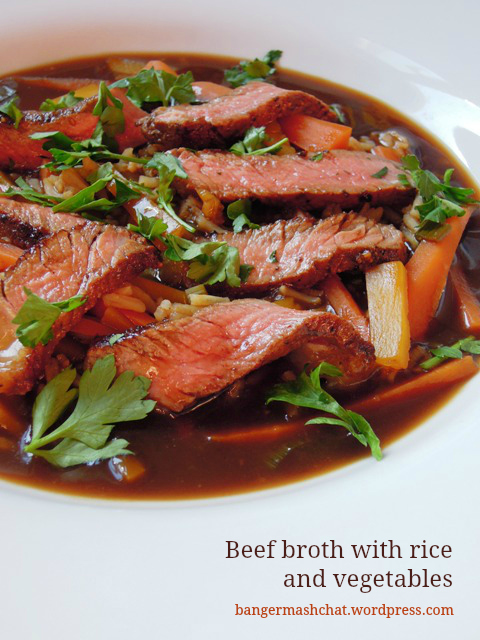
beef broth

While we all love to experiment in the kitchen, every cook has their favourite ingredients they use again and again in their meals. My usual suspects include garlic, chilli sauce, cream cheese and that Great British favourite, Worcestershire sauce.

I love the way Worcestershire sauce gives a comfortingly rich yet suitably spicy note to all your family staples. It makes a regular appearance in our cottage pies, casseroles and Bolognese sauces. But this is the first time I’ve tried it in a broth and it didn’t disappoint. Together with the soy sauce and beef stock, it creates a gorgeous, deeply meaty broth, just perfect with the tender slices of beef steak, crunchy vegetables and soft rice.

beef broth

This dish was a winner with all the family, although I suspect my husband felt it would benefit from the addition of a little sliced chilli, but then he thinks that about most things I serve up. And it also tasted very good the next day when I heated up a pot in the office microwave for my lunch.

Beef broth with rice and vegetables

1 large sirloin or rump steak
vegetable oil
black pepper
1 litre beef stock
2 tbsp Worcestershire sauce, and a little more for frying the steak
1 tbsp light soy sauce
4 spring onions, sliced
2 garlic cloves, peeled and crushed
2 carrots, peeled and cut into thin batons
half a butternut squash, peeled and cut into thin batons
120g basmati rice, rinsed
large bunch of fresh parsley, roughly chopped

Heat a large frying pan. Brush the steak with a little vegetable oil and season with black pepper. Fry over a high heat for around 3 minutes on each side, shaking over a few drops of Worcestershire sauce as it cooks. Leave to rest on a warm plate.

Pour the stock into a large saucepan and heat. Add 2 tablespoons of Worcestershire sauce and one of soy sauce, and throw in the spring onions, garlic, carrot, butternut squash and rice. Bring to a simmer, cover and cook gently for around 10 minutes.

Divide the broth between 4 bowls. Thinly slice the steak and place on top of the broth.  Garnish with chopped parsley and serve immediately.

beef broth

If you’d like some more ideas on how to use Worcestershire sauce in your cookery, you should take a look at Lea & Perrins’ YouTube channel. They have created a series of recipe videos with British YouTubers Sorted Food, bringing all kinds of twists to classic family dishes, such as spaghetti Bolognese and cheese on toast.

Disclosure: This post is sponsored by Lea & Perrins.

Love bites! Chilli and ginger raw chocolates

chilli ginger chocolates

It’s no surprise that two of the biggest tags on this blog’s tag cloud are chocolate and chilli. I can’t seem to get enough of either ingredient, and I’m in seventh heaven when the two come together. So this Valentine’s Day, I’m making chilli chocolates for my man. I say I’m making them for him, but of course I’m making them for both of us. Because it would be rude of him not to share…

chilli

I could of course buy him a box of chilli chocolates, and I have done this many times in the past. It’s just that my husband and I are real chilli fiends, and we find the chocolates you buy in the shops never have a strong enough chilli kick for us. When you make them yourself, you can tailor them to your individual tastebuds and make sure they have some proper fiery oomph. I also added a little crystallised ginger to my chocolates for extra flavour and another layer of spicy warmth.

chilli ginger chocolates

I used a raw chocolate making kit from Elements for Life to make these bad boys. The kit provides all the ingredients you need, including Wiltshire grown Habanero chilli, as well as the pretty silicone moulds, and the recipe is a sinch to follow. Although I should point out the crystallised ginger and fresh chilli were my own additions.

If you fancy trying out the kit yourself, there’s a chance to win one at the end of this post.

chilli ginger choclates

Dark and spicy and divinely smooth, I’m a big fan of these chocolates. Even my girls are fond of them – only the ones containing chilli powder; the ones with fresh chilli would be way too hot for them. But then it’s no surprise that our children can cope with a little heat, given their parents penchant. Normally, I’d suggest children stay away from these chocolates. Strictly adults only.

They are dairy free, so ideal for vegans and people who are lactose intolerant, and also gluten-free, so great for coeliacs. Nor do they contain any refined sugar, so perfect for diabetics.

But why raw chocolate? Well, apparently raw chocolate is pretty good for you. With normal chocolate, the cacao beans are roasted, destroying much of its nutritional value. Plus it generally contains refined sugar and fat. Raw chocolate on the other hand is one of the richest sources of magnesium and contains higher levels of anti-oxidants than either red wine or green tea. It’s full of essential amino acids, feel good chemicals and vitamins, and is even said to be an appetite suppressant.

Chilli and ginger raw chocolates

Makes 24 chocolates

120g raw cacao butter
100g cacao powder
around ½ tsp habanero chilli powder
5-6 tbsp Sweet Freedom natural fruit sweetener
20g crystallised ginger, finely chopped
1 or 2 red chillies, sliced

Place a clean bowl over a saucepan of hot water to create a bain Marie). Ensure the bottom of the bowl does not touch the water and no water goes inside the bowl.

Add the cacao butter to the bowl and allow it to melt slowly. Don’t keep the water boiling; take it off the heat and just give it a quick blast every so often if necessary.

Next, add the cacao powder slowly and stir in thoroughly with a whisk or fork, until it starts to thicken slightly. The chocolate should be runny and  easy to pour.

Once the cacao powder is mixed into the butter, add the chilli powder and stir in. Go steady here. Start with a quarter of a teaspoonful and give it a taste. Add more if you want a little more fire.

Pour in the Sweet Freedom sweetener and stir in well. Taste and add a little more if you like it sweeter.

Add the chopped ginger and mix in.

Before pouring the chocolate into the moulds, you might like to add a little of the chopped ginger or maybe even a slice of raw chilli into the bottom of each one.

Carefully pour the chocolate into the moulds using a jug or spoon. Place it in the fridge to set for an hour or so, or in the freezer if you can’t wait that long.

Perfect served with a strong cup of coffee at the end of your Valentine’s meal. Enjoy!

chilli ginger chocolates

Win a raw chilli chocolate making kit

For the chance to win a raw chilli chocolate making kit from Elements for Life, simply leave me a comment below. The first name drawn from the ‘hat’ (or whichever receptacle comes to hand first) will be sent a complimentary kit. Closing date for entries is Wednesday 12 February 2014.

Disclosure: Elements for Life provided me with a complimentary chocolate making kit for review purpose. 

Tartiflette pizza

Tartiflette pizza

This recipe was first published in my Eat the Season column in the Wells Journal on 30 January 2014.

Certain dishes can magically transport you to places from your past. Whenever I eat chicken satay, for instance, I’m taken back to trips to Malaysia as a child, visiting my mother’s family. And whenever I eat buttery poulet a l’estragon, I’m straight back to France and the first time my father-in-law cooked for me and I discovered Elizabeth David.

This tasty pizza is another dish that takes me back to France. But it’s not to the snowy French Alps I go, which is where Tartiflette originates. It is to St Émilion; where I sat with my family last summer in a touristy pavement cafe in the blazing August heat, and where I first tried this rather different take on the classic French cheese and potato bake.

I promised myself then that I would make the pizza on my return home. It’s only taken me five months. But actually, I think this pizza is probably suited to the winter months. It is rich and creamy, and can definitely be classed as an indulgent comfort food with its topping of delicious Reblochon, the French mountain cheese from the Savoie region.

tartiflette pizza

My recreation back at home worked well. I wasn’t 100% sure the children would cope with the cheese as it does have a rather strong taste, but they gobbled it down greedily. Potato may sound an odd topping for a pizza and this is certainly not a light pizza, but it is just so good with the oozy cheese and caramelised onion, making for a very satisfying meal.

Tartiflette pizza

Makes 2 large or 4 individual pizzas

For the dough:

400g strong white bread flour
1 tsp salt
1 7g sachet fast action dried yeast
1 tsp dried oregano
250ml luke warm water
1 tbsp olive oil
semolina for dusting

For the Tartiflette topping:

150g smoked lardons
1 large red onion, thinly sliced
2 garlic cloves, crushed
6 potatoes, peeled, boiled and cooled
1 tbsp dried oregano
1 Reblochon cheese, around 240g
50ml double cream

To make the dough, put the flour, salt, dried yeast and oregano into a large mixing bowl and mix well.

Make a well in the middle and pour in the lukewarm water and oil. Gradually work the flour into the liquid, making a soft dough. If it’s too dry, add a drop more water. If it’s too sticky, add a little more flour.

Flour your surface before tipping the dough onto it. Knead the dough by stretching it away from you, then pulling back into a ball. Do this for five minutes or so, until the dough is smooth and elastic.

Return the dough to the mixing bowl, cover loosely with cling film and put in a warm place for about an hour, until the dough has doubled in size.

Preheat the oven to 220°C/Gas Mark 7.

While you are waiting for the dough to prove, gently fry the lardons until they release some fat. Add the sliced onion and continue to fry gently until the onion is soft. Stir in the crushed garlic.

Uncover the risen dough and punch it back down. Flour the surface again and divide the dough into four balls. Stretch or roll out each ball until you have a thin circle about 22cm across. Place the pizzas onto baking sheets, lightly dusted with semolina.

Thinly slice the cooked potato and arrange on the pizza bases. Scatter over the lardons, onion and garlic and sprinkle with the oregano. Thinly slice the Reblochon and lay on top. Finally drizzle each pizza with cream.

Bake in the oven for around 10 minutes, until the topping is golden and the pizzas are crispy. Serve at once with a crisp green salad.

tartiflette pizza

Admittedly pizza isn’t one of the most sophisticated dishes ever created, but in my eyes Reblochon cheese is one of the sexiest foods I know. And sexy foods in my eyes equal romantic foods. So I’m entering my Tartiflette Pizza into February’s Cheese, Please! challenge over at Fromage Homage where the theme this month is Cheesy Romance. This pizza would definitely get me in the mood for love…

cheeseplease